1

The one which tells how it all began

imageEr, is this thing on? Ok here goes…..It all started on a grey weekday afternoon. Mummy was at work. I was cuddled up on the sofa with my young son watching He-Man on Netflix.

I could tell his attention was starting to waver as he began to ask me deep questions, which was unfortunate because it was getting to the good bit when Skeletor attacked Castle Greyskull.

He looked at me (my son, not Skeletor), golden curls framing his little face, eyes filled with an insatiable appetite for knowledge and asked: ‘Daddy, what’s a daddy for?’ I gave a throaty laugh, the sort which is supposed to mean ‘It’s truly adorable that you are so precocious but could you please shut up now.’ Jocular and proud, but with just a tiny hint of threat. But he kept at it, asking again, ‘But Daddy, what is a daddy for?’ the inflection in his voice rising at the end of the question as if he was pondering the utter pointlessness of the whole concept of daddies.

Worryingly I couldn’t think of an answer immediately. My usual tactic when faced with a tricky question (‘Ask mummy’) seemed not to be appropriate at this moment. Instead I settled for diversion tactics, bashing him repeatedly over the head with a cushion while doing my best evil giant voice and telling him I was going to use his bones as toothpicks.

However, the whole episode did start me thinking in a new way about the absolutely terrifying beautiful maddening wonder of being a parent and how it changes everything about your life. Usually when I start thinking I start writing. This blog is the result. I hope you enjoy it.

0

Fewer presents but more Christmas spirit

It’s an unlikely and crude measuring stick, but I’ve always been able to tell something about my state of wellbeing from the scale of how much Christmas baking has been completed.

When I am calm and relaxed, I tend to bake. December is my favourite time to spend countless hours in the kitchen, listening to carols on my wee radio while mixing and kneading and watching steaming creations rise (or not) through the glass in the warm oven. It is something I look forward to.

When I am anxious or stressed, baking is one of the first things that falls away. I am not gifted at multi-tasking and need clarity of thought when measuring precise ingredients or working with dough.

This winter I have done almost no baking. Well, to be clear, I have made cakes and puddings, but that is the minimum that I expect of myself. I have made those items for as many years as I can remember in defiance of the logic that I know hardly anyone who likes Christmas cake or pudding. I regard it as close to an obligation.

What I mean is that I have done nothing extra. For the first time since my son was born I have been unable to find the time (so far) to make the mince pies for Santa. There are no golden cookies cooling, no steaming loaves resting and no yule logs dusted with icing sugar. There is no shortbread, focaccia, gingerbread, frosted buns or brownies. I do not have rows of little sausage rolls baked until the pastry is crisp and their intoxicating aroma fills the house and lures the family towards my kitchen.

The simple and blunt explanation for all of this is that I have been too busy. The schedule at work has been unrelenting and punishing and I’ve struggled to stay on top of it. There is a sense of desperate rush as I try to get as many tasks done as possible in the diminishing number of days left in this year. The balance of the scales in the formula of the labour which needs to be completed versus time left to do it never seems to be in my favour. At moments I have felt like a beleaguered James Stewart in It’s A Wonderful Life, as I’ve stumbled madly from one crisis to the next.

Another factor is how I react to this adversity. I live with the constant guilt that I am not doing enough, not organised or accomplished enough to balance it all out. My son has asked a couple of times when we are doing the mince pies and I have a low feeling as I have to keep knocking it back.

The feeling of disorder extends well beyond the kitchen. There are presents not bought and some of the items I have ordered online now seem unlikely to arrive in time. This leads to the additional horror of potentially having to plan a trip to the shops at a time when I know they will be horrendously busy. I shudder at the memory of going to Marks and Spencer last year on Christmas Eve and feeling that I would be lucky to escape those packed aisles with my sanity or life intact.

The sense of adversity around Christmas in 2025 seems to have taken on a life of its own. The opening bookend of my festive celebrations is usually attendance at the little village carol service to count down the lights on the tree being turned on. This December that event was more or less wiped out by a storm which brought fierce wind and horizontal driving rain.

Then there is the expected visit to the Christmas market where I will spend silly money on foot-long hot-dogs for my son and myself. A combination of the poor weather and my long working hours has made this family routine impossible also.

To summarise it all, I am a bit frazzled. I have no residual middle-aged male pride which prevents me from admitting that. Past issues with mental health have alerted me to the need for vigilance and the importance of being able to communicate it when I see the first signs of an equilibrium interruption.

The truth is that my own character has always been my enemy. Like the sponge, I absorb pressure but am not expert at finding an outlet for it. I think of the sleepless nights I have had recently, worrying about not having done enough, not given enough of myself to live up to the expectations of what a perfect family Christmas should be like.

Like Scrooge, I know that we all have our own ways of keeping Christmas and ideas of what it should be, but it definitely should not be like this. I have to find a way to let go of the stress. If the bar is set so high that I cannot manage to jump over, then the only choice is to go under it.

The presents may not be wonderful this year, the hampers more spartan than previously. There may not be the aroma of sausage rolls or freshly baked loaves in the kitchen. I may not be able to spend hours grating blocks of cocoa to create my special homemade drinking chocolate. It doesn’t matter.

Because the one thing that will not be in short supply in my own house or any of those I visit this Christmas will be love. As The Troggs, and to lesser effect Wet, Wet, Wet, sang, it will be all around. If there is a sensible Christmas message for me, perhaps it is to be thankful for what is already there.

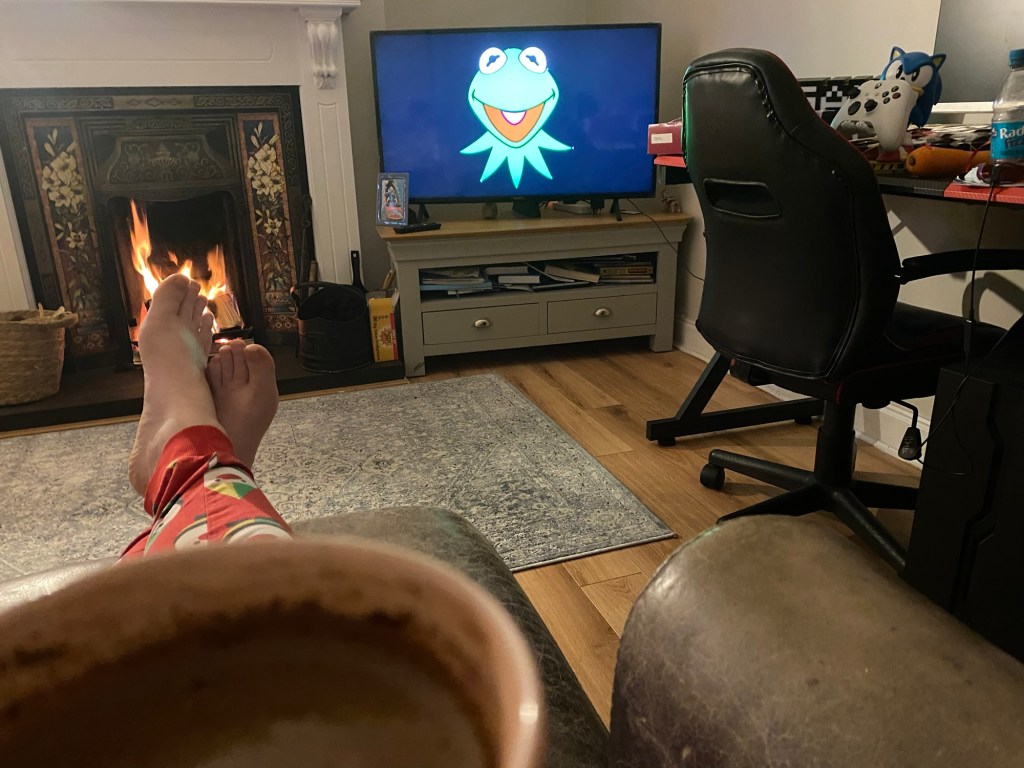
On Christmas Eve night my wife, son and I will put on the festive pyjamas, light the fire, sip on drinking chocolate (shop bought?) and watch the Muppet Christmas Carol. It is my favourite time of the year and I can’t wait. It is more than enough.

Happy Christmas to everyone.

  • First appeared in the News Letter


0

It’ll be alright on the night

A long time ago, when I was a young and keen cub reporter, I was asked to take part in a live broadcast on the national BBC TV news.

This anecdote is of such vintage that I can’t even recall what the story was that I was supposed to speak about, though it was clearly something which had made headlines beyond our shores.

The bulletin was anchored from London and, in a time before laptops with cameras, I was asked to go to Broadcasting House in Belfast.

When I got there, I was taken to a room where a camera was pointed directly at my face and an earpiece fitted. Checks were carried out and then a countdown began until the moment when I would go live.

I started to become nervous. All of the facts and opinions I had rehearsed, popped and disappeared like bubbles in the breeze. The impersonal setting made it worse. I could hear the London studio, but I could not see it and was instead staring straight into a dark camera lens.

And then, with seconds to go before I was due to go live, my earpiece fell out. I froze and was in danger of being completely overwhelmed by panic. A calm producer came to my assistance, replaced the earpiece and moved away just before I heard a voice say, ‘And now we’re joined from Belfast by Jonny McCambridge….’

Everything after that is a blur. I am sure the clip exists in a big BBC vault somewhere, but I’ve never seen it and I’m fairly certain I don’t want to. I am merely thankful that it didn’t end up as an outtake on ‘It’ll be Alright on the Night’.

Since then I have become more used to doing broadcast. I’ve been on the radio often and made the occasional TV appearance. However, I can’t remember ever doing live TV again.

Part of this is because I have not been asked. I can’t prove it, but I suspect there is picture of my startled, blushing face from that bulletin years ago posted onto walls in BBC TV studios everywhere with the instruction ‘DO NOT BOOK THIS MAN!’

In addition, there are countless journalists, much more opinionated than I, who are available and can do a better job. My own particular shtick of the culchie who doesn’t really know what he thinks and just wants everybody to like him is never likely to translate into current affairs TV gold.

However, even if I was asked to go live again, I’m not sure I would be keen. I remember too well the terror. Giving good analysis on the news requires a calm, relaxed mind, not a sense of wild disorder like a zoo where all the animals have escaped.

Peculiarly, this phobia does not extend to radio. I’ve done live radio broadcasts in the studio, at home or on location and always been fine. On one occasion, after a mix-up over times, I was called and put on the air while the listeners were blissfully unaware that I was in the bath.

The recent news agenda has been punishing. I have worked long hours and a hotel room in Ballymena became my temporary home. It is one of the rare occasions when news organisations internationally have shown an interest in Northern Ireland.

After a late night and less than two hours of sleep, I am up early to fulfil a couple of radio commitments. As I am recording a piece for a Scottish channel, my employer sends on another request from an Australian broadcaster. Add it to the list.

I make contact and a link is sent to my email. This is unusual, but not unknown; some radio programmes prefer to connect with conferencing platforms which give better and more reliable audio than mobile phones.

I bounce from one interview to the next. I click on the link and an Australian man greets me and says audio is good.

Then, confusingly, he asks me to shift my laptop back a little and move the cover slightly forward. I comply without thinking. He then tells me he will put me through.

A newsroom appears on my laptop screen complete with a scrolling news ticker and an immaculately presented and coiffured presenter. She is talking about the situation in Gaza. The scale of my error becomes clear; in 30 seconds I will be on live TV across Australia.

I quickly glance at the mirror. My face is flabby and tired, my hair a bird’s nest, my beard a wiry mess. I am wearing the old, torn and stained grey T-shirt which I slept in. I look like a man who has been covering riots for several days with virtually no rest. I notice behind me that the door to the bathroom in my hotel room is open and the toilet is partially visible.

‘And now we’re joined from Ballymena by Jonny McCambridge….’

The interview passes slowly. Each time I think it has reached an obvious conclusion the presenter thinks of a new question to continue the ordeal. I see my own worn and tortured features staring back at me and have to stop from flinching.

Then it is over. I did not suffer the stage-fright which overcame me the last time I did live TV. I know that my answers were competent and professional. But it is the state of my appearance which is the concern. I looked like Worzel Gummidge with a hangover, on a really bad day.

I call my wife, who works in TV, and knows the importance of image on that medium. She consoles me by laughing uproariously.

My concerns over creating a bad impression are balanced by the fact that this was broadcast on the other side of the world. At least nobody I know is ever likely to see it.

My phone buzzes. There is a message from my Da.

It reads: ‘My friend saw you on the telly in Australia….’
0

A drive to the north coast

It’s been a while since anyone asked me where I come from, but if ever the query were posed, I would reply without hesitation that I am a north Antrim man.

However, I have not lived in that part of our wee island for many years. I’ve had a home in Co Down for more than a decade and in Belfast for 20 years before that. The bald mathematics show that much more of my existence has been spent outside of north Antrim than within it.

However, it must be that the oldest attachments are the ones which cut the deepest tread. In my heart I’ll always be a culchie rather than a townie.

It follows that the north coast remains one of my favourite locations for day trips. I’ve lost count of the number of friends I’ve bored as I relate tales about Dunluce Castle or Sheep Island as we traverse the dramatic, winding coast road. There is a sense of belonging that, for me, exists only when I am close to that rugged landscape.

It is Sunday morning and it looks like it might not rain. The decision is made that we will go to Barry’s in Portrush (I know it is now Curry’s, but I still call a Snickers bar a Marathon). The decision to drive north is not quite spontaneous, we had briefly discussed the possibility the night before, but it is not well organised either. I’ve never felt the need to plan a trip home, I just go when the mood takes me.

All is well at first. We make our customary stop at the service station for coffee and sausage rolls. There is excited chatter about which rides we will go on first. My wife seems to doze off in the back seat as I deliver my well-worn lecture on the history of the Frosses trees.

My first sense that something might be different is when I see a large electronic sign at the end of the motorway. The message advises that the Carrick-a-Rede rope-bridge is fully booked.

Instinctively, I bridle at the advice. Through my youth and early adult years I went to the rope-bridge when it suited me. My da used to help in erecting that bridge in the spring. Even though I had no intention of visiting today, it still annoys me slightly to be told I cannot go.

But worse is to come. I am close to the end of the Ballybogey Road, still a couple of miles from Portrush, when I meet the traffic jam. The sight alarms me. I’ve been driving this route to the port for more than three decades, through the busiest of summer days, and I have never encountered traffic this far from the town before.

We barely move for the next 45 minutes. My wife goes online to find social media full of warnings for motorists to avoid Portrush due to a car cruise. The images on Facebook show hundreds of vehicles bringing the streets to a standstill. Regretfully, we explain to our son that we won’t be able to get to the amusements and drive east rather than west.

We stop briefly in Bushmills to stretch our legs. The small car park is full of large tourist coaches. I wonder how some of them will be able to manoeuvre the narrow coast roads. We walk along the main street and I’m struck by the number of cafes and restaurants, the sheer level of the footfall in what I’d always remembered as a sleepy village.

We drive further along the coast, past the causeway, Lisnagunogue and White Park Bay. I turn left and inch my car down the treacherous winding path which descends towards Ballintoy Harbour. I inform my now restless son that we can play on the rocks, explore the coastal path, get a treat in the wee café. I tell him that my own da used to bring me down here on Sundays when I was a boy.

But another plan is quickly abandoned. The cars are backed up in a long queue snaking out of the tiny car park. The best I am able to achieve is to turn my vehicle around and take a quick look at the dramatic rocky landscape before we drive away.

I have a low feeling as my car struggles on the climb back up the hill. This road will never get any wider, the tiny harbour is the size that it is, but the number of visitors just continues to grow and grow. I wonder how long it is before the tipping point is reached.

We drive on into Ballycastle, the pretty coastal town where I spent so much of my youth. There is much that I remember, but plenty which is new. Morton’s fish shop is there, Harry is still selling his ices, his hair and moustache now as white as the ice-creams he serves.

I am pessimistic about getting parked. We crawl around the large harbour car park and my son gets excited when he spots a free space, the most animated he has been in some time.

We go for a stroll on the beach. It is uncomfortably busy at first, close to the tennis courts and golf course, but we walk on until there are fewer people and more open stretches of sand. We keep going, in the direction of the Pan’s Rocks, until it finally feels like we have the beach to ourselves. I tell my son that I used to walk on this same sand decades before.

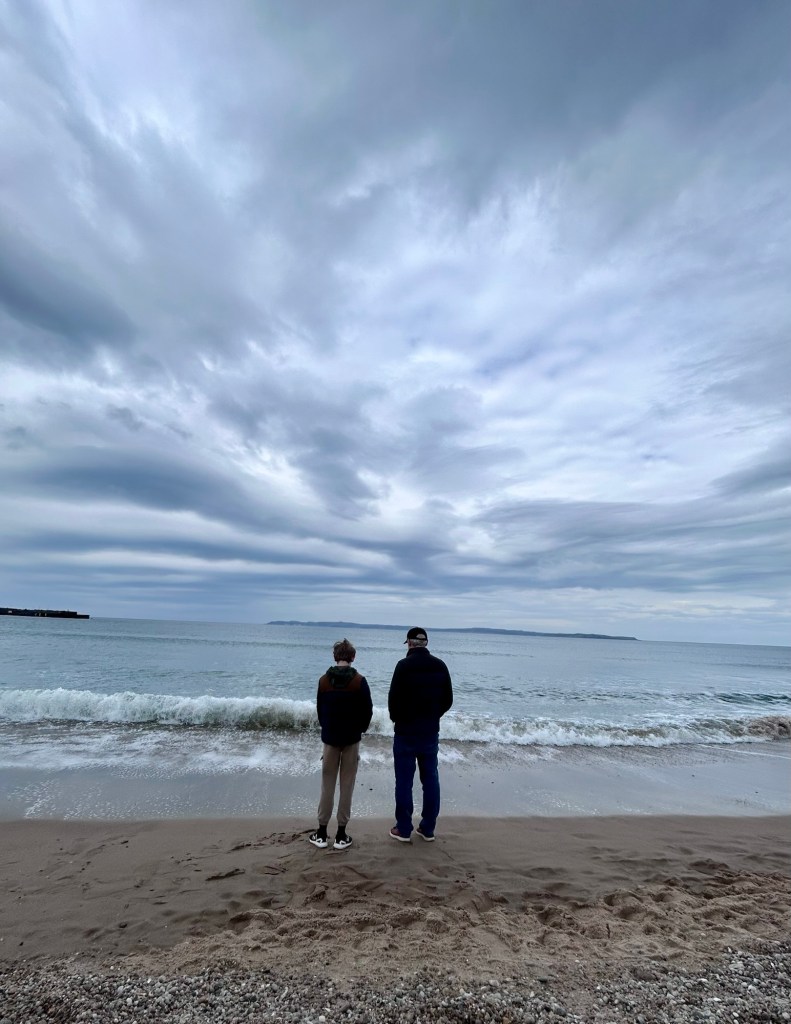
We throw stones into the sea, trying to skim the smooth and flat pebbles off the surface. Away from the crowds now, for the first time today, I notice the sky. The clouds have formed into a creamy void with threatening dark grey streaks. It is at once both ominous and beautiful. I stand there with my son for a few minutes, just staring at the sky. I wonder how I did not notice it before.

0

A thankful heart

I’m old enough to know better, but as I step out of the warm building and feel the cold blast on a black and frosty Friday night, I am as light as a feather, happy as an angel, merry as a schoolboy.

I’m leaving the Lyric Theatre after watching their stage adaptation of the great festive morality fable A Christmas Carol. I could confidently state that there is no story anywhere in the vast canon of literature with which I am more familiar, but Scrooge’s spectral hauntings and subsequent miraculous transformation of personality still stirs me, dulls the edges of something which might otherwise remain hard and sharp as a flint.

I know that it is gushingly sentimental. Indeed, as I write this, hours after the show, there is a little voice telling me to show a bit of professional detachment and judgement, not to have my emotions so easily exploited by the juxtaposition of a mean old miser and an angelic but sickly child, not to let my typing fingers run amok like Ebenezer on Christmas morning spreading festive cheer wherever he goes.

But it is no good, the force of the narrative cannot be resisted. It is as well that the theatre is dark to hide my tears when it is foretold that Tiny Tim will die if Scrooge does not change his ways. I heartily but tunelessly sing along to the Christmas songs and carols and laugh and cheer at the triumphant climax. As Dickens himself wrote, ‘There is nothing in the world so irresistibly contagious as laughter and good humour’.

I’ve digested more versions of Scrooge’s antics over the years than I’ve had helpings of Christmas pudding (and I eat a lot of pudding). I’ve seen the show on stage in the West End in London, watched animated retellings at the cinema, enjoyed countless TV adaptations. I own a handsome volume of Dickens’ collected Christmas stories, which I dust off every December.

What is different about the Lyric’s effort is that it is ours. Grimy Victorian London has been substituted for grimy Victorian Belfast. The city’s labyrinth of ancient entries and alleyways provide the dusty and dark backdrop. 

‘Sleekit’ Scrooge mixes his ‘bah humbugs’ with a rasping ‘Catch yerself on!’ When he attempts to explain his first haunting by Jacob Marley away as the result of a digestive disorder, ‘there’s more of gravy than grave about you’ is brilliantly replaced by ‘there’s more of tatie than tatie bread about you!’

I was slightly worried because I’ve seen attempts to shift the Scrooge story to other settings before which didn’t quite carry the magic. Here, playwright Marie Jones pulls it off seemingly without effort. The story oozes Belfast’s unique wit and charm while never straying far enough away from Dickens’ classic tale to jar or annoy the traditionalists. In truth the blend is so seamless that it is often difficult to detect (even for a self-confessed expert) where Dickens ends, and Jones begins.

At the centre of it all is Dan Gordon’s towering presence as Ebenezer Scrooge. I’ve had a soft spot for Gordon for some years. Once, when I was close to a deadline and struggling to find a voice to lend authority to an article I was writing about the impact of Covid lockdown on live theatre, I was passed the actor’s number and interrupted him at his dinner (whether the meal included tatie bread was not disclosed).

Despite the fact that my disturbance of his meal was likely as welcome as the Ghost of Christmas Past’s interruption of Scrooge’s sleep, Gordon generously gave up his time and chatted to me for more than half an hour, providing enough quotes to fill a dozen stories. Journalists are well used to speaking to people who are guarded, suspicious and regard our attention as a troublesome nuisance. For this reason, I always remember those few who are unafraid of letting the barriers down a little, who give more than they have to in order to help.

On stage tonight Gordon is a spluttering, snarling, gurning dynamo of rage as the stubborn Scrooge who obstinately refuses to conform to the general enthusiasm about Christmas. Through the hauntings, his seemingly impenetrable hide of hostility is first softened and then punctured. By the finale, he is a rolling, bouncing rubber ball of joy and contagious enthusiasm.

The show delights children, parents and grandparents alike. As the crowd slowly shuffles out, I hear the word ‘brilliant’ uttered over and over. It reminds me that there is something intoxicating about theatre; when done well it ignites and fuels your emotions in a way that television or cinema struggle to match.

But despite our proximity to the stage, the theatrical fourth wall exists for a reason, a barrier between the performers and audience, between fiction and reality. A Christmas Carol may be the finest of stories, but it remains just a story. How long will it be until the strong effects of its potion wears off and I, solitary as an oyster, return to my previous state of worrying more about myself than others?

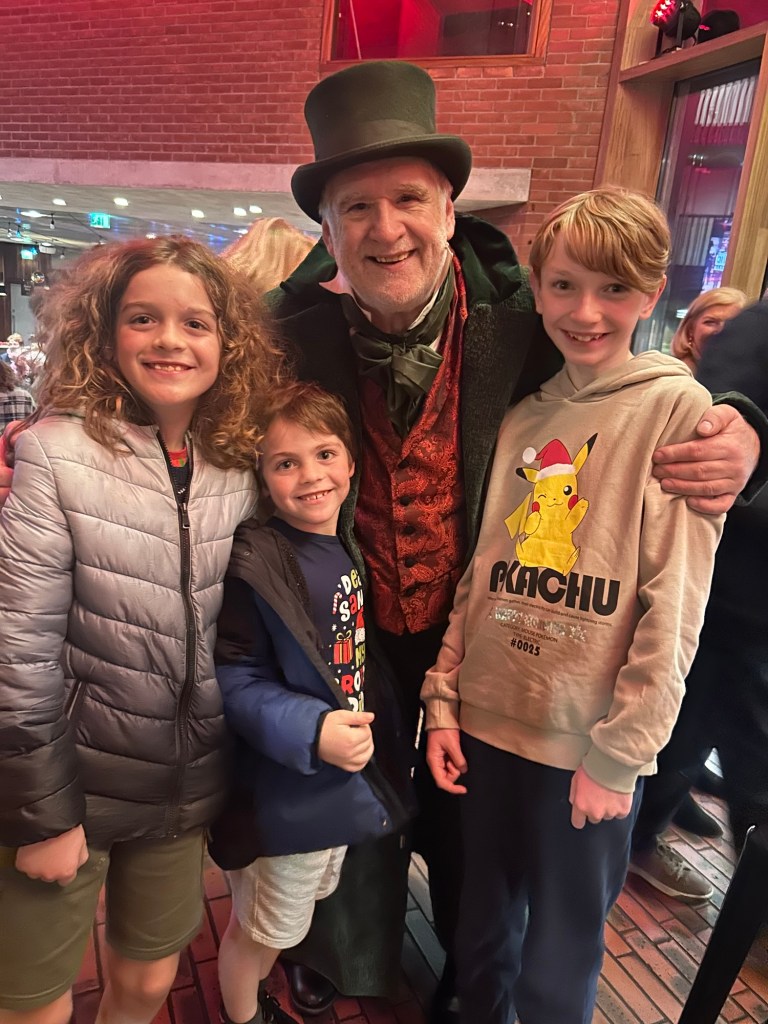
There is one last surprise. As we leave the theatre a smiling Scrooge appears before us. A top-hatted Gordon is there in the foyer to meet and greet every member of the audience. He doesn’t have to do it, but here he is. No remark is ignored, or handshake refused. There is time for everybody.

My son and nephews, already joyful from the show, cannot believe their luck. It is as if Santa Claus himself has descended the chimney. They rush to him and he happily gives his time and poses for pictures.

The fourth wall has been breached. Perhaps a little bit of the magic of the story has leaked out too. I hope that it takes a deep root within me.

As I prepare to face the cold of the night, I am possessed of a thankful heart.

Merry Christmas to all.

  • This article first appeared in the News Letter
0

Blackberry picking

There is not much chance of my aimless ramblings on this page ever being confused with anything produced by the squat pen of Seamus Heaney.

However, perhaps occasionally there may be a slight overlap of theme. When I studied the great poet’s Death of a Naturalist collection for my GCSE examination, there were some passages where the message penetrated a skull which was thick and otherwise resistant to my English teacher’s best efforts to educate me.

The poem Blackberry Picking was a good example. The stanzas stirred me briefly from my teenage apathy and stupor because they so familiar. Growing up in rural north Antrim, many hours in late summer days were spent picking blackberries off the briar bushes which sprawled on either side of the narrow country lanes. My brothers and I breathlessly crammed the berries straight into our mouths. Some were sweet, some were not.

Heaney’s descriptions of the ripe blackberry juice being like ‘thickened wine’ and the unripe ones being ‘hard as a knot’ were compelling. Equally familiar was the idea of hands being ‘peppered with thorn pricks’ and the disappointment that the berries which were stored, rather than eaten, did not keep. The discovery of the ‘rat-grey fungus’ on them also representing the loss of childhood innocence.

But perhaps a bit of that innocence never quite goes away. There are certain sights within nature which will always bridge that gap to a distant time. At this moment in summer it is the long drooping heavy leaves of the green nettles and the memory of rubbing cool docken leaves onto bubbled skin to ease the harshness of their sting.

I know that within a few weeks I’ll be looking out again for the signs of the wild blackberries ripening. The small hard green inedible berries will soon mature into fruit heavy with juice that will stain fingers. Happily, there are briar bushes in my back garden, and I will be in a race with the birds to pilfer their goods.

Now, as an adult, I know how to preserve and keep the wild fruit and how best to use it in baking. But that youthful impatience remains an integral part of the ritual and I will continue to eat a fair share of the produce straight from the thorn, just like I did when I was a boy. My wife tells me off for this, insisting the fruit should be washed first. Maybe she is right, but that’s how I’ve always done it, before I ever knew to ask the question whether or not it was good for me.

My son’s ongoing and seemingly immovable objection to eating vegetables means that I try to compensate and improve his diet by stuffing him with as much fruit as he can reasonably digest. Recently he advised that he would be keen to try blackberries. I smiled as I said he wouldn’t have to wait too long until he could pick them himself in the back garden. He seemed less than enthused by this idea and frowned as he asked if I could not just buy them for him from the shop.

I was mildly disturbed and even slightly offended by this suggestion at first. I had never bought blackberries in a shop. More, it seemed decadent and wasteful to pay £2.50 for a small plastic punnet containing fruit which grows abundantly all around me.

However, the more I thought about it, I realised it was difficult to sustain a reasonable and consistent line of argument as to why I should not buy blackberries in the supermarket. I have an apple tree in my front garden, but that does not prevent me buying apples every week. Raspberries, blueberries and strawberries are all purchased regularly without hesitation. I could grow them all if I was so motivated. I am certainly not in any lofty position of authority to advocate getting closer to nature by returning to the habits of foraging in the wild for berries, seeds and nuts.

And where would such a passage of flawed logic take me anyway? Should I also forsake buying meat in favour of rearing fowl, swine and a herd of cows in my back garden? Should I sharpen my knives and brush up on my butchery skills? As my mind wrestled with the impracticalities of an instinctive reluctance to buy what could be otherwise sourced, I was reminded of a quote from Irish writer Brendan Behan: ‘To hell with poverty, we’ll kill a chicken.’

But yet, blackberries remained a product apart within my psyche. My long history with the dark glossy drupelets meant I just could not view them in the same way as all of the other items in my shopping basket. Even as I scanned the barcode on the plastic punnet at the self-service till I found myself mumbling bitterly under my breath ‘Paying good money for blackberries…what is the world coming to?’

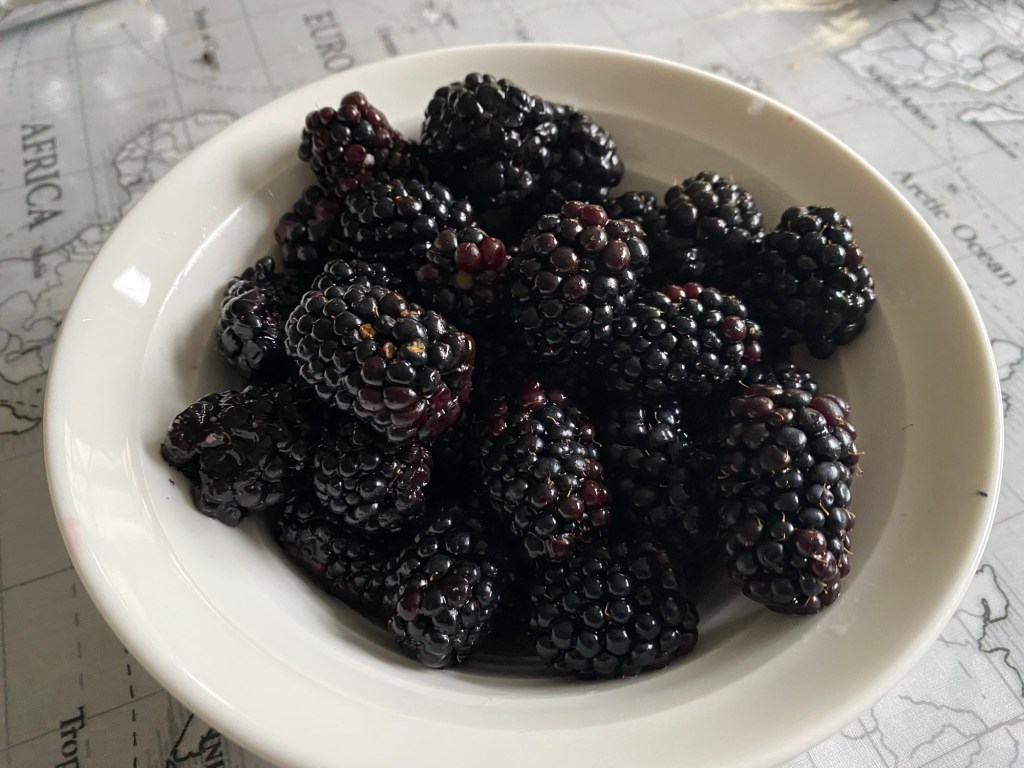
Later I presented the fat and sweet berries to my son in a bowl. He quickly devoured them and asked for more. As I opened a second punnet, I found myself pondering how he clearly enjoyed the fruit but seemed utterly uninterested in the process of exploring how the berries were harvested. I decided to try again.

‘Hey buddy, you remember I told you that we have blackberries growing in our back garden on the briars? In a few weeks we can pick our own if you want?’

My son responded with a non-committal shrug and a mumble. It is a gesture I am familiar with, which he displays when I suggest something which is of absolutely no interest to him, but he doesn’t want to hurt my feelings. I nodded and smiled, reminding myself yet again that my experiences are not his, that just because I can enthusiastically rattle out 1,000 words on the subject, I should not assume that it will be of interest to him also.

I hoped he’d go blackberry picking with me, knew he would not.

0

Am I insulted by the offer of help changing my flat tyre? Not likely

We are walking out of my son’s primary school for the last time at the end of his final day in P7. There is no doubt that this emotional event will be the subject of my next column (that’s just what I do, right?)

We are smartly dressed as we are due to travel on to a farewell class party which has been organised for children and parents. I drive the car onto the road but am immediately aware that something is wrong. I pull to a stop again beside the pavement.

I get out and discover that the rear left tyre is completely flat. I stare sadly at the rubber rim which is sinking uselessly under the weight of the car, like Atlas with lumbago. 

‘Oh boy’, I mumble to myself, as scenarios, difficulties and challenges multiply in my mind.

I have suffered punctures with vehicles before. I have successfully changed a tyre in the past. But not in a long time, perhaps more than 20 years. I have a vague recollection of the method and the technique. I am reasonably confident that if I was home in the driveway, I’d be able to complete the job. But here, at the side of the road, with pedestrians and cars going past, my brain becomes scrambled and I’m not so sure. It’s a bit like peeing in a urinal, I know I can do it, but not with people watching.

If I were to prove unequal to the task I think of alternative approaches. I could phone my da for help. Having said that, I’m pushing 50 and there has to be a statute of limitations on such things. The other possibility is to summon the RAC as I’m a fully paid up member. However, there seems to be something emasculating about having to call for help. I decide I will attempt to proceed alone.

I start to make a mental list of the equipment required and steps to be undertaken. I go to the boot to begin the search for the spare tyre. This first of all requires emptying seven years of junk from the space. Video gear, tripods, umbrellas, walking boots, two pairs of my wife’s shoes and countless shopping bags are piled at the side of the road before I locate the base which is lifted to reveal the spare tyre underneath. It seems to be resting in a small pool of rusty water, which I take not to be a good sign.

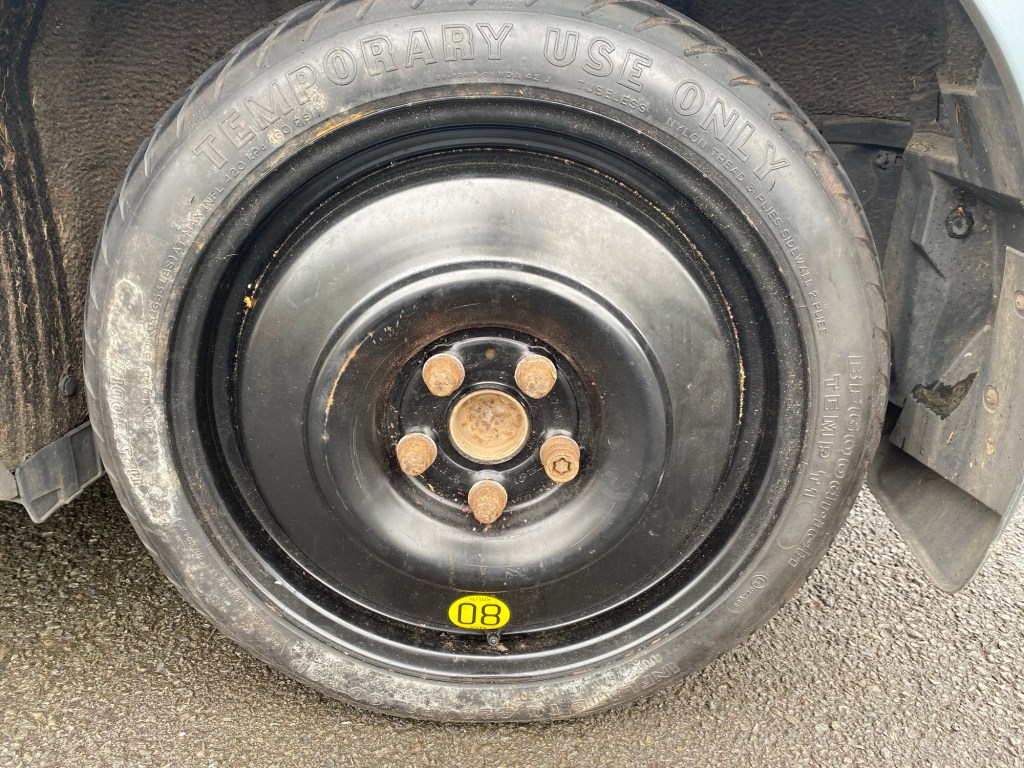
I struggle to move the spare tyre. I notice it is not substantive, not a like for like replacement, but a temporary emergency wheel, a ‘get you home’ tyre which looks more suited to a moped than a car. I can almost hear the disapproving tuts of my da at the sight of the flimsy article.

I have found the tyre, but the jack is not with it. This disturbs me as it seems logical that they should be together. I begin to search the car for the implement, looking under the back seat for hidden compartments as if it were a magician’s cabinet. The jack is eventually located after a panel is removed from the side wall of the boot. It takes me another 10 minutes to work out how to remove the tool from the slot in which it is neatly and tightly encased.

While I am trying to solve this conundrum there is a significant development. A family that we know approaches. It is my son’s best friend from school. Through this relationship, my wife and I have also become friends with his parents.

There are multiple benefits. My son, who is becoming agitated and bored, now has someone to play with. My wife has someone to talk to. Best of all, there is now another grown-up male on the scene. This man is larger than me, louder than me and, to be frank, sports a more impressive beard.

His opening gambit is to state that he doesn’t want to insult me by offering to help in changing the tyre. However, something in my pathetic wrestling with the jack must persuade him that I would very much welcome any such insult and he quickly sets himself to loosening the wheel nuts.

I have eventually freed the jack and I’m close to spent already. I put it in place under the car but struggle to get the handle to turn easily. My friend takes over and proves to be much more proficient. The vehicle is soon elevated and I’m able to fully remove the wheel nuts.

But the biggest obstacle now presents itself. The wheel should slide off. It does not. Instead it gives every indication of being stuck fast, as if it has been rusted onto the car axle. I try feebly to remove it. My friend tries more robustly. It does not shift. He asks me if I have a hammer. I do not. I strike it a few ineffective blows with the handle of the jack. Then my friend, in his smart clothes, positions himself on the dirty ground inside the tyre and lands a hefty kick with his giant boot which frees the wheel, launching it outwards like a piece of freshly popped corn. I can do nothing more than nod appreciatively.

From here, the task is more straightforward. The replacement tyre is fitted, the jack lowered, and the bolts tightened. My friend has thoughtfully brought wipes which allows us to clean the worst of the smears of black grease from our hands.

As we say our goodbyes, he charitably tells me that it was a ‘two-man job’. Of course, it depends who the two men are.

Before I drive off, I make a final check on the flimsy replacement tyre. There is a message on it advising not to drive faster than 80kph while it is fitted. I am not happy with the temporary remedy and tell myself that I must get to the garage urgently so the proper tyre can be repaired and restored.

And that, my friends, is a story for next week….