1

Piers Morgan, papooses and custard pies

As a pathway into a new day it was certainly novel.

Usually I’m roughly shaken into consciousness by my son at a hideously early hour asking one of the great questions of life. Such as who would would win a fight between myself and Wonder Woman?

But this was different. It was still dark when the little buzz from my phone revealed a text message. I wiped my bleary sleep-filled eyes and peered at the screen.

Would you be able to talk to Frank about papooses and Piers Morgan?

I stared without comprehension. The truth was that my brain was mostly still asleep and I couldn’t quite fit the pieces together yet.

Firstly it was an unknown number.

Also who was Frank?

Sinatra? Bruno? Bough?

As some air seeped back into my brain I finally computed that the message was from a producer asking me to appear on the Frank Mitchell morning radio show. This was fine, but what was the subject?

I read the message again. Papooses and Piers Morgan. I stared blankly.

I certainly knew who Piers Morgan was. But papoose was an unknown word. The phonetics brought to mind images of a giant underwater creature. Had Piers been eaten by a sea dragon? It seemed unlikely.

I Googled the word. Papoose, I learned, is an American rapper. Had Piers launched an unexpected gangsta rap collaboration? Straight Outta Good Morning Britain? Hmmmm….

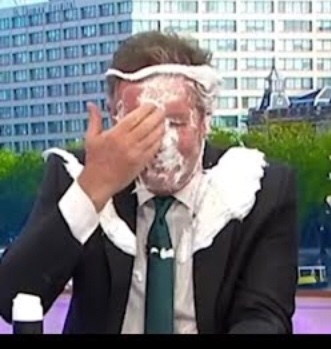
I explored further and soon it all made sense. A papoose is also the name for the baby sling which parents use to secure little infants close to their bodies while keeping their arms free. Piers Morgan had poked fun at actor Daniel Craig for wearing a papoose. He said that 007 had been emasculated.

It seemed that this had started an online controversy that was now sweeping across the media. Everyone was talking about it. Everyone except me, the journalist, who hadn’t heard about it.

But even though I was late to the argument I was happy to go on the radio and give my thoughts. I had used a baby sling when my little man was an infant. When he was just months old I carried him around much of the Algarve on a family holiday in a sling, his little arms and legs dangling like those of a scarecrow in the wind.

Also, I had been forced to admit, my career as a radio commentator had slowed recently. After a slew of broadcast appearances last year I hadn’t been asked to go on in many months. It seemed that the market for my incoherent culchie ramblings was not bottomless after all.

I readily agreed to appear and a couple of hours later was giving my views to a jovial sounding Frank. He played a clip of comedian Harry Hill thrusting a custard pie into Piers’ face (in truth this didn’t really work on radio) and I praised Daniel Craig for his parenting.

There was undoubtedly an element of attention seeking on Morgan’s part in manufacturing this whole, pointless row and now, here I was, indulging it live on air.

After my brief radio appearance I went back to some more mundane tasks. Then my phone rang. It was a producer from BBC’s Evening Extra radio show asking if I could go on tonight to talk about…..Piers Morgan and papooses.

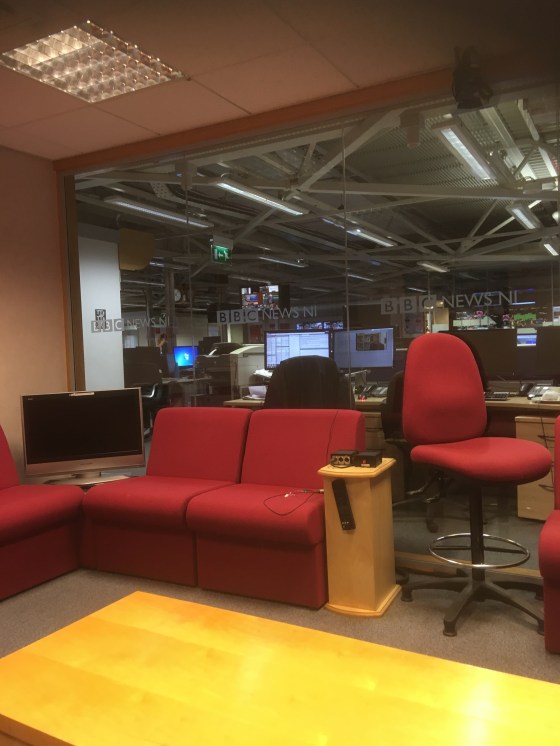
So, later that day I was sitting alone in the green room of the BBC NI building sipping on water from a plastic cup. I was led into the studio and, as ever, resisted the urge to yell expletives while they were doing traffic and travel.

On this occasion I was joined in the discussion by the excellent feminist journalist and columnist Fionola Meredith. Seamus McKee started by asking me about the custard pie incident. I said I had never thought so highly of Harry Hill until this moment. I got a little laugh in return.

I made a few more silly gags and Fionola made the important points about the serious issue of the perception of men as parents.

Then Seamus, who seemed determined to treat the whole episode humorously, asked me would I wear an Elsa dress if my son asked me to. In truth during my preparation I hadn’t anticipated this one and I sputtered something weak in response.

Then it was over and I was led out while they did the sports headlines.

Driving home I contemplated how strange it was that I would be asked to do broadcast twice in one day after several months of radio silence. Perhaps it was just a matter of waiting for the right subject.

The truth is, as I had explained to two different audiences that day, wearing a sling (or papoose) is a beautiful and intimate way for a father to get close to his new child. Certainly after the mother has carried the baby for nine months it doesn’t seem like too much to ask for daddy to help.

If that means, as some would say, that you’re emasculated, then that’s just fine with me.

As dark descended again I felt quite pleased with my day’s work. I had been back on the air, if only thanks to Piers Morgan.

I had made sure to enjoy my time on the radio because, as I had learnt, you just never know when or if you’re going to be asked again.

I have something to say and my own particular way of saying it (that’s why this blog exists). Sometimes a lot of people are interested, sometimes just a few, sometimes none. But I just keep plugging on regardless, sticking to my own views.

I suspect I’ll never make a regular commentator. The fact is that I try too hard to be reasonable, I never want to go for the throat, always want to consider both sides of the argument. I never say anything just to get a reaction or to wind people up. I’ll leave that to Piers Morgan. It’s usually the people who shout the loudest who get asked first. Usually, but not always.

As I reached my house my phone rang again. This time it was BBC Radio Foyle. A journalist asked me if I would be prepared to go on their breakfast show the following morning to talk about fathers who have suffered from postnatal depression.

Sure, I said, just tell me when.
1

Walking in graveyards

Being a parent means confronting the question of what to do with all the time.

It’s most acute on weekdays after school. I pick my son up at lunchtime but mummy is usually not home until mid-evening. The hours can stretch long before me, daunting and empty.

Homework fills some of the gap. My son also has the wonderful ability to invent his own games which temporarily distract him.

There’s also the option of just dropping him in front of the TV or iPad and knowing that he will be able to pass several contented hours. But my instinct tells me that this is lazy and should be controlled rather than encouraged.

Being an only child also means that there is no brother or sister for him to play and fight with. When he gets bored in the afternoon he always comes looking for me. Unlike mine, his reserves of energy seem to be limitless.

So I try to be organised and creative, always having a physical task on the agenda. We go to the playground on a couple of afternoons, maybe one day a treat in a cafe or a trip to the lake to feed the ducks. Sometimes I try to get him involved if I’m creating something in the kitchen or take him for a ride on his bike.

And some days we just go for a walk and have a little chat.

It’s a fine Autumn afternoon. The wind is blowing the red and brown leaves across the road like a blizzard. We’ve already been to the park and now we’re strolling. It’s a gentle and aimless walk, filled with his questions about the world.

We walk into the grounds of the large church in the centre of the village. It’s not a spiritual gesture but my boy loves to run on the large strip of grass in front of the dark, imposing steeple.

We play races for a bit, bringing a tut of disapproval from the elderly couple leaving the church. I’m a little chastened but my boy is wonderfully unaware and is gaily throwing leaves into the air.

I ask him if he wants to see inside the church but he prefers to stay in the open air so we follow the path which goes around the side of the building.

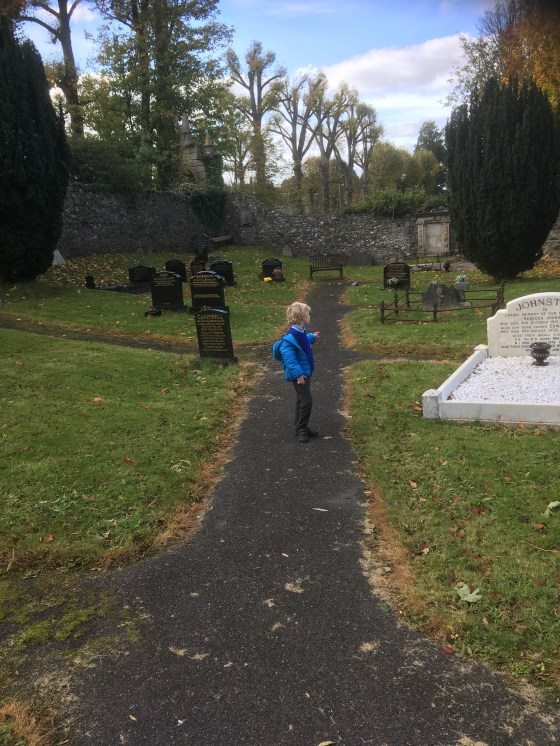
Then we meander down the steep little path which takes us into the graveyard.

We haven’t decided to come here, there were no words exchanged. We’ve just ended up here, almost by accident, like one of those autumn leaves being blown randomly in the breeze.

My son knows what a graveyard is. Once, when he was quite a bit younger, he told me he was looking forward to me dying because he liked to visit graveyards. He understands a little of the concept but hasn’t quite worked it all out. Just like his daddy.

It’s an old-fashioned graveyard. The type that you often see beside ancient churches with lumpy ground and crumbling crosses and gravestones haphazardly laid out. There’s no logic or order in evidence. The site is from a time before it had occurred to anyone that they might run out of burial space someday and turned interment into a professional and organised business.

We walk along the narrow paths and pass some marble plates which have Biblical quotations etched on them. My son asks me what they say so I read the verses. He knows a little about Jesus from what he’s learnt in school.

Then he starts to ask about the gravestones. Some are large and shiny, with golden letters chipped into the black stone. Some are so old and worn by the years that it is impossible to read the inscriptions. Some have a lot of information, like the one about the man killed in the helicopter crash. Others just have a name and a date.

But my son goes round them all in turn, pausing briefly at each one and asking me what it says.

Fresh and brightly coloured flowers have been laid at some of the plots while others are overgrown and neglected. Several of the older headstones have fallen over.

There’s a little wooden bench at the back of the graveyard. I gingerly sit on it and when I’m satisfied it will take my weight I allow my son to move next to me. I’ve brought him a packet of crisps and he munches happily while he begins to pepper me with more questions.

He asks me what happens to people when they die. He asks me if God is the biggest man in the world. He asks me why some of the graves have little children in them rather than old people. He asks me why people have to die.

None of these are questions that I know how to answer and I don’t try. I just give neutral responses and tell him there are lots of things we don’t understand and that lots of people believe different things.

He’s momentarily confused because in his world his father should have a simple answer to all of his queries. But it passes soon enough and I pull him closer to me on the bench. I tell him that this is a place where people come to remember those that they loved. After a moment he tells me that he likes the graveyard.

Then it is silent. Silent apart from the sound of his little teeth crunching. Some of the crisps fall lightly onto his school trousers but he doesn’t notice.

We sit like that quietly for some time. There’s a beautiful unspoken intimacy that I can’t bear to break with words. A closeness that I want to last forever. A fear that once it’s gone I may never be able to find it again.

The wind is getting up again. My son hands me the empty crisp packet and I wipe crumbs off his fingers. Then I tell him that we’d better go and get mummy’s dinner ready and we walk out of the graveyard, his little hand inside mine.

0

Death knock

I’ve recently started watching the BBC series Press, an enjoyable and polished drama which follows the adventures of the staff on two fictional daily newspapers.

While certain shortcuts are taken or cliches pursued for dramatic purposes, there is enough in there which is familiar to pique the interest of an old newspaperman.

The conflict of the approaches of a left-leaning liberal publication which flounders while it attempts to maintain strict editorial principles with the thriving tabloid where the editor demands his reporters dig up ‘dirt’ is a quandary many journalists will have wrestled with.

Similarly the struggles of a diminishing industry dealing with the new commercial challenges of a digital age is well observed. The scene where the editor of the Guardian-like Herald explains to her groaning staff how the following Monday’s edition is going to have an advertising ‘wraparound’ covering the front and back pages is accurate. I’ve been in the room on more than one occasion while that very conversation has taken place.

Also the underlying theme of how being at the forefront of driving the news agenda requires sacrifices which can destroy family life or good mental health is a little too recognisable for me to properly enjoy.

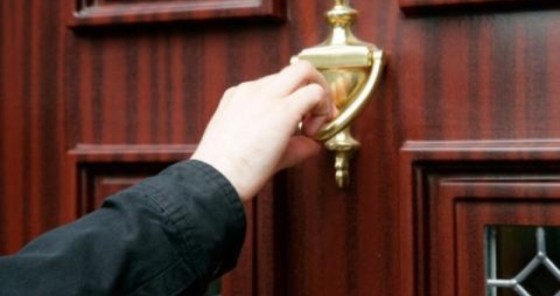
But it is another scene altogether which I perhaps found most impactful. The first episode of the drama is called ‘Death Knock’ and part of the story surrounds a young reporter on the tabloid Post agonising over having to rap the door of the grieving parents of a young footballer who has taken his own life. Just watching it made me uncomfortable.

For several years I was the crime reporter on a daily newspaper. In far distant days the paper produced an evening edition. This meant that the reporters started work very early in the morning to meet the deadlines of a PM print run.

As the crime reporter my first duty was always to check the overnight police notes. Then, not always but often, while the rest of society was just waking up I would be on the road to do a death or crime knock.

I would be reasonably confident in stating that for several years back near the start of this millennium I had at least as many of these difficult encounters as any other journalist in Northern Ireland.

But despite the multitude of death knocks, the ritual never seemed to get any easier. My stomach never quite settled, my nerves were always raw. I could never shake the persistent feeling that I was doing something quite awful.

Yes there was and is a clear and genuine public interest in allowing bereaved families to tell their stories, but I always felt mercenary. Newspapers peddle in grief and anguish and I knew a strong human interest story would always make the front page.

In addition I had to balance the guilt over talking to a victim’s family with the fear of having to go back to the office to face my editor empty handed.

Often I thought about how I would react if I had been bereaved and a young journalist came calling at my door reeking of desperation to get the story.

Techniques evolved through practice. Most people’s original reaction is to tell you to fuck off. But if you can just get them talking first, just a little opening before the door slams in your face, the smallest of human connections, then you know you’re in with a much better chance of getting the interview.

And all people are different. The death knock demonstrated the hugely varying methods that the human nature uses to cope with great adversity. Often I was verbally abused and described as ‘scum’. On a few occasions I was advised to leave property for my own health and was pushed and shoved more than once.

But then there were the people who just wanted to talk, who found something cathartic in sharing at a time when their grief must have been overwhelming.

I’ll never forget the family of one high profile murder victim in Belfast. I was the first journalist to find their house and knocked on their door less than six hours after their son had been killed. The parents invited me into their home and were unfailingly generous and open with their time. The tearful mother asked me if I’d had any breakfast and then insisted on making me tea and toast. A more compelling example of human strength and dignity I’m not sure I’ve ever witnessed.

There were disasters too. Hours spent unsuccessfully knocking on doors asking if this was the right house, cases of mistaken identity or where incorrect information which had been passed on. I remember once waking a middle-aged gentleman from his sleep to ask him if it was his son had been lost the night before. It was the wrong house but the momentary look of fear and horror on his face disturbed me greatly.

It never happened to me but I’ve heard of occasions where journalists or photographers found a victim’s house so quickly that the family had not yet been informed of a tragedy.

In my later years in journalism things changed. I was on the newsdesk so became responsible for sending other reporters to do death knocks rather than carrying them out myself.

But the routine was always the same. The reporter was loathe to leave the office, often hanging around or killing time until I firmly told them they had to do it. Several times journalists informed me they were uncomfortable. I told them that was the natural reaction, the day when they were not uncomfortable was when they should begin to worry.

In more recent times social media and the dwindling resources of newspapers changed the situation further. Rather than knocking on a stranger’s door and asking them for a picture, photographs can often be found online. Rather than needing to get live quotes from a family member, there is usually a flood of online tributes which can be harvested. Doors are still knocked but perhaps not quite as often.

But this new situation presented a new series of problems. On occasion I received angry phone calls from grieving relatives who demanded to know the source of our photo or quotes. When I told them that they freely available online it rarely placated their hostility.

The truth is that there is just enough grey area about the rights of information publicly accessible on social media that newspapers are able to charge right through the vacuum and hoover up what is available. It is a rare and brave journalist who will decline the chance to lift a photo from social media when he or she is aware that all of the competitors have almost certainly already done so.

There is no doubt that much of the most powerful journalism comes from families telling their story of facing grief or adversity. I know personally of instances where families have channeled the story of their tragedy through the media to push for justice or vital societal change.

The death knock will always be part of journalism. And it should be.

But that doesn’t make it any easier to perform.

As a former hack now there are still many parts of the game which I fondly remember and miss. The early morning rap on the door is not one of them.

0

Alcohol and glory days

These days I get to go to the pub about as often as my son decides to have a lie-in (for the non-parents that means virtually never).

It wasn’t always so. I used to have an active social life and regularly enjoyed bars.

Back then the names of beers were easily recognisable – Harp, Stella, Smithwicks.

Now, on the very rare occasion I’m at a pub, I find myself squinting at the logos on the taps and the bottles in the fridge gamely searching for a brand I recognise amid the myriad of brews with strange names such as The Headless Leprechaun or Goat Manure.

My relationship with public houses changed when I essentially gave up alcohol about four years ago. My decision was based on the logic that having a very young son and suffering from hangovers mixed about as well as gin and milky tea.

I felt I needed my full reserves of energy to cope with the incessant demands of looking after a toddler rather than the soft leaky-tyre state of physical exhaustion that drinking the night before inevitably brought.

There were other reasons for deciding to abstain from alcohol. I wanted to become healthier, both in mind and body. I had grown tired of struggling to hold conversations in crowded, noisy bars and then desperately searching for a taxi to take me home at the end of the night (few words are more demoralising to hear after midnight than ‘Nah, I’m booked mate’). I was utterly fed up of pissing in dingy pub toilets, fighting my way back to my table and then realising I needed to go again the moment I sat down.

And, the reason which I seldom mentioned but which was perhaps most profound of all, I simply didn’t much like myself when I’d had a few drinks. All of the worst elements of my personality became magnified – the anecdotes were exaggerated, the comments became more cruel and I had a unhealthy tendency towards dark moments of morose introspection – when under the influence.

It’s probably not overstating the mark to say that most of the actions which I really regret in my life were carried out after alcohol had been taken.

If I had the opportunity to remove such a negative influence from my life, it seemed logical and obvious to take it.

So I made the decision to banish alcohol.

And here’s the thing. It turned out to be much easier than I had anticipated and I found that I didn’t really miss it at all. My wife still enjoyed her glass of wine on a Friday night but I wasn’t struck by the inclination to wrestle the goblet from her hand.

I simply fell out of the habit of drinking, to the point where the action of opening a bottle of beer became as alien and unlikely as sticking a large carrot in my ear.

I never described myself as teetotal and didn’t beat myself up if I decided to have a glass of wine at a wedding or a cold beer on a warm day on holiday. I just found, that for the most part, I didn’t bother.

Naturally I found myself attending fewer social occasions and, when I did, I was always the designated driver. Being in a bar or restaurant when you are sober but surrounded by very drunk people is often humorous but occasionally disconcerting or even threatening. More often it just seemed less bother to stay at home.

And this became my habit. While I have tasted alcohol on a few rare occasions I have not been drunk or in any state close to it for four years.

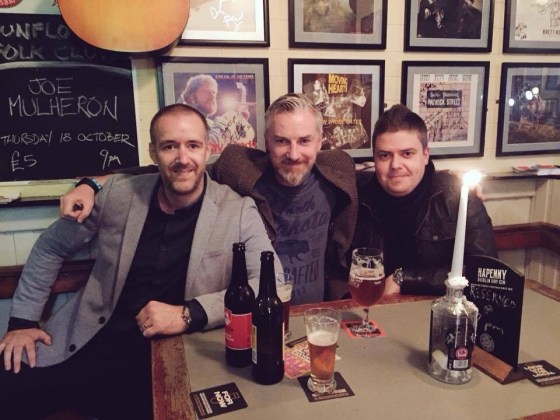
However, last night I did go to a bar and I drank. The occasion was a catch-up with two former colleagues from my newspaper days. Although none of the three of us work in the daily news market any longer we’ve all loosely stayed in contact and had been trying to organise a get-together for close to a year. Finally we managed to set a date which was mutually convenient.

My original intention had been to drive to the bar and home again at the end of the evening. As I prepared myself I did wonder what my old mates would think about me not drinking. I’ve not been out with them since I’ve been abstemious. Indeed the last occasion I drank with these mates was the very last time I was drunk. A heavy night in their company finally persuaded me to kick the alcohol habit.

I readied myself for some good-natured ribbing but assumed they would be understanding and supportive.

And then fate intervened. Shortly before I was due to depart a nasty traffic accident brought the roads between my house and Belfast to a standstill. I was faced with the unwelcome prospect of being stuck in traffic for a sizeable part of the evening when I should have been catching up with old friends.

So I abandoned the idea and jumped on a train. Ten minutes later I was in Belfast City Centre dandering towards a pub I had never visited before in my life.

I met my friends at the bar. One immediately asked me what beer I wanted. Perhaps I was already a little bit intoxicated by the pleasure of seeing former colleagues so I just went along with it. I asked him to select an ale for me and was quickly given a dark bottle which contained liquid which looked like goat’s piss and tasted and smelled quite foul.

However, I stuck with it and soon we retired to a table in the corner and were blowing the dust off some of our favourite insults about each other. By the second or third bottle the goat’s piss had started to taste a little better. It was clear my mates were drinking a lot faster than I was but they didn’t say anything when I sat out a couple of the rounds.

Having not drank seriously in several years my resistance to alcohol was severely diminished. Soon it was a case of, as I think Wilde put it, alcohol, being taken in sufficient quantities, producing all the effects of being rightly pissed.

My head began to swim pleasantly. However, I was wary because I know it’s a small leap from there to spending the evening with your head down the toilet. I slowed down.

And the three of us fell into a routine of drunken banter. Most of this was built around anecdotes from the period we worked together in newspapers (‘d’ye remember the time when….’)

Frequent parts of the conversations were hilarious. But it was, I think, laced with a trace of poignancy. Poignancy borne of the fact that the common experience that had bound us all together is now gone, that in a very narrow sense our professional lives are not as interesting or fun as they once were. We’re all in different places now. In the end it became like that Bruce Springsteen song where the characters all sit around talking about how great things used to be.

It was my first drunken conversation in a long time but it was just like all the rest, looking backwards rather than forwards.

And then it was over. Except it wasn’t.

I had left myself plenty of time to walk back to Great Victoria Street station to catch the last bus home to Hillsborough. But one of my friends was travelling in the same direction and floated the idea of a last pint in The Crown. I was pleasingly drunk at this point and idiotically agreed.

We supped the pints and talked nonsense agreeably until my mate looked at his watch and we concurred that the position of the hands proved beyond reasonable doubt that I had missed my bus. This meant I had to wait forty minutes to get the last train to Lisburn.

Eventually it arrived and was full to capacity. I had to stand the whole way while a group of drunken women on their way home from a night out danced, tripped over each other, laughed and sang chart songs.

When I reached Lisburn I tried to phone several taxi companies but was met each time with a voice of exasperated amazement that I would be so foolish as to expect that a taxi may be available.

Eventually I conceded that I would have to walk. It is probably about four miles from Lisburn train station to my house. When I reached the outskirts of Lisburn it began to rain. Heavily.

As I got to the countryside a couple of times I had to disappear into a darkened field to relieve myself. I trod miserably and wet along a lengthy stretch of the A1 where there are no streetlights and it was so dark I could not see where I was placing my front foot.

At some point after 2 am I reached my house and collapsed, exhausted into bed. I was very sober by now.

When I woke this morning, my feet still aching, I checked my phone. I had a message from one of my mates.

‘Great night lads. Let’s do it again soon 👍

0

Dippy the dinosaur and the toilet step

It was a photo in the newspaper which first got me interested in Dippy.

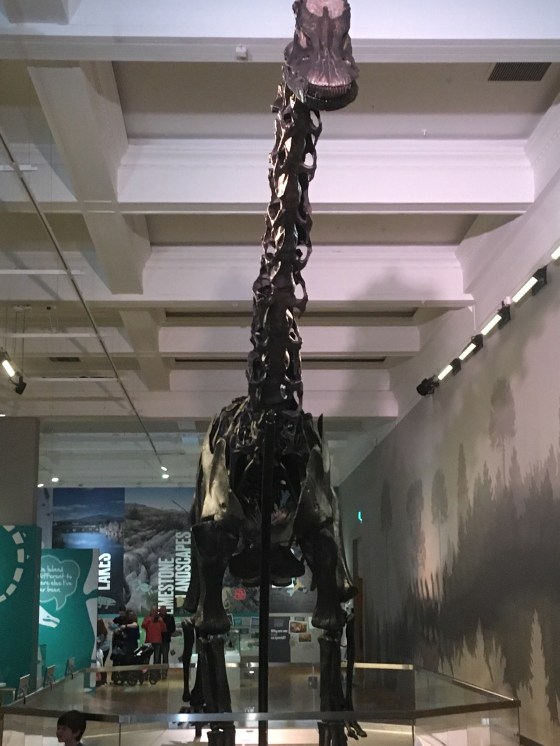
The 70ft long plaster cast replica of the fossilised bones of a Diplocus carnegii dinosaur is currently on display in the Ulster Museum in Belfast as part of a UK tour, and all the hype suggested it was something that kids just had to see.

The images in the papers which launched the exhibition echoed the point. Perfectly groomed primary school children with their mouths open and eyes stretched wide as they encountered the giant dinosaur for the first time.

Now, as a former newspaperman myself, I can be quite cynical about what appears in the printed press. I know the tricks of the trade and the likelihood of the photographers instructing the children to adopt an astonished reaction is quite high. Perhaps the image was taken a few times until the persistent snapper got exactly the shot he or she wanted.

But this was not the occasion to be sceptical. My wee man loves dinosaurs. He has a large collection of dino toys and already knows the name of more prehistoric animals than I ever will. He regularly compiles lists of his favourite dinosaurs (as of yesterday the roll of honour was 1 brontosaurus, 2 T-Rex 3 stegosaurus).

And here was an opportunity where the most viewed set of dinosaur bones in the world were just down the road. When I told him last week about Dippy I said it was something we had to see because he would remember if for the rest of his life. I promised him that we would go soon.

Mummy was off work yesterday so we decided to surprise him with a visit to the museum after school. The three of us chatted excitedly on the way about what we were about to witness.

The museum has worked hard to make it an unforgettable experience for young visitors. As soon as you enter the building friendly staff members give kids ‘I’ve seen Dippy’ stickers and there are green dino footprints and signs erected pointing the way. In the waiting room, next to the hall where Dippy is on display, there are little peepholes where young ones can have a sneaky peek before they are admitted.

Soon it was our turn. My wee man ran and bounced into the room. He spent a few seconds gazing upon the majesty of the huge collection of dinosaur bones which dominated the space, then he turned to us, smiled sweetly and said…

‘OK, what else is there to see?’

It was, in truth, not quite the reaction I had been expecting.

The Dippy room is packed with dinosaur facts and art projects but, it quickly became clear, my son had seen enough and was ready to move on. I managed to stall him for a few more minutes, trying to draw his attention to the size of Dippy’s feet or the length of his tail, but soon I had to concede what was obvious, he was already bored.

We left the room and descended the stairs, pausing to look at a few other artefacts and exhibits. He clearly wanted to see everything, but only for a fleeting moment, before he rushed on.

He became truly animated only once.

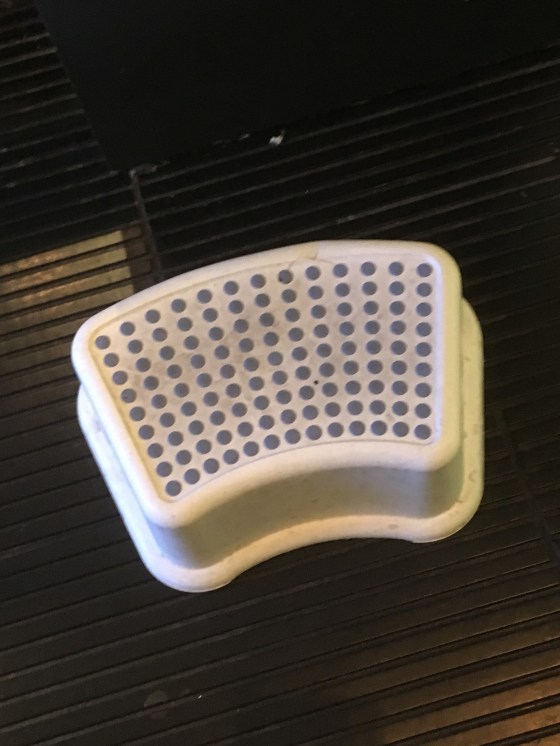
It occurred when he spotted a little plastic step beside a glass case. He came running to find me.

‘Daddy! Daddy! Come and see! It’s the same wee step that we have at home! The one that I use to climb onto the toilet!’

This got him more excited than Dippy.

Our visit inevitably ended in the museum gift shop. We probably spent ten times as long here as we had in the Dippy room as my son pondered and agonised over which small toy to buy. After an inglorious display of indecision, and with my threats that he would leave with nothing hanging over him, he eventually settled on a roaring stegosaurus.

He explained: ‘Stegosaurus is my third favourite dinosaur and he has some blue on him, and blue is my favourite colour.’

Then we drove home. The car was a more subdued place now as exhaustion overcame us all. My wife and son went to bed early and I was left to reflect into the late hours upon what had happened.

I had promised my boy that Dippy would be an experience he would remember for the rest of his life. Perhaps I felt a little cheated that he had dismissed so quickly what I had spent so much time building up. If there was a little bit of pique within me it was because it had not worked out the way I had imagined.

And therein lies one of the conundrums of being a parent. Understanding that my experience, or even my perception of what that experience should be, is not the same as my child’s.

I suppose I want to write a beautiful narrative of exactly how every day will work out for my boy. But it is my narrative, not his.

Just like this blog is mine and not his and the events described in it are reflected through the prism of my consciousness. Perhaps some day, if my son ever reads these words, they will all seem foreign and unfamiliar to him because it is not the experience he remembers.

The way a child thinks is so different to an adult that they may as well be a different species. But it is adults who write the children’s stories. That is why we spend a lot of time talking about things like Dippy, and no time at all talking about the excitement of finding an exact replica of your toilet step.

When my son woke this morning he immediately wanted to play with his dinosaurs, to introduce his new stegosaurus to the other toys. He talked a lot about our museum visit as I drove him to school. He proudly wore the ‘I’ve seen Dippy’ sticker on his school jumper and as he met his little friend at the school gate he immediately began to tell him all about the dinosaur museum.

And then it occurred to me that it was a special occasion for him. Perhaps because he’d seen the most famous set of dinosaur bones in the world. Maybe because he’d got a new toy or found a match for his toilet step. Possibly just because we’d done it all together as a family.

Maybe, just maybe, he will remember it for the rest of his life. And then, when he wants to, he’ll tell you exactly why. And that’s just the way it should be.

2

The Parkrun odyssey goes on

Like all journeys in life I found that the best way to approach the Parkrun odyssey was to run straight at it.

Once I had announced my intention to complete each Parkrun in Northern Ireland (https://whatsadaddyfor.blog/2018/09/02/my-parkrun-challenge/) and basked in all of the congratulatory words and messages of good luck, then I really hadn’t left myself any alternative. I was going to have to do this.

And so it began. Travelling to new locations, searching for the starting line, familiarising myself with the route, meeting new runners every week.

I was worried that a sense of staleness or unwelcome obligation might soon set in. But the truth is that every Parkrun is different, they all have their own unique personality.

Wallace Park has the bandstand where everyone gathers for a chat and a sticky bun. Carrickfergus has all of those crazy bends. Victoria Park has the talking toilet and the beautiful views. Valley Park has that brutal hill – which you have to run up twice. And Ormeau Park has the numbers. If you want to run a PB at Ormeau then get yourself near to the front or else you will be swallowed in a sea of good-natured participants.

But there is also a constant theme which unites all the Parkruns. The welcome that you get. The sense that we’re all in it together, regardless of individual levels of fitness.

Often I’ll meet someone I know. If not then I’ll usually find someone new to talk to, sharing some common experience. I’m not much of a conversationalist but the Parkrun gives you a starting point for a chat. How many have you done? What’s your PB? Watch out for the hill.

Since I’ve blogged about the Parkruns I’ve had dozens of messages from other runners and invitations to come to their local courses. I’ll get round them all in time and hope to meet with everyone who has contacted me.

I need to get out of the greater Belfast area soon. Next week I’ll aim for a more distant location.

Ormeau yesterday brought a new experience when I was addressed mid-run by a man who patted me on the shoulder, told me he had read my blog and loved it, and wished me all the best for my tour. It was a lovely moment which helped to sustain me just at a point when my energy was flagging.

And I had anorher welcome encounter. One which perhaps sums up the inherent social value of the Parkrun. The fact that it makes you get up in the morning and go out to see people.

I have an old friend who does the Ormeau run. A work colleague who I sat beside in an office for years. For a long period we probably spent more time with each other than we did with our own spouses.

And then our lives moved in different directions. We both took up different employment opportunities and had families. For longer than I can remember we have been promising to meet up for a coffee, but never quite managing it.

But there she was at the Parkrun. So we swapped stories about our jobs and children and how unfit we have become. Then we did the run. Then we chatted some more and posed for photographs.

As we said goodbye we promised that we’d have to meet for that coffee soon. I also promised to come back to the Ormeau Parkrun. We’ll see which happens first.

The Parkrun challenge goes on…..