2

Kumon down, the price is right

Until today there hadn’t been any promotional literature sent home in my son’s schoolbag for a couple of weeks.

There was a part of me which wondered if, after all the debate about the Slimming World and cosmetic dentist leaflets, an instruction had gone out not to give my boy anything that I might be tempted to write about.

And it did spark an almighty discussion when I blogged about it.

Countless angry parents contacted me to say that they thought it unacceptable that promotions for private companies were being placed in a child’s schoolbag. I thought this was a valid point.

Several others told me that it wasn’t worth making a fuss about and the best thing to do was just to bin the leaflets. There were bigger things to worry about. I thought this was equally valid.

One mother seemed quite peeved and asked me if I had nothing better to do with my time. When I honestly answered that I hadn’t, she unfollowed me. Such is the lot of the blogger.

And so today, secreted among the schoolbooks, I discovered another leaflet. This time for Kumon Maths and English Study Centre.

I had no idea what this was so I went surfing. It turns out Kumon is a private education system designed by a Japanese maths teacher in the 1950s. It has since spread all over the world. It’s big business. There’s a centre just a couple of miles from our house. It provides after-school tuition for children.

The leaflet which was sent home offers a two week free trial.

What it doesn’t mention are the prices if you decide to continue with the study. It’s £30 registration and then £65 per subject each month, according to the Lisburn Kumon centre’s website.

So what we have is another private business being advertised via the schoolbag.

Of course it can be argued quite reasonably that it’s easier to defend this practice when it’s tuition in maths or English (private though it may be) rather than an ad for a slimming company.

But here’s the bit that confuses me.

Yesterday the parents of P1 pupils were asked to come to the school so the curriculum could be explained to us. Many of us complied.

Let’s look at what they told us about mathematics. The presentation said it’s practical based, numerical concepts reinforced through structured play. One of the teachers went as far as telling us we wouldn’t be seeing any maths equations in exercise books for a while.

It’s a world away from how I was taught maths in P1, but I’m happy to trust the system and go along with it.

But when I look at the maths programme offered by Kumon for young children, it’s very different.

Their website talks about a daily ‘worksheet based programme’ allowing students to develop ‘an affinity for mental maths’.

The website says this: ‘At Kumon we place great importance on children understanding how a calculation works and therefore their ability to select the most efficient approach to solve a problem. This is achieved through individualised instruction and the use of traditional methods.’

So, on the face of it they seem to be describing two completely different systems for teaching maths. Structured play v traditional methods. It’s night and day.

Would following both approaches be confusing for a young child? Does it undermine the school system if another method is being taught simultaneously?

And how does Kumon sit with the local school curriculum?

Their website says this. ‘As a global programme, Kumon does not follow a school curriculum, but rather is complementary to curricula across the world.’

Which is grand. It’s great to give people choices and not to be overly fettered by narrow systems.

But it doesn’t answer my basic question. Why does the school tell us one day how we can assist in following a curriculum but the very next pass out promotions for an education company which operates outside of that very curriculum?

Is the leaflet a case of the school advocating the Kumon system for those who can afford it?

Or is it something else?

Since I posted about the previous leaflets several parents have told me there is a flat-rate charged for the distribution of leaflets by the school.

So has the schoolbag simply become a conduit in a mercenary exercise?

Is it simply a case of Kumon down, the price is right?
1

The school curriculum 

Things are getting serious now.

All the parents of P1 pupils have been summoned to the school hall. We’re going to hear about the curriculum. More specifically we’re going to hear about what mummies and daddies can do at home to assist the school curriculum.

It’s the moment I’ve been dreading. The moment when my carefully spun narrative over the last four years that it’s all just fun and larks begins to unravel.

I’m expecting my son to come home from school any day now and exclaim angrily ‘You mean there’s a point to all this shit?!’

The room is full of impatient parents. Mummies and daddies I’m used to seeing casually dressed at parties are wearing their smart work clothes and glancing nervously at their watches. I know how they feel. This is exactly the time when I would usually be having my first slice of cake in the cafe. I’ve made the effort today though as well, putting on a pair of trousers which don’t have an elasticated waist and getting my coffee to go.

To be fair the teachers don’t appear enthusiastic either. Sitting at the front surveying the parents like how I imagine a group of student nurses on their first day at the leper colony might look.

One of the teachers begins by noting that there are a number of babies in attendance and if they start to cry would their parents mind slipping outside. She’s very polite about it but it does make me think of a Donald Trump rally. While she starts to explain the curriculum I’m lost in some daydream where Trump is in the room, jerking his thumb at a crying baby and yelling ‘Get the hell out of here!’

I must have started giggling because mummy nudges me in the ribs. One of the teachers is explaining about learning through play.

I play a lot with my son. Often it involves him leaping on top of me and kneeing me in the testicles. I’ll retaliate by giving him an abrasive beard rub. Sometimes one of us will break wind and blame it on the other. I wonder if this is the sort of thing the teacher has in mind.

I’m particularly interested in how reading and writing is being taught. I’ve got hazy memories of interminable days copying out the letter A in my exercise book in P1 while a demented teacher lurked close behind with a taped ruler twitching in her hand. After what seemed like six months we went on to the letter B and so on. I’m able to read and write at an acceptable level so I suppose it must have worked for me. However, there were a number of my peers whose levels of literacy were wretched when they left primary school.

It’s very different now. The children learn a system called Jolly Phonics where more importance is given to learning the sound than the name of the letter. Each sound also has an accompanying hand movement. The sounds are then put together to form a word. The first sounds they are learning are S, H, A and T (I might have gotten a little bit mixed up there, there’s been a lot of new information to absorb).

The teachers say it’s scientifically proven to work. It’s a fascinating area, trying to unlock a child’s potential towards a new process. We’re told to practice sounds at home with him after school.

Maths seems a bit more fluid. No written work as such but practically based activities through structured play which encourage the concept of learning numerical concepts. I can grasp this. How many chocolate biscuits can daddy eat before he has to unbutton the top of his trousers?

History, geography and science seem to have been replaced by the World Around Us, which means the textbook I bought him on the fall of the Weimar Republic was a big fat waste of money.

Then the teachers talk about the importance of punctuality, structure and discipline. They say the single most important thing they want us to take from the day is the concept of teaching your child to do what an adult tells them.

I lean across to my wife and whisper ‘That’s us fecked then, we’ll have to look at home schooling’ but she pretends not to hear.

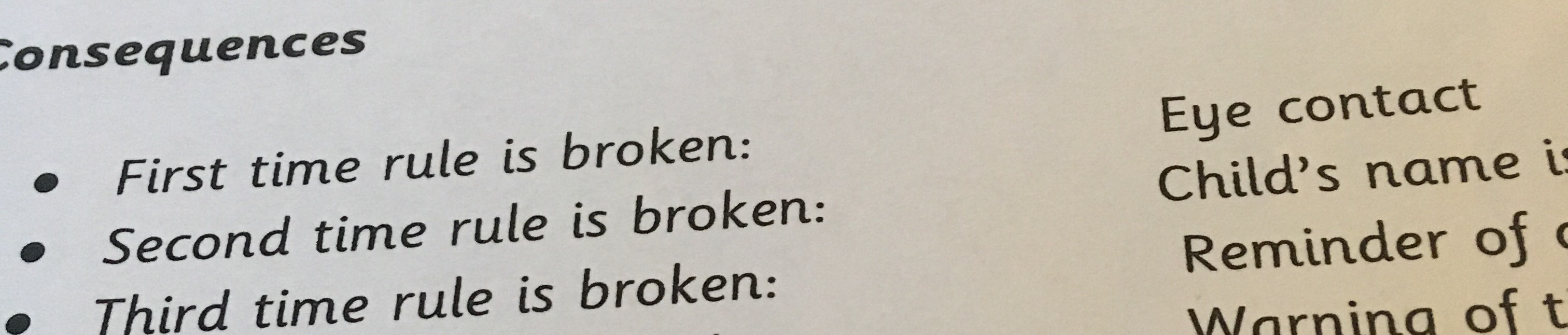
There is a list of six consequences for bad behaviour. The punishment the first time a rule is broken is ‘eye contact’. I’m not sure what a child thinks of this but it scares the shit out of me.

I wonder if a similar sliding scale existed when I was at school. First time rule is broken: Beat repeatedly with ruler. Sixth time rule is broken: Fractured skull, concussion optional.

The meeting breaks up without fuss or the option for questions. We have to go and sign a leaflet to confirm our attendance and to pick up some forms on E-safety and healthy packed lunches.

As we’re waiting in the queue I say to my wife ‘That went OK’ and she gives a little nod which I’ve learnt over the years means ‘Well you haven’t done or said anything stupid. Not yet anyway.’

At that moment I realise that I’m holding my paper coffee cup horizontally and the remnants of a cold, milky cappuccino are cascading all over the floor, splashing over other parents’ shoes and trousers and leaving a large sickly brown puddle on the wooden floor.

As always in the face of disaster I go on the attack.

‘Look what you’ve done!’ I bark at my wife.

She reasonably points out that she’s not holding a cup, torpedoing my desperate defence.

One of the other daddies produces a cloth handkerchief from his pocket and sinks to his haunches to clean the mess. I feel that I really should help him. I don’t.

Then one of the teachers comes over with a plastic warning sign which says ‘Wet Floor!’

She casts an accusatory glance around us. I hide the plastic cup behind my back. I meet her eyes and then nod my head in an incriminatory manner towards another daddy.

I roll my eyes.

‘Grown ups, you can’t take them anywhere.’

0

From the mouths of babes

It’s week two of drama class.

After my simian experiences from last week (https://whatsadaddyfor.blog/2017/09/20/getting-into-character) I ask my son if he wants to go into the class on his own this time. No dice.

So again I’m sitting in a circle with the group of P1 and P2 children who are peering curiously at me. I feel like Rodney in that old episode of Only Fools and Horses when he has to pretend he’s a child to get a free holiday. I feel like a plonker.

Jo, the angelic, patient instructor gives me a little smile. Encouragement or pity, I can’t tell.

She welcomes everyone to the class with girlish enthusiasm. Boy 1 asks her if we’re getting a bag of sweets this week (I’m keen to know myself, but didn’t like to say). Jo smiles.

We start by playing a game which is new to me. Duck, duck, goose. For some reason I can’t seem to grasp the rules and it quickly descends into farce.

What happens is that boy 2 walks round the circle tapping everybody on the head and softly saying ‘duck’, until he gets to me when he wallops me painfully on the back of the skull and screams ‘goose!’

I stare vacantly at him. Eventually Jo explains that I’m supposed to chase him. I half-heartedly comply.

Then I sit down again. Boy 2 calls me a ‘dimwit’. Jo tells him that’s not nice and asks him to apologise. He glowers at me. Jo smiles.

Boy 3 then walks around the circle tapping everyone on the head and quietly saying ‘duck’. When he reaches me he whacks me painfully and bellows ‘goose!’ right into my ear. I chase him around but it’s not clear what I’m meant to do if I catch him. I assume tripping him up is forbidden.

Jo persists with the game for a while but eventually abandons it when it becomes clear the children are simply using it as an excuse to whack me on the head. One of my ears is ringing slightly.

Boy 1 asks her if we’re getting a bag of sweets this week. Jo smiles.

Then she gathers us in a circle and asks us to guess what’s in her bag. Boy 2 suggests that it might be poo. Jo smiles. It’s not poo, it’s a toy rattlesnake called Rex.

She lets us all touch Rex, as if it were a real snake. Boy 3 asks if he can see Rex’s guts. Jo smiles. When boy 2 is holding Rex he says that a frog once pissed on his mummy’s hand. When Jo expresses scepticism Boy 2 tells her that his mummy then licked the pee. Boy 1 tells her that his mummy eats dog poo. Jo smiles.

She starts to tell a story about Rex. It involves him not being very good at dancing (no arms and legs you see). I’ve got empathy and nod sadly but Jo seems to have lost the rest of the room. Boy 3 is lying stretched out on the floor making farting noises.

Boy 1 has moved behind Jo and has picked up her phone. He is pressing keys manically. I decide I’d better warn Jo and she jumps upright in alarm. She tells boy 1 that he’s not allowed to be invasive. He sits down and gives me a wretched look which seems to suggest he’ll get me later.

Boy 1 asks if we’re getting a bag of sweets this week. Jo smiles.

It’s time to act out a short sketch now. I happily volunteer to be a dancing penguin. It just feels right. But everybody else wants to be a snake. She asks boy 3 to be a swan. He roars back ‘I hate bloody swans!’ Jo decides he can be a snake.

While we’re acting out the sketch boy 1 is rifling through Jo’s handbag. I decide to let it go this time. I do an admirable solo number as a tap-dancing penguin but it can’t save the sinking ship.

Boy 2 is supposed to be a bear. He’s lying flat under the table, apparently asleep. When Jo asks him why he’s not dancing he says the bear is dead. Our sketch concludes. Jo smiles.

It’s time for colouring in. Fittingly a picture of a snake. I try bravely but boy 3 tells me my picture looks like poopy pants. I’m a little hurt but I can sort of see where he’s coming from.

Jo takes the sweets from her bag and starts to distribute them. But it’s individual sweets rather than packets this week and boys 1,2 and 3 protest angrily. I’m carried along by the raw emotion and have to stop myself from yelling ‘I only came for the fecking sweets!’

Jo gives boys 1,2 and 3 another sweet but the tension in the room is unmistakeable. Jo smiles weakly.

Then it’s time to gather our belongings. Jo is handing a schoolbag to boy 2 when it becomes clear he is about to sneeze. Jo tries to warn him but before the words come his head jerks forward violently and a huge sneeze erupts right in her face. There are bits of snot in her hair and on her eyelashes.

I can see Jo fighting for composure. Trying to choose the right words.

‘Your mummy wouldn’t be very happy with you doing that’, she eventually says, wiping little specks of green from her face.

‘My mummy told me to do it!’ boy 2 fires back without missing a beat.

Jo tries to smile. She can’t quite manage it.

The class is over. Parents are outside in the corridor, waiting to pick up their children. For a moment I look enquiringly up and down before I remember I’m supposed to be the parent.

I see Jo as I’m walking with my son to the car.

‘See you next week,’ I say brightly.

Jo smiles.

4

The sleeping arrangements

There are certain subjects which inevitably stir strong reactions in people.

Immigration, traffic wardens, Donald Trump’s foreign policy.

Children sleeping in their parents’ bed.

This last one was brought to my notice recently when I saw a comment from a woman I don’t know on Twitter. She told how she had been left upset by the negative reaction after revealing on social media how her three-year-old daughter slept in her bed. She was now wondering if she was a bad mother, like so many people were telling her.

Leaving aside the obvious point about online trolling, I was struck by the strength of the backlash against such a seemingly innocent practice.

I generally avoid Twitter debates and I usually try not to burden people with my advice but I sent a message to this mother telling her to pay no attention to what people who have never met her child think. I suggested she knew her child best and told her to enjoy every moment of it.

A few minutes later my phone flashed a little message that she had liked my reply.

But, as often is the case, it’s easier when you are talking about other peoples’ issues than your own. This is a post which I’ve put off writing for some time. And a subject that I’ve often waltzed around.

But now it’s time to grab the aardvark by the protruding nasal implement.

My four-year-old boy sleeps in our bed.

I’ve usually struggled to be quite so direct when talking with other parents about his sleeping arrangements for exactly the same reason that bothered the mother on Twitter. The questions over my parenting judgement. Concern that someone will think I’m causing my child harm.

I met a father recently who told me he had fitted a lock to his bedroom door to keep the children out. This seemed absurdly extreme yet I just nodded and smiled along as if it was normal practice.

In our house we’ve always operated an open door policy.

My son has his own room with his own little bed which he loves. He often plays in there. Several times we’ve tried strategies to get him to spend the night in his room, with varying degrees of success. But in the end he always seems to find his way back to where he is most comfortable, snuggled in the warmth between mummy and me.

He’s obviously ok with it. I’ve probably spent more time thinking about this than any other parenting subject but I always come back to the same conclusion. I’m ok with it too.

Just to get a few things straight. I’m not advocating very young children co-sleeping, the dangers of that are well known. Similarly if our boy is still sleeping with us when he’s 14 then I think it would be time to call in help.

But he’s four. He likes to do it. We like having him there. Does that make it OK to co-sleep? What’s the consensus?

As a test I Googled the phrase ‘children co-sleeping’.

The first page of results throws up the following: ‘9 ways co-sleeping affects your child’s personality’, ‘The dangers of sleeping with an older child’, ‘Why the benefits of sharing a bed with your children outweigh the risks’, ‘Five benefits to co-sleeping past infancy’ and ‘Your kids’ bad sleep habits caused by co-sleeping’.

The first one I read suggested co-sleeping causes anxiety in children. The second said children who co-sleep have less anxiety.

Are you finding this helpful?

Like most things in life there’s plenty of supposed evidence and research to confirm your own particular bias, whatever it may be.

Like most occasions in life I’m forced to ignore all the contradictory advice and use personal experience to mould my own thoughts and opinions.

There are plenty of evenings when I’ve wished our boy was in his own room, anywhere other than in our bed. When he wakes you up for the sixth time in a night looking for a drink, or when his feet push me out towards the furthest, coldest edge of the mattress. When he yanks the duvet away.

On the other hand there are the cuddles, the warmth of him against me. Watching his little chest move up and down. Wondering what’s happening in his dreams. Holding his soft hand.

And the moment when he wakes up in the morning and gives you that sleepy smile.

But it’s not really about me. It’s about what’s best for him.

Usually the simplest question is the right one. Does it give him the best night’s sleep?

Sometimes I watch him in the night, he’s asleep but reaches his arm out to touch mummy or me, just to make sure we’re still there. There’s obviously a comfort in that for him.

He sleeps well in our bed. His mind is settled. When I see him lying beside us he always seems happy.

But does the practice have an impact on his personality?

Yes, he can be overly-sensitive, a bit clingy, sometimes afraid of new things. But I’m not sure I understand how forcing him into a room on his own at night would alter that. Not through any method that I like anyway.

On the other hand he’s emotionally open, full of affection and certain of the love of his parents. Just like many children who don’t co-sleep.

So I suppose you just have to go with your gut. Your parental instinct of knowing what’s best for your own kid. Because you’re the only one who really understands them.

My suspicion is that putting him into his own room at this stage would lead to more nights of broken sleep for all of us. More incidents of waking in the dark and calling out for help. More tears. More fear.

Most things which I’ve tried to impose on my son in his short life haven’t worked. I’ve learnt that it’s usually best to let him get there at his own pace. I’ve got confidence that more often than not he’ll find the right way.

And I think it will be that way with sleeping too. There’ll come a point, probably not too far off in the future, where he’ll decide it’s simply cooler to be in his own room.

Until then I’m going to enjoy every single cuddle.

0

Suspicious behaviour 

I received a text message from my son’s school today.

It warned about a man ‘acting suspiciously’ in the public toilets.

It took me a few minutes to register exactly what was happening.

First there was a jolt over the fact I’d got a text message (a rare enough occurrence).

Then there was the surprise that I was receiving a text from the school (I had no idea this was how they imparted information).

This then led to a moment of concern and indignation where I thought this was a personal rather than a generic message. For a terrible illogical moment I thought the text was about me, rather than for me.

But then the shilling descended. It was a warning to all parents to be vigilant due to a report of suspicious behaviour.

I was unsure exactly how to react to this. Of course a parent’s natural concern for the safety of their child trumps all other considerations.

But I also found myself curious for more information.

Acting suspiciously seemed to be such a vague phrase as to be almost meaningless.

And of course the thought occurs that this might be an overreaction, fuelled by illogical fears which magnify a risk greater than it ever needs to be.

I genuinely don’t know.

I have to trust the judgement of the school which decided this was serious enough to raise the alarm.

I suppose if there’s any concern at all then parents have the right to be informed. And a school seems to be the best channel to pass on information to a large number of parents.

The last line of the message said ‘Please be vigilant’. I’m not sure I know any other way. 

4

Old friends

I met a dear old friend for coffee this morning.

I hadn’t had a proper chat with this person in more than a decade. It’s shocking how lax we can be at keeping alive the communications which are important to us.

But proper friendships never age and soon our conversation had gathered its own momentum, a mixture of blowing the dust off old stories and sharing new photographs of kids and grandkids. There was no struggle to find the right words.

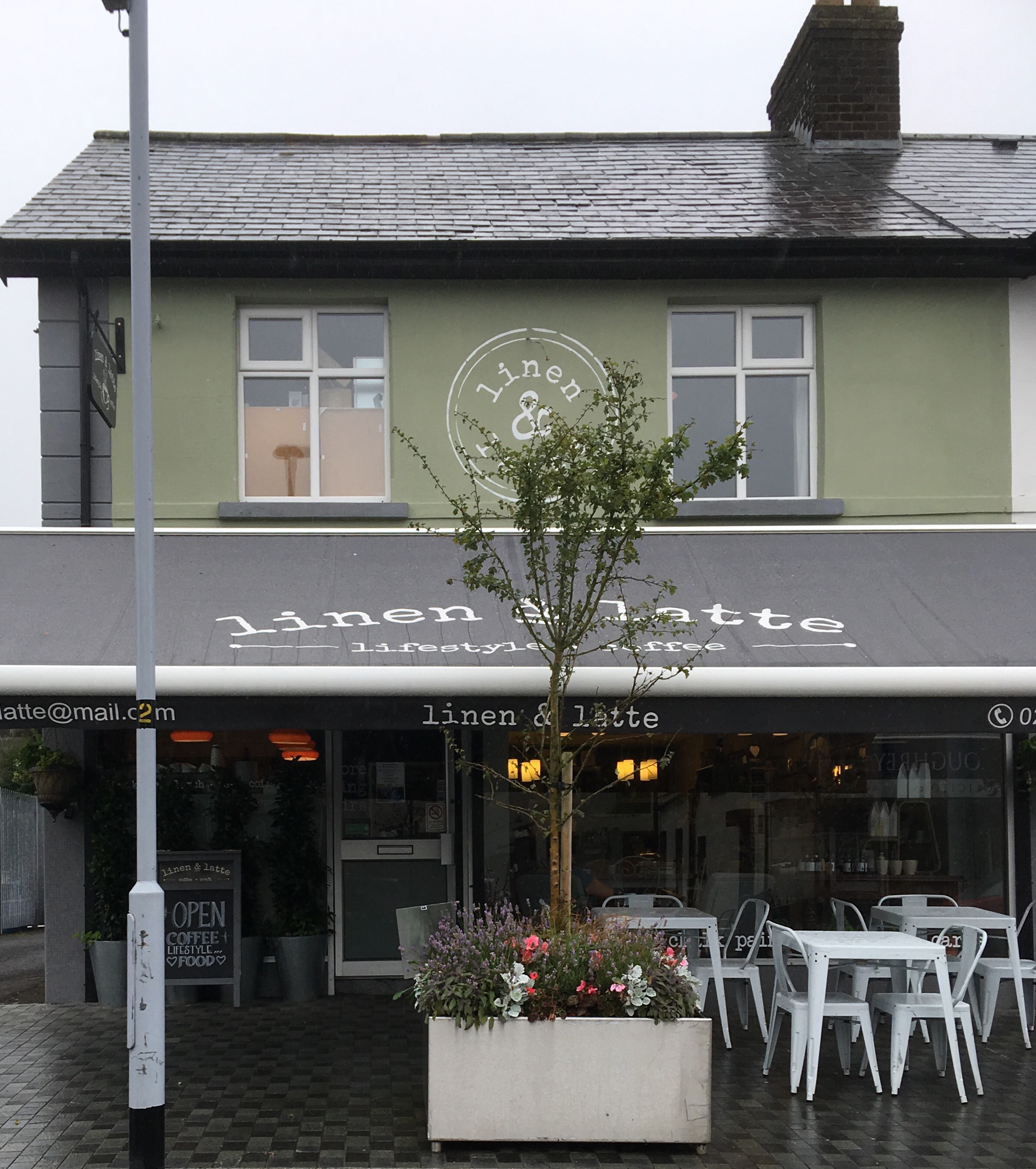
What was equally interesting was where we met today. A delightful little coffee and gift shop in the centre of Glengormley.

I worked in this same building almost two decades ago when it was the offices of the Newtownabbey Times newspaper.

I sat there and sipped a black coffee in the very same corner where my desk had once been placed. Back when I was a younger man, determined to leave an impression in the sand.

It was a lovely morning, but edged with just a tiny bit of sadness. All the things that have happened in those years. Have I become the man that I hoped I would be?

It was impossible not to think about the power of change. How the world spins just a little bit faster than most of us are comfortable with.

Every newspaper office I worked in during my career has now gone. The Ballymoney Times closed its office in the Co Antrim town years back. So did the Carrick Times. And the Newtownabbey Times.

These papers still exist but without any physical base in the town which they report about.

Even the Belfast Telegraph vacated its magnificent city centre office where I worked for more than 15 years in favour of a smaller base out at Clarendon Dock.

It’s easy to say that these events tells us something about the declining power and influence of newspapers, and undoubtedly that’s true. But what’s really different is the way we communicate now.

Sometimes when I’m training young journalists I tell them how I used to carry a pocketful of loose change everywhere when I was starting out, in case I stumbled upon a scoop and had to phone it in. Invariably they laugh, as if I’m a character in a Monty Python sketch telling tall tales from the far distant past.

But that’s how it was. And not that very long ago. I remember sitting in this very same spot of the Newtownabbey Times office when I heard the news about the September 11 attacks in New York.

The next morning we learnt that a Ballyclare man had been in one of the towers but survived. There was no internet in the office then. No social media. So I started where I always did in those days, with the phone book.

I went through every person who had the same surname in the directory until I stumbled across his mum. She gave me his number in New York and agreed to supply a photograph if we could call at the house. It was deadline day so I sent our photographer speeding down the road to pick it up while I called the US.

Luckily, despite the time difference, the local man answered. I suppose he didn’t sleep too well that night. Within an hour of starting the search I had finished the interview and written it up, the photograph had been collected and we were putting the package together to appear on the front page of that week’s paper.

It’s a form of journalism that might seem very primitive to many in the business today. But we learnt to be resourceful, persistent and crafty.

But soon the communications revolution was to change the profession profoundly. The same inherent personal skills were necessary but the outlets were radically altered. Like all changes, some things were positive, but there were also casualties. Budgets and staffing levels were slashed in many news organisations. Proper journalism was replaced in too many places by the insidious nature of the cut and paste industry. Curiosity seemed to have been squeezed out.

The truth is my son, like every other child of his generation, will probably never hold a newspaper in his hands the way I do. He’ll never sit down with a sandwich and just lose himself in the features or comment sections, enjoying the rub of the dry paper between his fingers, wiping the grimy grey ink off his hands.

But journalism will survive, perhaps better than before. Information has to find its channel.

And now, in the deepest irony of all, I’ve become the world’s least likely blogger. The man who still listens to the news on a battered old wireless which has the frequency for Radio Luxembourg marked on the dial (if you’re under 50 ask your parents).

But it has allowed me to feel the power of connection again and in a more direct way than I’ve experienced in the past. Analytics tell me I’ve got followers from Vietnam, South Africa, Sudan, United Arab Emirates, Chile and Peru.

I’ve met new people, some who I now regard as very good friends even though I’ve never met them in person and probably never will. My virtual friends.

I’ve also reconnected with many old friends, relationships which I’d unforgivably neglected over the years. My new old friends.

And this takes me back to my now tepid coffee with this voice from the past in the building which used to be my office. Where I learnt the trade.

My friend and I drink up and step outside. It’s raining now, a warm light spray which is pleasant and refreshing. We walk to her car and wish each other well. We embrace, holding it for a moment to make up for lost time.

She says she hopes we can meet again soon. I do too.

Nothing ever stands still and only a fool tries to live their life backwards. But in a virtual world of communications it is more important than ever that we still make the little effort to sit down together and talk.