0

Food, weight and the obsessive personality 

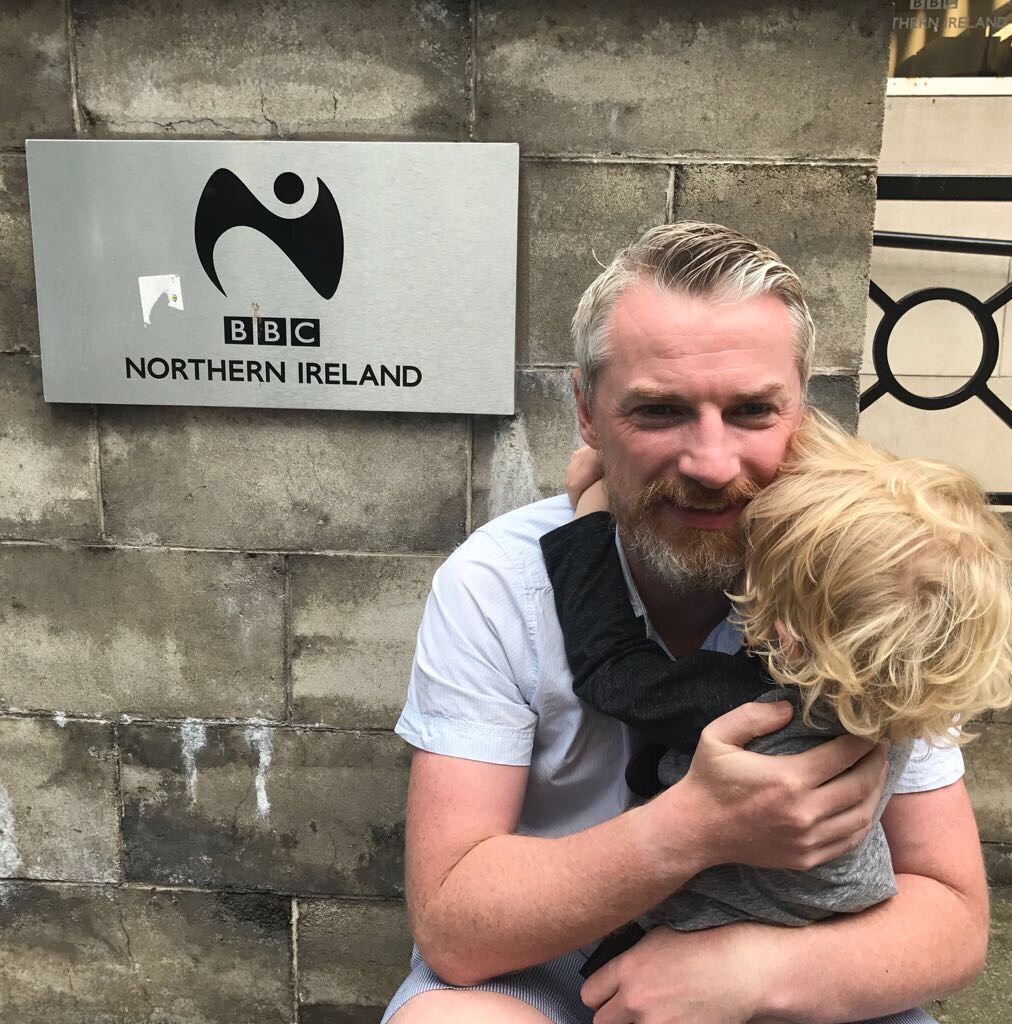
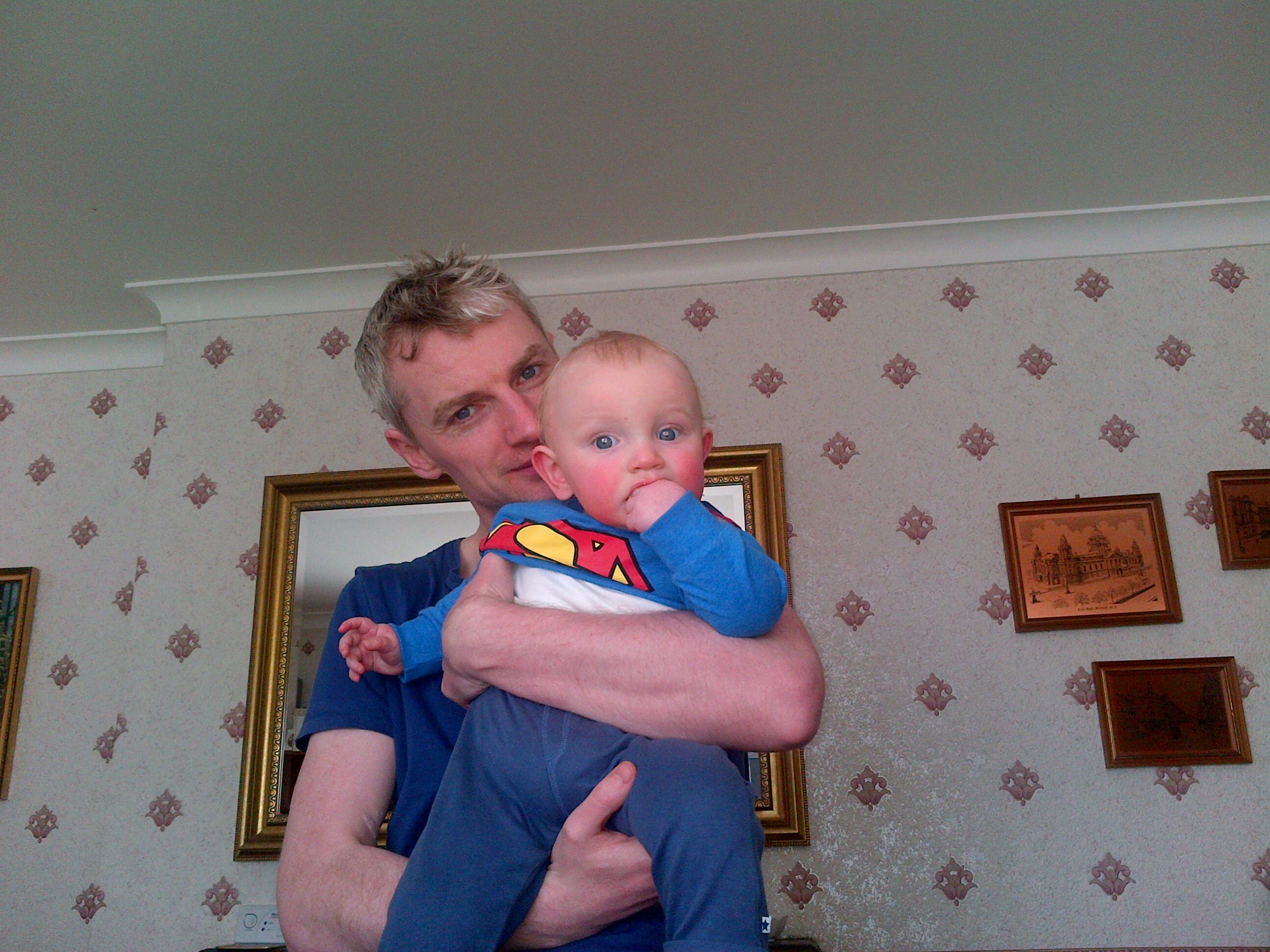
Take a look at the photograph above.

That’s me. About 16 months ago.

What do you see?

When I look at it now I see a man with haunted eyes who is thin. Painfully thin. Dangerously thin.

What is most scary is that I didn’t see that at the time. I looked at myself in the mirror every day and saw nothing wrong.

And yet people were warning me. Loved ones were telling me I had lost too much weight. Some people even asked if I had a disease.

And still I saw no problem. If anything I probably thought I could do with losing some more weight.

I don’t look like that now. My body, face and arms are a different shape. Much fuller. The pictures now tell a different story.

My brother showed me this photograph last week and it scared me. Not just because of my appearance but because of what it says of the remarkable capacity of the brain for self-deception.

How can you see that something is wrong when your brain projects a different image?

I should probably give some context. At the time I had just run a marathon. From having no athletic experience at all I trained obsessively for six months to complete the running challenge.

I was going through a tough time at work and my mental health was fragile. Looking back I clearly threw myself into a crazy training regime as some sort of diversion.

I was running six days a week. Getting up some mornings at 4:30am to do a 20 mile run before work.

But no matter how much I ran I could never shake the persistent feeling that I just wasn’t doing enough. My old friend the nagging doubt.

I also started doing strange things with my diet. I cut out gluten, dairy and sugar entirely. I lived on brown rice, nuts and canned fish for a long time.

I’ve always had a complex and difficult relationship with food. A troubling fascination about how my body will react when different things are put inside it. Or not.

This is woven into separate issues surrounding weight, body image and mental health. It’s such a difficult interdependency that I’m pretty confident I’ll never really understand it.

Or understand why it is that I do certain things.

As a young child I often remember being hungry. Where I grew up it was spuds for dinner every night. I was never too fond of potatoes boiled to the point of being almost souped so I sometimes went without.

We’d have a Rich Tea biscuit and a drink of water for supper but I often remember going to bed with a sore, almost empty stomach.

I think this drove in me a determination to be self-sufficient in the kitchen. I remember using the chip pan by myself when I was about eight or nine. Long before they were dangerous. But I had no proper understanding of food and no culinary skills.

Despite this I was a good eater. I loved school dinners and would gorge myself on the steamed puddings and thick custard that the other boys turned up their noses at.

Something changed when I was a student at Queens. At this difficult time some of my anxiety problems were beginning to manifest themselves.

I was becoming more and more conscious that my skeletal pale frame looked puny and absurd compared to most of my more muscular peers. I was very embarrassed about how I looked. I always assumed girls were laughing at my physique.

My diet lost all sense of structure. I found I had the capacity to go for long periods of time without food.

I never ate breakfast and very rarely dined during the days at all. Sometimes I would feast at night, having my first meal of the day at about 11pm. On other occasions I would not eat at all.

I also became aware of the first time of the link between food and what was going on in my brain.

For years I simply could not eat in the presence of other people, family and close friends excepted. My stomach would churn and my throat seemed to contract at the horrific thought of it.

This destroyed eating out as a social choice. I came to dread any situation where I had to eat in front of other people. Several times I had to invent lies about feeling ill to explain why I wasn’t having any food.

One year a close friend invited me to her house for Christmas. I shouldn’t have gone. Her mother plated a huge Christmas dinner which I couldn’t touch beyond moving the food around the plate pathetically with my fork. The mother looked horrified and I was humiliated.

It got so bad that on several occasions I found the only way I could stomach having food was when I was drunk.

But over the years things began to improve. In a sense.

As I started to assert my independence in life my interest in food deepened. I devoured cookbooks and taught myself the basics about how to prepare food properly and to make use of fresh ingredients.

My fears about eating out eventually melted away. I developed a love of the cafe and restaurant culture which remains among my dearest pleasures in life.

And so developed another problem.

I found that I couldn’t stop.

I simply didn’t possess the capacity to know when I’d had enough. The trigger in the brain which says stop just wasn’t working.

From the shy teenager who couldn’t eat a pick, I became a gorger.

In the morning I couldn’t stop at one bowl of cereal, I had to have four or five. If I opened a packet of biscuits then I wouldn’t cease until they were all gone in one sitting. I would buy a packet of six yogurts to last all week and then devour them all within minutes of getting home.

There was something about the way I ate as well. It was urgent. Like a force of nature not to be disturbed. I deplored people trying to talk to me as I feasted.

It could be quite embarrassing, if we were with a group in a restaurant. While all my peers were still stuffing their napkins into their shirts I was already finished and wanting more.

My wife also developed the habit of eating fast as well. For her it was an evolutionary defence against me stealing her food once I was done.

I existed on the edge of what is socially acceptable with food. I would ask others if they intended eating what was on their plate.

I stared longingly at the food on the plates of diners at other tables. I simply couldn’t comprehend that they could sit there chatting casually to each other while they hadn’t finished their food. It angered me that they could be so blasé about their meal.

It seemed absurd that society demanded that their leftover food should be binned rather than allowing me to walk over there and take it from their plates.

Some wives may suffer from husbands whose eyes are drawn to other women. Mine often had to tell me off for staring too obviously at someone else’s plate.

But the downside could be debilitating. The linkage of overeating with depression is well known. Often my most acute feelings of worthlessness came when I had eaten so much that I felt sick. I knew it would happen, I told myself to stop, but I just kept eating. Then I despised myself for the weakness.

But somehow I stayed slim. No matter how much junk I ate it never seemed to have any impact on my body weight or shape.

My thin frame, which had been a curse when I was a teenager, now seemed a blessing. I saw countless younger men’s bodies collapse into a middle-aged pear shape while I stayed relatively lithe and fit.

Well, for a while at least.

As I passed 40 things began to happen. There was hair on my body where it had previously been desert. My stomach, up to now admirably concave, collapsed into some sort of soft convex bulge.

So I decided to do something about it.

There comes a point in your life where you know you have to start looking after yourself. I also thought a fitter body would assist in combating my mental gremlins. It seemed to make sense.

Unless you’ve got a chronic depressive obsessive personality-type.

One of my first decisions was that I needed to drink more water. So I drank three litres every day. Exactly three litres. Every day. Not a drop more or less.

My wife bought me a watch with a step counter. I decided I had to do 20,000 steps every day. If it got to late in the evening and I was lagging behind I could be found walking incessantly around the kitchen table. I pulled all sorts of diversions to ensure that the step which took me into bed at night was my 20,000th.

Sugar, gluten and dairy were all binned from my diet. My kitchen cupboards were reorganised to be full of glass jars packed with nuts and seeds. Coffee was banned.

Just to offer some brief defence for my actions. I knew there was no point in me trying to cut down on something like sugar. The only relationship I have with sweet food is one of excess. The only hope I had was to banish it from the house.

And then there was the running. The endless hours of pounding the pavements.

I trained for the marathon through last winter, which brought a surfeit of nasty storms with names. I found myself running in the darkest, blackest mornings several times with gale force winds blowing sheets of stinging, icy rain straight into my face.

And yet I kept on going. I learnt that my willpower is like iron when I set my mind to a task. I was a victim of my own stubbornness.

And so I ran the marathon. In a decent time.

And then the photograph with which I started this blog post was taken.

Was I healthier than before? Perhaps in some ways.

However, my face looks haggard and drawn. The arms are skeletal. The torso so sickeningly thin.

But the real point is the look on the face. There’s no joy there. No love of life. There’s fear in the eyes.

Gradually I’ve drifted away from the fitness and dietary regime I set myself and my body is now pretty much back to where it was before I started.

I still eat way too much. I wish I could stop that.

I could probably do with losing a pound or two.

My son likes to make fun of ‘daddy’s big fat belly’ and plays a game where he slaps it repeatedly to watch it wobble.

Your physical health is like your mental health, it never stays static. There’s always a process of improvement or regression. You try to keep it moving in the right direction.

And you guard against the other. Because you don’t always see it in the mirror.

0

Mummy drinks the fish water

Some stories just demand a happy ending.

Ever since my original blog about my difficulties in buying a fish for my son (https://whatsadaddyfor.blog/2017/08/13/buying-a-fish-is-harder-than-having-a-baby/) the questions have just refused to go away.

Those who read it, all seven of you, will recall that I had bought the tank, filter, food, conditioner, a toy octopus and pink stones.

Just no fish.

Before we could get our boy his first ever pet we had to have our water tested in the shop to ensure that it was a safe environment for living creatures.

And now, the story continues.

I’m happy to report that as of today, we have passed all the stringent tests. Now we have fish swimming happily.

And it all went off without a hitch.

Well, kind of.

I had been treating the water for a couple of weeks, pouring in copious amounts of expensive liquid from little plastic bottles into the tank. Some bio boost. Some water conditioner. Some more of each.

Then the water turned cloudy. I wasn’t sure this was a good sign. I considered my options. I decided on adding some more conditioner. I don’t even use conditioner on my hair and here I was using dollops of it in an empty fish tank. I wasn’t even sure what it was supposed to do to the water.

The water turned an even murkier colour, like a swamp. I watched a fly buzzing around the room. When it flew near to the fish tank it seemed to lose its bearings before colliding with a wall and dropping dead to the ground.

Something didn’t seem right.

I thought best to dispose of this rancid water. As I poured it down the sink it bubbled and hissed. The poor fish will never know what a lucky escape they had.

I filled the tank afresh and decided on a new approach. I would read the instructions on the bottles this time. It turned out you only need to use a tiny amount, less than a capful. This was more promising.

When we were satisfied that the water had been suitably filtered, conditioned and boosted, we took a sample and headed off to the pet shop.

Now this part is worthy of some comment. There are usually plastic water bottles lying around our house. Both my wife and I drink a lot of water. It seemed logical to take a sample of the fish water in one of these bottles. Right?

I was driving the car. Mummy was in the back playing a running joke with our son where she was telling him not to drink the fish water from the bottle. He laughed along. The first six or so times anyway.

Then I heard a squeal from the back seat. The sort of noise which immediately makes you slam on the brakes.

I turned.

‘What the heck mummy?’

She was wiping her hand across her mouth in a sort of panic.

‘I drank the fecking fish water!’

‘Excuse me?’

‘I drank the fecking fish water!’

There are some things which happen in life which just defy explanation. The only thing I can put it down to is muscle memory. Put a bottle of water in the hand of someone who drinks a lot of bottled water and they may well take a slug without thinking. Even when playing a game with your son which involves telling him not to drink the fish water. It’s just what your arm expects to do.

I suppose I should just be thankful we hadn’t put it into a wine bottle.

And so it was that my wife, the mother of my child, a respected and serious news journalist, drank the murky water that we were bringing to have tested for the fish.

But it was worse. Having realised her mistake in the middle of the action, she then spat the remainder of the water back into the bottle.

So now the water which I had carefully cultivated and nurtured as a safe environment for fish, had partially been through mummy’s digestive system.

As I pulled into the carpark I wondered about how I was going to explain this to the man in the shop.

And now another confession. We went to a different pet shop this time. I simply couldn’t bear any more lectures from fishman, who starred in my previous post. I wanted to talk to someone who could relate to humans, as well as marine animals.

As my son remarks whenever fishman is mentioned in our house, ‘He just talked and talked and talked…..’

In this new shop we were assisted by a younger male who had what seemed to be a sea serpent tattooed on his arm. I took this to be a good sign. I like people who are committed to their profession.

He also had what could have passed for a trident pierced into his ear. I considered that he may be Poseidon himself in human form. But when I asked him if he liked Homer, he said: ‘Yes, but Bart’s my favourite.’

There was a nervous moment while he tested the water by dipping a stick of cardboard into it. Mummy was lurking in the background. She seemed to have turned a bit green.

But he turned cheerily and told us the water was fine.

Finally. Now, after a month, my son could do what we had all believed would be straightforward in the first place. Buy some fish.

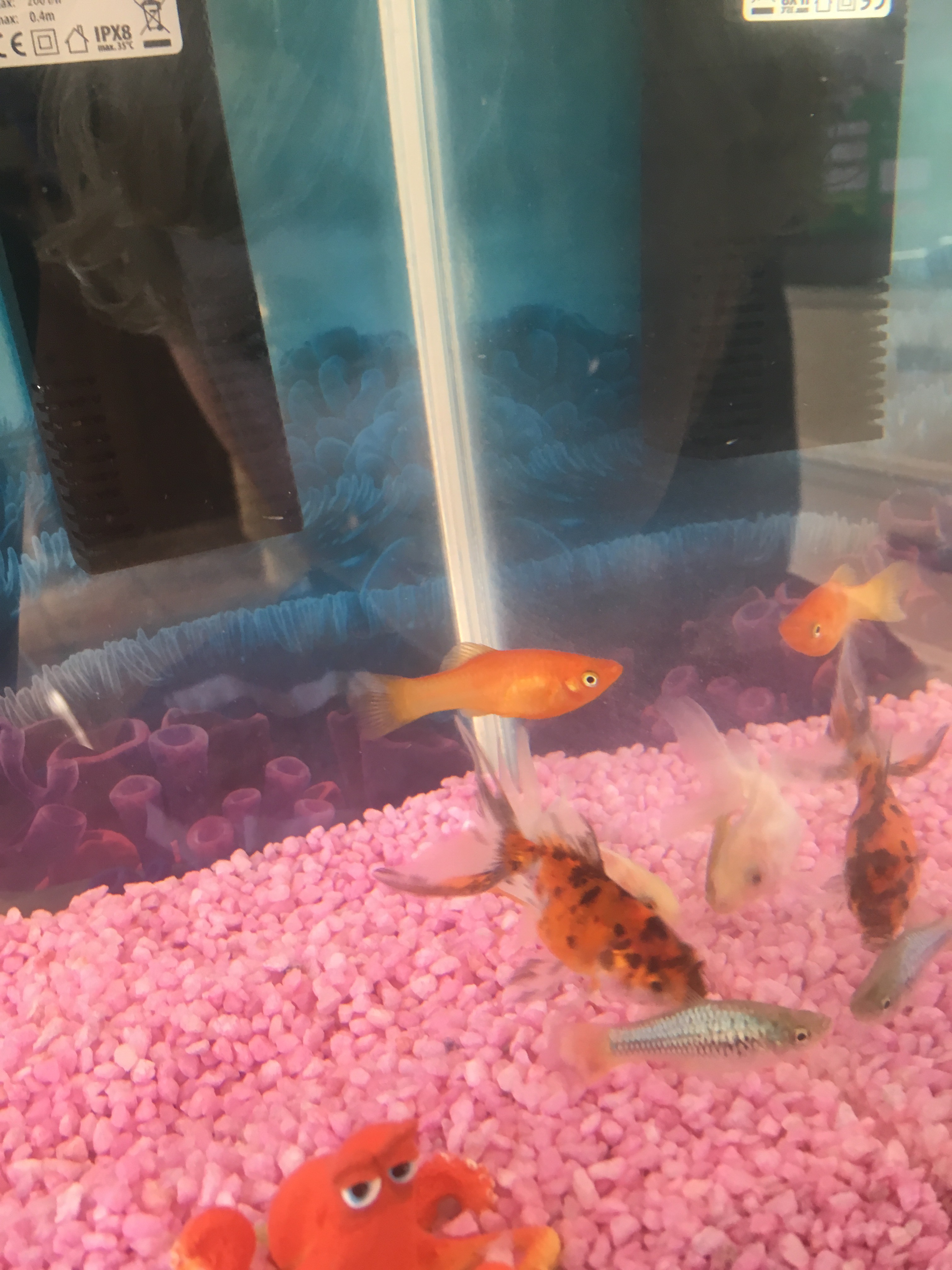
He selected five little lively ones. Ginger, Goldie, Larry, Harry and Matthew. They were duly chased, netted and bagged.

In fact this shop was even happy to sell us goldfish, something which fishman had warned us was illegal. I said to hell with it and bought a couple. I like to live on the edge sometimes. A soldier of fortune. I felt like B.A. out of the A Team.

Now the fish are happily ensconced, swimming around in our little tank. Our son is learning a little bit about responsibility, having taken on the job of feeding them.

He’s happy. I’m happy. It’s a good ending. The only unanswered question is the long-term effects of drinking fish water. We await with interest to see if mummy grows gills.

4

Leaving work. The Dark (part 4)

Sometimes the mind places undue significance on random events.

It’s a human frailty which, I imagine, afflicts us all. Encounters are slightly tinted through our recollections to suit a narrative.

Sometimes this can take the form of a distortion, by design or not.

On other occasions it manifests itself through a chance single occurrence being placed within a sequence of events, as if to prove an almost pre-ordained direction of travel. Like an autumn leave dropping from a tree onto the surface of the wide river and then being carried along in the strong current.

I’ve started this post in such an oblique way, I suppose, as a health warning against myself.

In this part of my story I will relate my decision to leave my job. To detonate overnight a career I had spent a quarter of a century building up. To make the biggest decision of my life. To walk away from something which had consumed and dominated my thinking for years.

My brain has selected a certain moment in my working life as a neat parable to convey how what had once been so full of promise was now infected with blight. A single moment when I knew I was finished as a journalist.

The truth, of course, is rarely so neat. The water is a lot more cloudy. The event was just that. An event. Just one grain of rice in the bag.

But it’s the only way in which I can think to tell this story.

Please forgive me for it.

I had worked in newspapers for more than two decades. On this particular evening I was editing. The responsibility for producing the next day’s newspaper lay with me.

This was not unusual. It was my job.

Nor were the problems I faced that night unknown. They were the familiar headaches.

No front page story. No front page photograph. No headline. No editorial. A paper full of holes to be filled. No ideas.

I swivelled slightly in my chair and watched the staff. Chatting freely, sharing confidences. A few giggles. Some watching the clock to see how long was left in the working day. I had a common feeling of envy for those who were able to walk away. Those for whom this was merely a job, not a vocation.

I felt the ache of desire to be free of the responsibility. To be able to simply depart the office and not think about work until I returned the next morning.

It was a nice idea.

But the urgency of the circumstance brought me sharply back to focus. Staff needed direction. People depended on me making some decisions. I was bound to this.

I was working on the intro of a weak story. Staring wearily at my computer screen. My fingers flickering uncertainly over the mouse. Wondering if it could be turned into a front page lead. I remember a pain behind my eyeball was troubling me.

A young reporter moved beside me. It says something about how preoccupied I was that I didn’t notice her approaching. She asked me a question. Or made a remark. I can’t remember which. It was probably inane, touched with the naivety of youth. It was the wrong moment.

I blurted out some sort of bitter reply. It should have been a warning that now was not a good time to approach. But the reporter persisted with the inquiry. A shot of anger went through me.

I don’t think I shouted. It was quieter than that. Probably more sinister. I hissed at her, telling her that if she wanted to remain in employment then she should not say another word.

There were enough people around to hear what was going on. It was awkward for all. The young reporter retreated. I made decisions. I got a paper out. I don’t know if it was a good one or not.

The newsroom can be a harsh environment, particularly when deadline time looms. I’ve been on the receiving end of countless ‘bollockings’ over the years, and probably handed out a few as well.

But there was something about this exchange which bothered me. I didn’t sleep very well that night. I knew the situation had not warranted the reaction.

That probably should have been the end of it. A testy, unfortunate exchange. Not my best moment, but we all move on.

However, days later word reached me of another conversation. This same young reporter had told some of her colleagues that she was now ‘terrified’ of me. Nobly some of them came to my defence, arguing that ‘Jonny’s been under a lot of stress recently’.

And this bothered me even more. A young reporter who was now afraid to talk to me.

I was her boss. Responsible for her work. Her professional development. Her wellbeing in the office. Now she was afraid to approach.

I could argue that there were extenuating circumstances. I knew my health had been deteriorating sharply for months. My doctor had been pleading with me to slow down.

After my breakdown and hospitalisation three years before I had fought back. Returned stronger. Dazzled everyone with my powers of recovery.

But it was built on foam. The truth was I knew that I was falling apart again. The suicidal thoughts were now more persistent than ever, more precise. I feared it would be worse than before. I feared there would be no recovery this time.

I didn’t know what to do. So I just worked harder.

There is a particular pressure in working at a senior level in a daily newspaper. The cyclical nature of the work. You put one edition to bed and another one is staring at you.

There is never a lull. Never a chance to reflect. It never stops.

Busy days can be chaotic in a newsroom. Quiet days are worse. The same product has to be delivered with only a fraction of the base content.

It was all I knew. It was my life, my comfort coat. The only thing I had ever been good at.

This had been my mindset for as long as I could remember. Always thinking about the next edition.

I’d never had any particular ambitions as a journalist, other than to be one.

People from outside who viewed my career assumed I must have been driven to succeed. To always go higher in the business. It wasn’t the case. I just wanted to do the job.

I’d been a reporter in a daily newspaper. Then a security correspondent. Then a news editor. Then a deputy editor. All almost by accident. Progressing quickly because so many good people around me were deserting an industry which was perceived to be dying.

Over my years working in news I discovered that I enjoyed helping to find and develop new talent. Perhaps it was because I was scarred by memories of how uncertain and fragile I had been as a young journalist that encouraged me to give so much of my time to others.

The single proudest thing from my career has been watching scores of young journalists who I’ve tried to help go on to make successful careers in newspapers or in broadcast. Knowing that I’ve done my best to get them to think in a certain way about news, to have been a tiny fleeting figure in that long journey. Just to have helped a little.

And now this.

Now this realisation that when a young person comes to me for help I will threaten and bully and abuse.

This was how deep into the slurry I had gone. How far away from myself I had travelled.

I thought about how I would have reacted as a young journalist to being spoken to in that way. It made me shudder.

I felt deep shame.

There may be a bit of revisionism from my mind but it was certainly around this time that I began to think seriously about leaving the profession.

My already dry resolve was splintered just weeks later.

My son was starting nursery school. He’s a shy boy and struggles with new situations and environments. Both his mother and I knew it would be a difficult time. We both felt that we needed to be there for him.

But I couldn’t get the time off. The staffing situation required me in the office. As my boy wore his cute little red uniform and wept at the door of his new classroom, I was miles away, either in a newsroom or a boardroom.

It felt wrong. It was wrong. I knew it had to change.

I only have one child. One go at this. One chance not to fuck it up.

I couldn’t see a way forward with work anymore. I felt that if I I kept going in this way the best scenario was that I would miss seeing my child grow up. The worst was that I would not be alive to see him grow up.

I went to see my doctor and broke down. She ordered me to come away from work and I complied. Just like three years before.

But it was different this time.

Soon afterwards I left the company where I had worked for the last 15 years.

The decision was made quickly and I knew it was right. I’ve never doubted it for a second.

But that should not diminish how utterly terrifying it was. I had no plan B. No other skills. No idea how to make a living.

The truth is I still don’t.

The day that my departure from the company was confirmed I went home and sat on the sofa. My hands and legs began to shake horribly. I suffered a major panic attack.

I knew no other life.

Working as a journalist did not cause my mental illness. It existed long before I entered the profession.

Indeed, for a long time I believe it helped me. It gave me a purpose when I had none. It sharpened the skills which have allowed me to launch this blog. It provided an outlet for my creativity.

But I never learned how to have a healthy relationship with it. How to leave it at the door. How to be a professional and a daddy.

It was everything or nothing.

However, amputations are rarely easy or clean. The industry was woven into the sinews of my being like vines growing through a wooden fence.

You can’t just walk away so easily.

I still read the newspapers urgently each morning, like a rat scavenging for food. I read them the way a journalist does. Not for enjoyment, but to see what the other lot have got.

I rarely remember my nighttime dreams. Except for one. The dream where it’s deadline time and I have to get a paper out. But I’ve got nothing. Just a blank sheet of paper. No matter how many times I look at it the paper is always blank.

I’ve had this dream for years. I still get it.

I’ve apologised to the reporter who I barked at that evening. The incident clearly cut me a lot deeper than it did her.

I think I’ve said sorry to her so often that I’m in danger of annoying her more with my continual apologies than the original outburst ever did.

When I left the trade one of the first things I did was to contact some of the people who had worked for me. People who I felt a latent sense of guilt about my treatment towards. People who I thought perhaps I had not supported as well as I should have.

It was only a few names. I sent them messages. Just to say sorry for not being a better boss. They thought I’d gone loopy.

They all came back to say that they had loved working with me. That meant a lot.

Outside of journalism I found myself reconnecting with lots of people who I had neglected for many years. Old friendships which I had allowed to drift away were hauled back. The hibernation was over.

I made new friends too.

Odd things started to happen. I began being pleasant to others. Talking to people in the supermarket queue. I stopped pretending not to see my neighbour waving at me. I conversed with the barber. Made friends with the mummies of the other kids in my son’s nursery class.

I found a coffee shop I liked. I went there a lot and chatted with the staff. I no longer wore a permanent scowl.

I spent time with my son. Lots and lots of time.

On one of the first days after I left my job I took him to the park. As I pushed him on the swings I couldn’t help but think with regret about the things that I’d missed. The years that would never come back.

He was a little unsure on the day. Perhaps not used to spending time alone with his daddy. Usually he’d have been in childcare or at his grandparents now. He seemed to be instinctively aware that something was different. Perhaps he saw a change in me.

I took him to the ice-cream stand and ordered a 99.

‘Can I have strawberry sauce on it daddy?’

‘Yes, you can son.’

‘Can I have sprinkles on it daddy?’

‘Of course you can.’

The ice cream was handed over. It was bigger than his head.

He took my hand and we walked along the path.

The world was a different place now.

* If you have been affected by any of the issues raised in this blog or need immediate help call Lifeline on 0808 808 8000
0

It’s pizza night


I’ve always had the knack for making dough.

Unfortunately it’s the sticky white stuff which rises in the oven I’m referring to, rather than the sort which pays the mortgage, but hey ho.

Anyway, one of my favourite dough related activities has always been pizza night. An occasion I can use both to get my son involved in the kitchen and to sate my obsession with crafting the perfect method.

I’ve always been fascinated with pizza. The ultimate fast food. How to do it better. Always trying to improve. The best base. The right topping.

I’ve been lucky enough to travel in Italy quite a lot. I’ve eaten a lot of bad pizza there. I’ve also eaten the very best pizza there. Usually around the Naples area.

Southern Italians have that innate understanding that the dough itself is the most important part of making pizza and pasta process. The pizza base, or the pasta shape, must be the most important thing on the plate. It should work even with no sauce, topping or accompaniment. It is the dish. It should get the level of care it deserves.

The best pizza I’ve eaten has usually been close to plain. Perhaps stretched with just a sprinkling of oil, herbs and salt upon thin and crispy base. Totally addictive.

It’s pretty hard to recreate an Italian Taverna in my Hillsborough kitchen but I’m always game to have a go. It’s about the only culinary experience which gets my son excited so I do it as often as I can.

The first thing is realism. There’s a lot of flour involved and your kitchen’s going to get a bit messy. Accept it.

Also, unless you’re lucky enough to have a pizza oven installed in your back garden, then you’ll have to make do. You’ll never match the heat of a pizza oven in your kitchen but that doesn’t mean you can’t make a decent pizza.

First there’s the dough. I’ve mucked around with dozens of recipes over the years but, through experimentation, I think I’ve settled on this one.

I take 500g of 00 flour. This is the same sort of flour I use to make pasta. It’s very fine and has a lower gluten count, which means the dough will be less elastic. I like this because when you roll it very thin it doesn’t immediately begin to shrink back.

Mix the flour in a large bowl with a good glug of olive oil and a generous pinch of salt. In a jug measure 300ml of tepid water with 7g of dried yeast (double the quantity if you’re using fresh yeast).

Give it a good stir to waken up the yeast and then add to the flour. Stir the grey porridgy mixture with a spoon until it comes together. Then tip onto a floured surface.

And now the work begins. I’ve met lots of people who say they enjoy kneading dough, that they find it therapeutic. To me it’s just another process to be done. The more work you put into it the better your dough will be.

Flour your hands and begin to stretch it. My method is to stick the heel of my hand into the dough and then roll it out until its stretched to breaking point, then turn it back over on itself. Soon you will see the dough improving, cleaning your work surface and your hands and becoming glossy.

The kneading process should take about 10 minutes and you should be slightly out of breath. You’ll know when it’s ready. It just looks and feels right.

Then the rise. The most important part of the process. The better the rise, the better the taste and quality of the dough. Ideally this should be done as slowly as possible. In the fridge overnight.

But that involves organisation and preparation. Not qualities I’ve ever been accused of possessing. You can get away with covering in a bowl with cling film and 45 minutes next to the radiator. The dough should double in size as the yeast begins to activate.

Now get your oven turned as high as it will go.

Now comes the fun bit and the part where I introduce my little helper.

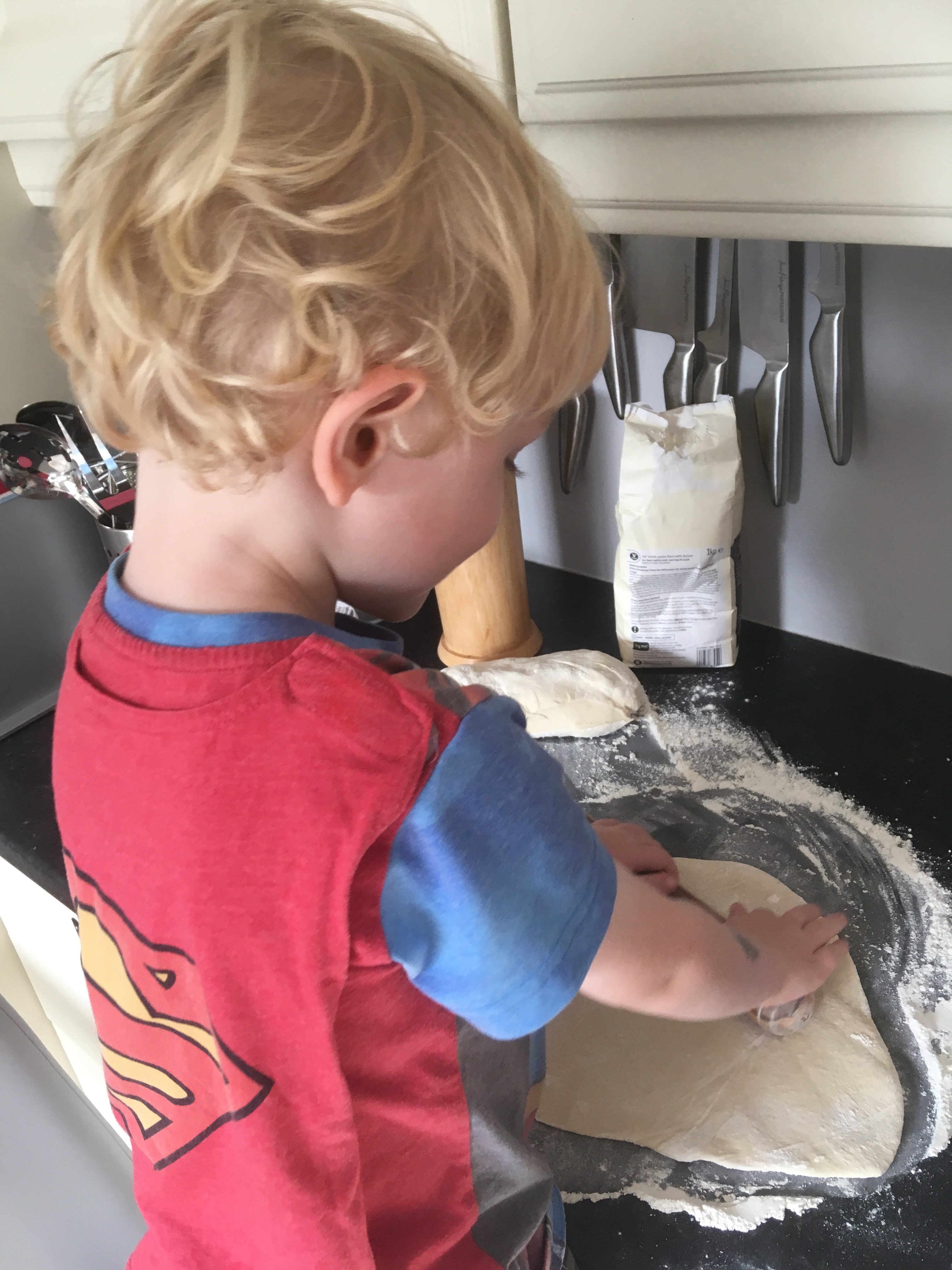
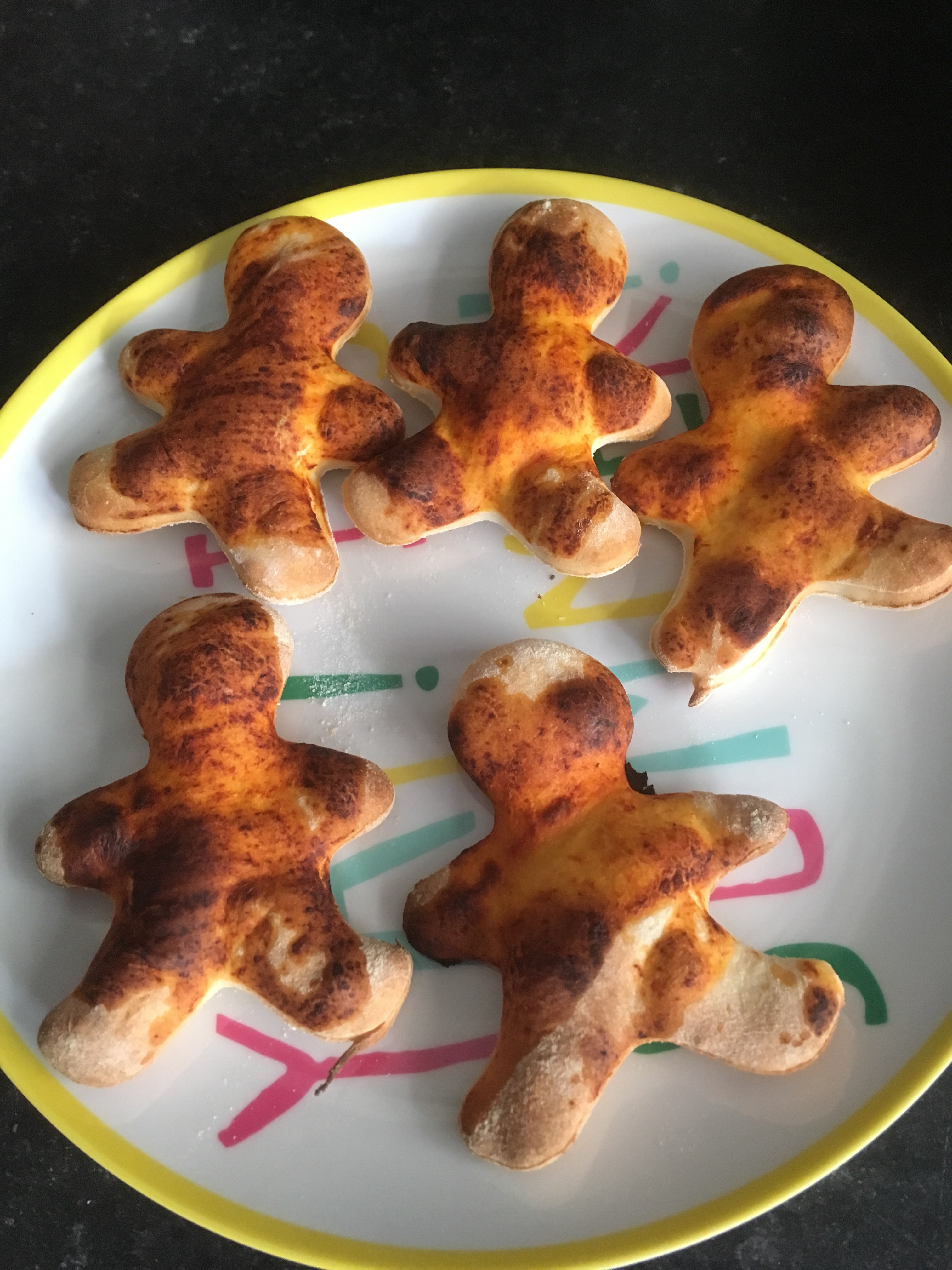
I like my son to feel some ownership of this. He’s got his own little rolling pin and I let him pick out which cookie cutter shapes he wants to use. I find he’s way more likely to eat if I cut his pizzas into fun shapes rather than just having them round.

I cut off a chunk of dough and help him to roll it thin. Today he’s using gingerbread men cutters and we play a game that it’s a little pizza family, with a mummy, daddy and troupe of children.

He paints them with tomato sauce and, if he’s feeling adventurous, adds a little grated cheese. Then daddy sets them into a hot oven. Five minutes and they’re done. He’ll now sit happily munching his pizza men while I get on with the serious business.

Rolling the pizza can be tricky, but if you’ve done the work properly in the kneading, then it reduces the stress now. Basically roll it as thin as you can, using flour above, below and on the rolling pin to avoid sticking.

You should be able to lift it and almost see through it (people who advocate any sort of thick pizza base are, I’m afraid, permanently bewildered).

I’ve never been too bothered about the shape of my pizza but if such things disturb your mind you can always place a plate on top and go round it with a pizza cutter to get the aesthetically pleasing round shape.

To the topping. I have to admit to being entirely agnostic about the tomato sauce and grated cheese. I don’t mind it if it’s there but I don’t miss it if it’s not. It ain’t obligatory and simply doesn’t work with a number of toppings.

If you are using tomato sauce it’s worth having a go at making your own using tinned cherry tomatoes and some dried oregano, basil and garlic. You don’t need to heat it because it will cook atop the pizza.

For the rest of the toppings, anything is fine (OK, even ham and pineapple, if you must). I love anchovies and capers.

But it’s worth remembering that some things may burn in the hot oven. Toppings like pine nuts or egg can be added half-way through the cooking process. Salad leaves should be added at the end because otherwise they’ll wilt away to nothing.

Always season generously and add a good glug of olive oil before you go into the oven.

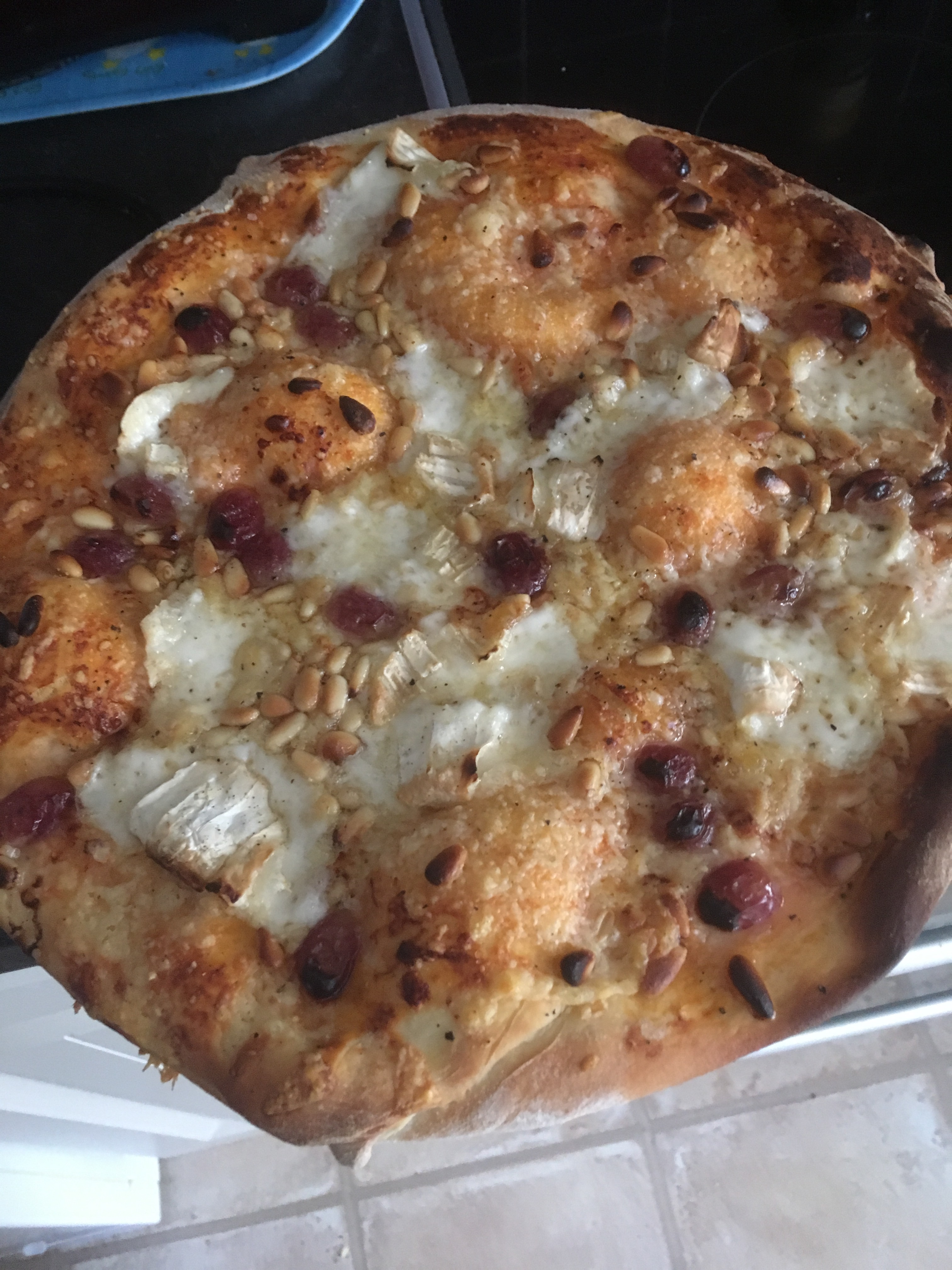
Tonight my choice of topping is goat’s cheese, pine nuts and red grape. I choose this because I had goat’s cheese, pine nuts and red grape left over in my kitchen. That’s kinda the way my cooking works.

The only other thing left to discuss is how to transfer the pizza in and out of the oven and how to crisp the bottom.

The round pizza crisp dishes on sale in kitchen shops are useless at doing what they say on the tin. They don’t crisp the pizza but they do make it easy to transport.

Failing this a pizza paddle or peel is cheap and useful for moving the pizza. It’s also useful to sprinkle some semolina grains below just to stop it sticking.

Getting a crispy bottom to your pizza depends on the base coming into contact with a hot surface and then cooking at as high a temperature as possible for as short a time as possible. It’s a balancing act to try and have a crispy base but ensure everything is cooked. When you do it a few times it becomes easier.

A marble or stone slab in the oven works well (I find a headstone is best) but they are cumbersome and take a long time to heat up and cool down.

What I sometimes do is turn a steel baking tray upside down. It conducts the heat a lot quicker.

You’ll know your pizza is done when you see the edges start to brown. How long depends on the heat or your oven and they’re all different.

By now I’ve made giant pizzas for mummy and daddy and junior is happily munching the heads off his pizza men family. He’s all excited about telling his friends tomorrow that he made pizzas. We’re all covered in flour and the kitchen’s going to take a bit of scrubbing.

Of course, if you don’t fancy this you can just order a pizza delivery. But I guarantee it won’t taste as good. And I guarantee you won’t have as much fun.

Arrivederci!


PS. Curry night is next….

0

The worst daddy 

I’ve never been much good at remembering quotes.

When I was at school some of my peers were able to cause much hilarity by reciting Monty Python sketches seemingly in full. I envied their eloquence. And their powers of memory.

Feelings or themes or parts of scenes would stick with me. Moments in time. Ideas. But rarely the words.

I’ve read pretty widely in my life. If I could retain just a quarter of the material that’s passed through my brain I’d be a fascinating dinner party guest.

One thumping exception to this experience has always been the opening line of Philip Larkin’s poem This Be The Verse.

‘They fuck you up, your mum and dad.’

Direct and unforgettable, like a dart to the eye. The iambic tetrameter rushes you to the top of a cliff and drops you off just as quick.

I first read this when I was an angst-ridden teenager. What a great quote to have up your sleeve! None of this is my fault! Blame the folks!

Plus it was someone who I studied on the school curriculum using a word that would probably have gotten me suspended if I’d said it aloud in the classroom. What’s not to like about that?

Except.

Except. The thimble is firmly on the other thumb now.

I’m the daddy now.

And I’m not saying that with a threatening curl of the lip, a la Ray Winstone in Scum.

Now the Larkin line haunts my thoughts and taunts my dreams.

Maybe I’ve just got too much time on my hands. Maybe I overthink things (you think?). But there is an awe-inspiring responsibility in shaping another human being like clay. Of knowing that my failures, imperfections and weaknesses could be reflected in him.

It’s my heaviest coat.

It just doesn’t seem quite right. This society.

I never filled out a form. Or did an interview.

I got asked more questions when I tried to buy a fucking goldfish then I ever did about my parenting abilities.

Recently I’ve been contemplating taking on a part-time job. Something not too stressful. Just to dip my elbow back into the murky, stagnant bath of employment.

But the truth is I’ve been intimidated by the form filling. The gush of information. The weariness of the length of the process.

But I have been invited to a couple of interviews.

When they ask me why I’m suitable, I always have to fight against the urge to deliver the Groucho Marx line ‘I don’t care to belong to any club that will have me as a member.’

Laughably I even got offered one job after a minor moped prang of an interview. Politely I declined. I just wasn’t ready to go back into an office yet.

But I could have another child tomorrow (well not literally tomorrow, but you get the point).

In fact I could keep having children until I get the hang of being a daddy. Write the first half dozen or so off as experimental until I stumble upon the Pet Sounds child.

Yesterday I had a day out with my son and some friends. We went to an open farm. He was fine. Shy as always, but in good form.

The weather was good and we all had a lovely day. But I spent most of it doing what I always do. Watching him. Always watching him. Looking for some signs that all is not as it should be. Some signal that my curse has been passed onto him.

All the usual questions were teasing me. Why doesn’t he make friends as quickly as the others? Why does he always want to cling onto me? Why does he fear every new thing?

I tried to force myself to relax. Nothing is more likely to bring what I dread into reality faster than me lurking over his shoulder fretting about it.

As I drove home he dropped off to sleep. The sure sign on an active day. When I stopped at the supermarket to buy food for dinner he was still dozing. I had to carry him in one arm while I was laden down with a shopping basket in the other.

As ever I ended up buying much more than I had intended and the weight of the basket became oppressive. A couple of times I had to stop in an aisle and set my boy down as my back began to ache (yes I know I should have got a trolley).

He was just half awake and whined to be carried again. I lifted him and struggled on. This repeated a couple more times.

I was hot, very sore and way behind my schedule in starting dinner. I set him down again. He looked at me pleadingly, tears in his eyes, and held his arms out.

‘Up daddy.’

I was exasperated.

I’ve never shouted at my child and I hope I never will. But on this occasion I spoke sharply, out of contained frustration.

‘Goodness sake son, why can’t you walk? All the other boys and girls walk! Only babies need carried!’

I regretted it at once and felt a deep self loathing. I could see the hurt and shame in his beautiful blue eyes, smeared with tears.

‘I don’t like you saying that daddy.’

I lifted him and he buried his sad little face against me.

‘I’m sorry son. Daddy shouldn’t have said that. Daddy’s really sorry.’

But what good is it to say sorry now? Perhaps the damage is already done?

In the dizzying network of routes that make up the brain what channel has already been blocked by my infantile, impatient, pathetic barb at him?

Perhaps a career as a chiropodist, or a jazz saxophonist, has now been closed?

Does every little failure of mine chip away something from him? And how do I begin to control this sculpture with my clumsy, unsure, shaking hands?

That’s a load of questions. Not too many answers.

Maybe I’m just pretending to be worried about him. Maybe my true concern is about myself and my inability to do this well enough.

The confession is that it doesn’t come naturally to me. Being a parent. I have to force it.

I try every day to understand him. To think why. To comprehend what he’s really trying to tell me. To have the patience to play the games. To stand there and let him pummel me. To do the same thing again and again and not to tire of it. It’s really hard.

To think of him first and not myself. To put his needs ahead of mine.

Because isn’t that what being a parent means? Putting his needs ahead of mine? Maybe. Maybe not.

Yes, Larkin was right. We do fuck them up, just like we were fucked up, as were our parents and all the way back until some caveman stubbed his toe on a sharp corner and clipped little Bam-Bam around the ear for laughing.

There’s really no other way. There’s no flat road in this journey.

We all love our children. We want them to be surrounded by comfort and happiness all the time. Not to be plagued by self doubt and fear.

They watch us. They learn from us. They try to be us.

And that’s why it’s even more important that we to learn to love ourselves. Because it’s us that they’re going to turn into soon enough.

0

Fun daddy and the birthday parties 

As a parent there are certain things that society prepares you to deal with.

Sleepless nights. Learning to walk. Going to school.

But there are other things which don’t get spoken about so much. Situations where you just have to extemporise.

Like the first time you see green poo.

Prime in this latter category is learning to deal with the fact that your child is likely to have a better social life than you.

Ok, maybe that’s just me. After all there are inmates of Guatanamo Bay who have a better social life than me. But I hope you see where I’m going.

Of all the things which have surprised my about parenthood, nothing has been more unexpected than the industry of birthday parties.

And I use the word industry carefully.

Because it is a relentless, calculated money-making carousel of bouncy castles, chicken nuggets, tears, jealousy and making awkward small talk with other parents.

In the first half of this year alone my little boy was invited to more than 30 birthday parties.

That’s more than one a week.

That’s more parties than I’ve been to in my entire life.

He hasn’t even started school yet.

That’s pretty much all of our leisure time from January to June built around attending birthday parties.

There have been parties where I’m not sure if my son had ever so much as spoken to the celebrant.

On more than one occasion I’ve not known who the birthday boy or girl was until they blew the candles out on the cake.

I’ve found myself singing Happy Birthday in the general direction of a bunch of kids and hoping the right one is in there somewhere.

It reminded me of a time when I went to a funeral and got mistaken for the dead man’s son.

A long line of people formed in front of me, shaking my hand in turn and wishing me ‘good luck’.

I was touched by the generosity and civility of these strangers. Until a member of the dead man’s family intervened and pointed out I was just a friend. A well meaning but simple friend.

And at the birthday parties I end up talking to a lot of strangers as well.

I’ve always had a rather small circle of friends, people who I feel comfortable around.

But as a daddy I find myself in the environment where I have to talk to large circle of new people.

This is difficult for me because I’m pretty hopeless at smalltalk.

Usually I just end up saying, ‘Your little one’s getting big’ and then staring at my feet.

Sometimes I say this when I don’t even know who their little one is. Someday I’ll say it to the parent of a dwarf and get myself in trouble.

The problem is I don’t have a lot in common with many of these people. Other than the fact that I had sexual intercourse within the same academic year as they did.

And that doesn’t seem like a clever thing to say as an icebreaker.

I’ve another problem with the parties.

I’ve allowed myself to fall into the role of ‘fun daddy’.

Believe me, that’s not a place where you ever want to be.

It all started at one of the earliest parties. My little boy is shy and sensitive and sometimes needs a little bit of encouragement to join in with the other kids.

Thus I found myself out in the middle of the play area.

At first I was just kicking a ball about. Then wheeling him in a toy car. Then playing chase.

But soon I turned round and found there were 17 other kids all wanting to join in the game.

By the end of the party I was a heaving, sweating mess as various kids hung from my legs and chased me around the room, beating me with light sabres.

And it sort of grew from there. Every week there would be a selection of the same kids who would howl with glee and menace when they saw me arrive.

I would attempt to ignore them and take a seat as far away from the action as I could. But it always ended the same way, with me being pulled into the maelstrom.

More than once I found myself, like a drowning man under a pile of children in the bouncy castle, raising my head to catch a glimpse of all the mummies calmly sipping coffee, before I was dragged under again.

And those kids can be rough. On one occasion a little girl greeted me at the door of a party by saying ‘Can I kick you in the face like I did last week?’

There are certain rules which apply to the parties.

First among these is hire a location. Do not attempt to have it at home. The mess caused to your house by 35 pre-school kids would be akin to the damage caused by a crowd of metal fans who turned up to a gig expecting to see Guns N’ Roses, only to be told Axl was ill and they was being replaced by Daniel O’Donnell.

The entertainment varies. Some go for the bouncy castle and giant slide.

I’ve also seen electric cars, climbing walls, magic shows, dancing exhibitions and fancy dress.

It’s pretty much all been done.

By the time I got round to organising my son’s party there was simply nothing new left. Unless I organised a Satanic themed party.

Which didn’t seem like a good idea.

Then there’s the cake. The all-important cake.

As each party passed the cakes seemed to become more and more elaborate, featuring complicated cartoon characters and wonderful icing.

By the time of our party the bar had been raised very high.

My son decided he wanted a train cake. I knew it was important to him so I gave it my best go. I worked out a design in my head and spent two days baking, cutting and decorating. The final cake turned out closer to what I had imagined than I had dared hope. He was delighted with it.

Then I spent a sleepless night worrying about how I was going to transport such a delicate cake to the venue.

When I did get it there a few parents admired it briefly before the kids tore it to pieces. It had taken me two days to make but was gone in less than 20 minutes.

I also decided I wanted to do something different for my son and all his friends to enjoy. I settled upon making balloon animals. I would teach myself to make a few simple shapes.

I ordered the long coloured balloons and a pump and spent a few days mastering a sword, a dog and a giraffe. It was gloriously simple and addictive. Soon my carpets were covered with balloon animals and I had to order more stock for the party.

There I was a victim of my own success. I had imagined maybe making a dozen or so of these things and then relaxing, glowing in my hard-earned success as a daddy of the year candidate.

But soon after I started, the queue for balloon animals had stretched all around the room. There were kids I had never seen before. I began to suspect that some children had crashed the party just to get one of my coveted balloon animals.

Time and time again I found myself patiently saying the same thing to yet another child.

‘Ok sweetie, I can do a sword, a dog or a giraffe. What would you like?’

‘I want a tiger.’

And so it went on. The whole party passed in a blur of twisted, squeaking balloons. I didn’t even get a slice of my own train cake.

As I was tidying up the mess afterwards I heard one of my son’s friends talking to his mummy. A sweet little four-year-old boy. He was pointing me out to her.

‘Mummy, can you ask him if he’d like to come out and play with me?’