2

The man flu

I’ve barely got the strength to type today.

I’m only doing it because of my selfless devotion to my art. And to my fans.

Things are grim. I’ve got…..

The man flu.

But not just any man flu. This is a previously unknown virulent and ultra aggressive strain.

I’m the first to ever fall victim to it.

My head throbs, like there’s something alien in there gnawing away incessantly at my brain. My eyes feel like they’ve been staring at the sun too long. My throat is closing like the lid of a coffin.

My limbs heavy and sore, every muscle screeching in anger.

Luckily I’m not one to complain.

I felt it coming on me last night.

It started with the sneezing, each time like a cannon going off in my head. Skittling brain cells I can scarcely afford to lose. 

 Then, through the night, the shivers and shakes.

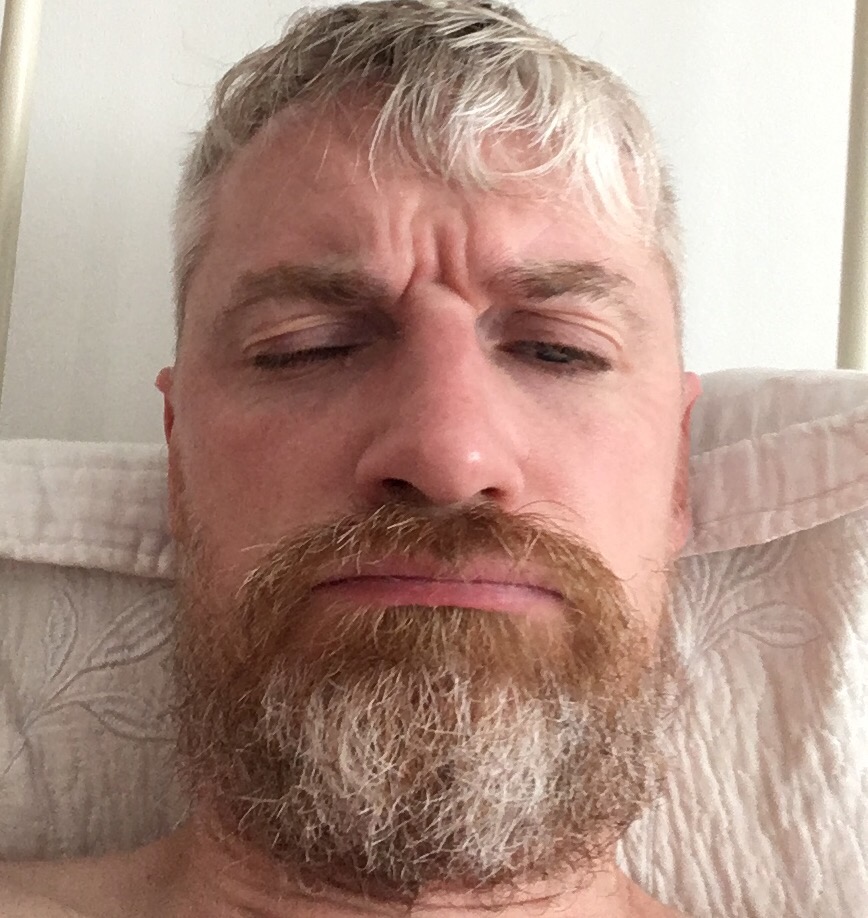
Now even my beard aches.

I dosed myself up on Lemsips. But the brave little particles of paracetamol turned and fled when faced with the unstoppable march of this new unknown menace.

I could go to the doctor. Or the pharmacist. But I doubt there’d be much they could do.

This horror is beyond the scope of conventional medicine.

I’m in bed. All on my own.

Luckily the wee man’s in daycare today. I’ve shielded him from the worst horrors.

My wife’s had to go to work. As she left she kissed me and said, ‘See you tonight honey.’

I tried to raise my head but it was no use. I weakly replied, my voice hoarse and failing.

‘Yes, I hope so. I really hope so.’

She shook her head and mumbled something about it being ‘only a sniffle’.

So I’m still here in bed. On my own.

Abandoned.

Luckily, I’m not one to complain.

Earlier my wife took my temperature. It was normal.

This truly is a devious sickness.

I need the bathroom now. But it seems so far away. Like a different continent.

What happens if I fall on the way? Probably best to just stay where I am.

Safe and warm. Eating choccy biccies in bed.

Thank God I’ve still got my appetite.

But I can’t stay in bed all day. I’ve got an important social engagement tonight.

It’s a dear friend’s 70th birthday party. And I don’t want to disappoint him. I couldn’t bear it.

And there’s a free dinner laid on in a fine restaurant.

So heroically I’ll rise from my sick bed and put on a brave face.

There’ll be lots of people there. And they’ll be asking how I am.

And I’ll have to tell them.

In great detail.

It’s my responsibility to warn them all of what is coming.

Luckily I’m not one to complain.

I’ll have to stop now because the little strength I have is failing.

I hope I’ll be back to posting again soon. But we’ll just have to see how it goes.

I so want to live.

I desperately hope that you all avoid.

The man flu.

0

The scariest half hour of my life

I was driving when I heard the phone.

I glanced at the glowing, throbbing screen on the seat to my left.

I could see the name. It was my wife.

I was on the M1. I knew I shouldn’t have answered.

But I could think of no reason why she would be calling at this time. I was on my way home from work.

I lifted the phone.

‘Hi honey. All ok?’

Her voice was in a place beyond fear. It was some seconds before I could understand what she was telling me.

‘He’s had a fit. He’s in accident and emergency.’

‘Where?’

‘Lagan Valley.’

I tried to calm her a little and changed course.

I knew what was happening.

Since birth my son had had trouble with his ears. He was prone to infections.

The infections could lead to rapid temperature spikes.

These spikes could lead to seizures.

Febrile convulsions, the doctors called it.

Our son was one-year-old. The most vulnerable age for this type of condition.

He had ended up in hospital once before. The Royal. When he’d had a mild seizure.

I had been at work at the time but mummy described it to me. It sounded scary.

Since then we’d been obsessive in looking out for the signs.

Blue lips. Listlessness. Trembling.

The thermometer was never far from his ear.

At the first sign of a temperature rise we filled him with Calpol and Nurofen.

This time it sounded more serious. He had been with his grandparents when the seizure took hold.

They had rushed him straight to the emergency department.

I arrived at the hospital reception demanding to know what was happening with my son.

Luckily a nurse who was involved in treating him was standing nearby and brought me straight to a large room.

The only useful way I can convey the scene there is to compare it to something from a TV medical drama.

I’ll never be able to forget it.

The tiny body of my infant son was stretched on what seemed to be white table. A team of doctors and nurses were in motion around him.

His legs, arms, head and body were in spasm, trembling horrifically.

There was a mask on his face and pads stuck to his tiny weak chest. A plastic tube seemed to be running from his leg.

He was so small, wearing only his nappy. Just one year old. Utterly helpless.

Mummy was there. She kept asking the staff to tell her that he would be OK.

But they can’t tell you that. In case they’re wrong.

The seizure had been going for more than 20 minutes. We knew from what we’d read that it was now in the dangerous stage.

And still it went on.

One of the nurses told mummy and me to talk to him.

I didn’t know how I could find my voice. My own mental health was still not in a good place.

And now this?

But a thought started to go through my head.

‘If ever you’re going to be a daddy, this is the moment.’

This is the moment when he needs his mummy and daddy more than ever.

Mummy stood on one side of him and I on the other.

We stroked his little arms and talked to him.

‘We love you son. You’re our brave wee man. You’re our brave wee man.’

The one part of his body which seemed to be operating properly was his eyes.

Looking at his parents.

Pleading for help.

The shaking seemed to go on and on.

And then, finally, it stopped.

And he began to cry.

The merciful, joyful, wonderful sound as he bawled in terror and frustration and rage.

I remember a nurse saying to us, ‘You see, he’s crying, that’s a good sign.’

The doctors were quickly satisfied that he was out of danger and mummy was able to take him in her arms.

The two of them sobbed. Mixing their tears as one.

I went and sat down.

The danger was over but the ordeal was just beginning.

The doctors wanted to transfer our son to the Ulster Hospital where he would be kept in for tests and monitoring.

In case it happened again.

Mummy went with him in an ambulance while I drove home to grab some belongings.

The events I am recalling took place three years ago.

Had the seizure occurred tonight then the Lagan Valley Accident and Emergency department may not have been open. It was a 24 hours service then. Now it closes at night.

I arrived at the Ulster. The same hospital where my son was born.

He was in a ward with mummy. A cot for him. A chair for me.

A doctor came to talk to us. To explain what had happened.

I asked him if there would be any permanent damage caused by the longevity of the fit.

He told us we might not know that for years.

Mummy snuggled up to sleep with our boy in the little cot while I tried to make myself comfortable in the chair.

The World Cup in Brazil was just beginning and I remember watching the opening match on a tiny screen above the cot while the two of them slept below.

A few days and sleepless nights passed in boredom.

They wanted our son to stay in or close to his cot while he was being monitored.

But energy was returning to his body and keeping a one-year-old cooped up in a tiny space like a battery hen led to a multitude of tears and tantrums.

I brought him toys.

He hurled them back at me.

And so the days passed.

One other unexpected and distressing complication arose.

While in hospital the doctors need a simple and quick way to insert drugs or fluids into a patient.

Rather than continually use needles they insert a line directly into the vein. A tiny soft intravenous plastic tube which can be accessed at any moment.

But they had desperate trouble finding a suitable vein in my son.

They injected his legs and arms so often without success that he could have passed for a miniature heroin addict.

And on the rare occasion when they did find a vein he yanked the line out.

Because that’s what an active one-year-old will do when you stick a tube into his body.

A doctor took mummy and me aside and told us they had only one option left.

They were going to have to put the line into his head.

Stick a large needle into my one-year-old boy’s head.

They took him away to a separate room.

I followed.

They told me to go back to the ward.

I said no.

They said it would be too upsetting for a parent to witness.

I told them I was more concerned about the upset caused to my son than me and if anyone was going to stick a needle into my son’s head then I was going to be there.

I hadn’t slept in two nights. I was a little cranky.

They closed the door on me.

I tried to look in through the frosted glass. I heard screaming and struggling.

The door opened.

They asked me if I could come in to help calm the boy down.

I went inside and held my son tight in my arms. I talked to him constantly as I saw the doctor behind his head closing in with the shining needle.

‘You’re such a brave boy. You’re such a brave boy. Daddy loves you so much.’

He began to scream and his limbs tried to bolt but I held firm.

‘You’re my brave boy. You’re my brave boy.’

His eyes never left mine.

I carried him back to mummy who consoled him, both crying again.

Putting the line in his head solved one problem.

But it didn’t stop him trying to yank it out.

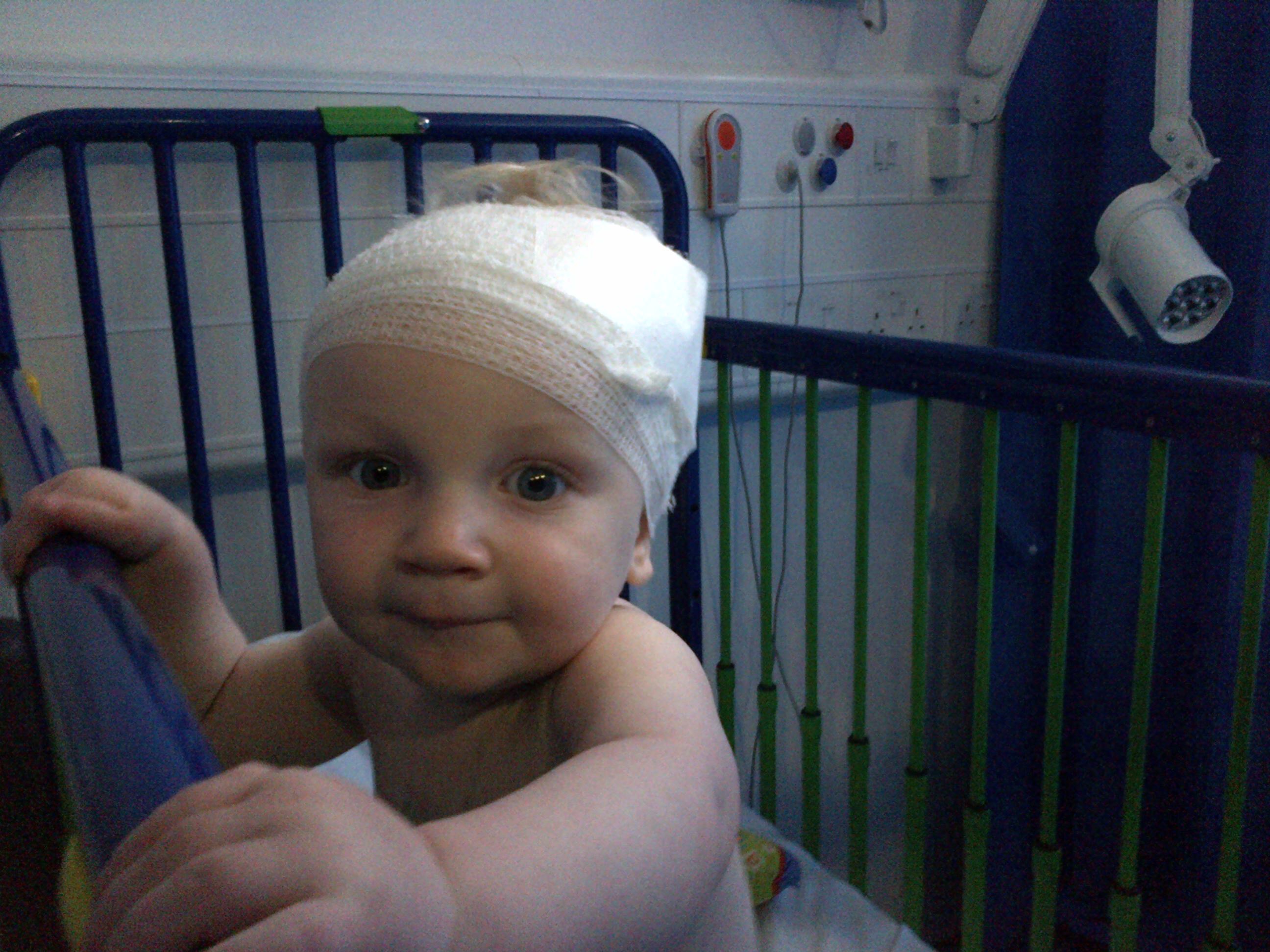
As a solution the nurses wrapped a large bandage around his skull, covering the tube.

So he started to pull the bandage off.

A long night passed like this, with him ripping off the bandage and mummy and me taking it in turns to go and ask the nurses on the graveyard shift if they could redress his head.

More trauma followed the next day when my son had to undergo a lumbar puncture.

This involves an injection straight into the spine. To search for any sign of nerve damage.

There were a lot more tears but, in truth, I can’t remember it very clearly. I think after three sleepless nights my brain had simply folded and my ability to retain information was exhausted.

Tests were carried out and results were delivered.

Everything was fine.

We were all desperate to get home. Desperate to sleep.

And finally the doctors released us.

We went back to our little house. Welcomingly messy.

We remained vigilant.

We kept looking for the signs.

It was quite a while before our son could even sneeze without mummy running for the Calpol and me scrambling for the car keys.

His health dramatically improved when we paid privately for him to have vents inserted into his ears.

There were no more seizures. Now he is as healthy as any other little boy.

And he’ll be starting school in a couple of weeks.

He’s a long way away from the angry toddler prowling around the hospital cot with an oversized bandage on his head.

1

The allotment 

You can’t relive your life through your children and shouldn’t try.

It’s daddy’s First Law of Keeping your Sanity.

1. Push an adolescent too hard in one direction and they’ll surely end up going the opposite way.

And it’s not the 1970s anyway.

My son’s childhood experiences bear as much relevance to mine as an ironing board does to German measles.

But it doesn’t mean you can’t try and give them a little nudge now and again.

I grew up in a farming environment. There were no other kids within miles of our remote house on the top of a hill.

There were fewer attractions to being indoors then and less fear of what was outside.

My brother and I would often disappear into the fields and barns which served as our hideouts in the early morning and often not appear back until it was feeding time at night.

Nobody sent out any search parties.

Our currency was mud.

Mud seeping over the tops of our wellies, marrying together the bruises on our legs.

Imprinting itself so deep in the lines of our hands and fingers that you wondered if it would ever come off.

There were always animals about, or crops growing in a nearby field.

You ate blackberries straight off the bush.

One of my earliest childhood memories is walking through the fields with my uncle as he carried a shotgun, blasting crows out of the sky to keep them from the crops.

I missed the party on the day of my First Holy Communion because I was driving a tractor for my da.

As I said, it’s not the 1970s anymore.

My son grows up in a world of suburban comfort, filled with experiences designed to assist his development.

Even though he’s an only child he has so much contact with his young peers that he may soon need a PA just to organise his social schedule.

He has shown no interest in the provenance of food.

And why would he in a world dominated by giant supermarkets and plastic wrappers? Where blood and offal are thought of as something which belongs in a horror film, rather than the natural order of life.

He can sit on the sofa munching sausages while he watches Peppa Pig without any obvious sign of awkwardness.

I’ve taken him to an open farm a couple of times.

But when I ask him what’s his favourite bit he inevitably responds ‘the bouncy castle’.

I really don’t think he’s getting the authentic experience.

So I was a little unsure this week when I tried him with a new adventure.

The allotment.

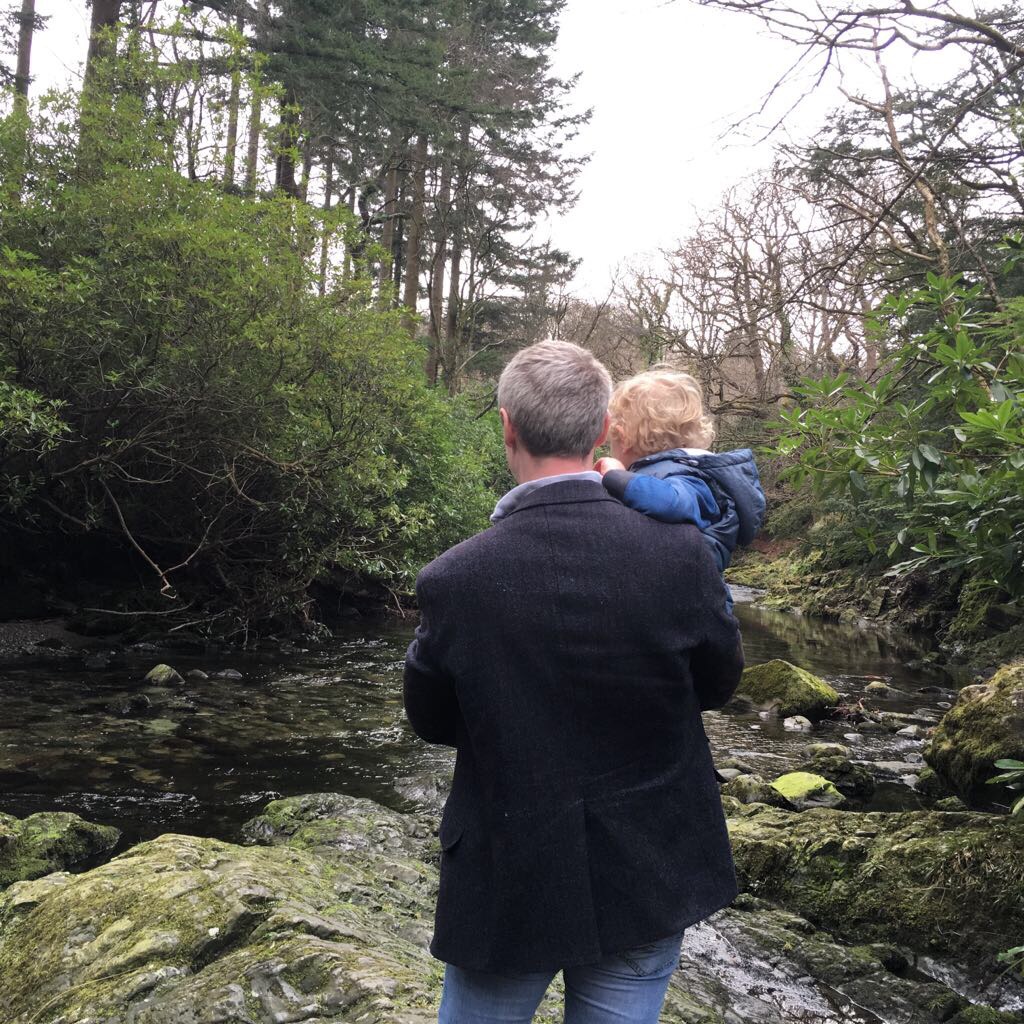
I’m very lucky in that my da has his own allotment. He is virtually self-sufficient in fruit and veg with plenty left over for me.

But in order to get my son to the allotment we first have to go to my Da’s house.

And that means the distraction of Uncle Giggie’s computer.

It’s easy enough to get my boy excited about going to what is essentially a big field. It’s just about judging how long you have before the novelty wears off.

The day is dull and damp.

I put his wellies on.

Wellies today are no longer black. They’re bright colours with cartoon characters emblazoned on the sides.

The day when my son came to me crying and said ‘Daddy, there’s mud on my wellies!’ was, I think, the day when I realised the world had moved on and left me behind.

We arrive at the field. My da, me, uncle Giggie and my son.

A quick game of hide and seek breaks the ice for him.

Then we’re at the plot.

I know the trick.

Get him involved. Get him to take ownership.

He helps my da to pull cauliflowers, beetroots and corguettes. To cut rhubarb.

We get him to hold the fork and turn over some soft soil, unearthing a hoarde of little white potatoes.

We pretend we can’t seem them and he gets excited as he finds spud after spud, glistening in the mud like shiny smooth stones on the seabed.

It’s a lightbulb moment. Realising that the food he eats comes from the ground.

Potato waffles don’t just grow ready-made. There’s a natural process to it all.

But he’s young and there’s only so much you can push on him at a time. This is all alien to him.

Soon he’s whimpering quietly. Then a little louder.

‘Daddy, when can I play on uncle Giggie’s computer?’

There’s no point forcing it beyond that.

We take him to the water tank to wash his hands.

It’s an old plastic tub with a drainpipe catching the rain and running into it.

As his hands are being cleaned he looks at my Da.

‘Granda, is this how you did it in the olden days?’

Soon we’re back at my Da’s house and he’s upstairs with Giggie.

There’s nothing he shows as much enthusiasm for as the computer and nothing can keep him quiet for as long.

I get the feeling I could leave the house and nip off on an excursion to London, return, and he’d still be sitting in the same place playing the same game.

Do I wish he showed that sort of interest in the allotment and the veg?

Yeah, maybe a little.

But the world’s a different place now and he’s much more likely to make his way in the world with computers than he is by getting his hands dirty.

Besides while he’s up there it gives me a chance to do a little bit of food prep.

Spuds are scrubbed. Carrots peeled and chopped. Beetroot the same. Peas popped.

I’ll boil the hard veg and then roast them with some herbs and vinegar.

I’ll fry the corguettes lightly and then add peas and egg for an omelette.

From the ground to the plate in a matter of hours.

The way it should be.

I’m content because I’ve given my son a little nibble of the natural world of food.

Now the next challenge is to try and get him to eat some of it.

17

Ward 12. The Dark (part 2)

I watch the clock on the wall.

The second hand never tires, never goes fast enough.

I’ve been doing this for some time.

It’s my thing. I used to watch the clock in school, in work, at home, on holiday.

And like so many other parts of my mind, there’s not another person on this earth who knows that I do it.

It’s a technique.

Not one I’ve been taught. Something I’ve developed myself over the years.

I count the hours down. The minutes. The seconds.

Counting them down until another day’s over.

I suppose the idea is that when I’m thinking about time I can’t think about anything else.

No two things can occupy the same space.

It’s a way of keeping me from the worst excesses of myself. The thoughts that terrify me.

I have a phrase also.

Something I’ve been saying for years.

Over and over.

Under my breath.

‘Just let me get through this day. Just let me get through this day.’

It’s a false comfort. A trick played on my own brain.

The next day is seldom better. Usually worse.

And the nights are worst of all.

That’s when the fear is most intense, the edges of doubt at their sharpest.

You pray for sleep. Sometimes it comes. Sometimes it doesn’t.

I watch the clock.

There’s some comfort in knowing that every day, no matter how black, can’t outlast the clock.

I need that comfort more than ever now.

I’m in a strange place. In a place I could never have imagined I would end up.

I always assumed I’d be dead before I saw the corridors of a hospital.

I’m in Ward 12.

I didn’t sleep much last night, just enough to confuse me when I woke.

As always I looked for my son first thing. My tiny infant son. But he wasn’t here today.

Instead I’m in a shabby room. Paint peeling off a the walls, tattered fading curtains, pillows limp and flat like a burst balloon.

The room looked like it had been forgotten about. A forgotten room for forgotten people.

The first day was the worst. I saw a doctor. Another doctor. I wouldn’t open up to them.

A nurse took blood from my arm and gave me some tablets.

Then I walk through the ward.

I go to the door which takes you back to the outside world. You need a code to leave.

I don’t have it.

I’m a prisoner here. For the first time in my adult life I don’t have the right to come and go as I please.

I need a signature on a piece of paper to leave this place.

I walk to the other side of the ward. There are other people up and down the corridor but I barely register them.

There’s a little room at the end, almost like a conservatory. A couple of bookshelves.

It’s empty.

I decide this will be my place.

I sit in the armchair and wait.

I don’t know what I’m waiting for or how long it will take.

I watch the clock. I watch the raindrops on the window.

The fat drop explodes on the glass and then runs down the pane like a tear.

Like a tear.

I have so many emotions now. But most of all I’m angry.

Angry at myself for not holding it together. Angry at others for putting me in here. Angry at my cowardice that I allowed this to happen.

A nurse spoke to me this morning, gave me an induction. Told me about all the things they do here.

Like a holiday camp.

But I didn’t listen. I’ve no intention of taking part in any of their activities.

I just sit here watching the clock and the rain and waiting for something to happen.

Eventually I get hungry. I’ve been sitting in the same spot for hours.

I find my way to the canteen. It smells of burnt fat.

I pick the food that looks least likely to kill me in the short term and find a quiet corner.

I don’t even lift my head to see who else is about.

And then an extraordinary thing happens.

A large man with black hair and a red, round nose, sits opposite me. One by one a few other men drift to the table.

I look up, unsure what’s going on.

Then the large man holds out a giant hand, more like a paw. He has watery, kind eyes.

I don’t think I’ve offered my hand but he takes it anyway.

He tells me his name and introduces a few of the others. He asks mine.

‘Uh, I’m Jonny.’

‘We’re all very pleased to meet you Jonny. The first day’s the worst. But we all stick together and we’ll help you get through it ok.’

But it’s not fear I’m feeling now. It’s deep shame.

I had completely dehumanised these people. I thought I was too good to be in here with them.

But the same rules of kindness and compassion apply inside the ward as outside.

I learn that just because you’re damaged doesn’t mean you still can’t do a good thing. Still try to help someone else.

It all gets a little bit easier from here.

Just a little bit.

And the hours begin to turn like a spinning wheel.

I’m kept in the single room by myself for just a couple of nights before I’m moved into a larger, even more dilapidated area.

At first I think this must be progress.

There are four beds in this new room. One is empty. Two younger men and myself.

Curtains so thin you can see right through them separate the beds.

In the far corner is a scrawny boy with long ginger hair. He’s probably early 20s and he cries all the time.

Right through the night, behind his little curtain, the sobs never stop.

Often I hear him on the phone. He’s whispering, but there are no secrets in here.

‘Mum, please get me out of here. Please mum, I swear I won’t do anything, please mum, please….’

It’s the most desperate and heartbreaking sound I’ve ever heard.

Our other roommate is even younger, I guess barely out of his teens, if at all. He rarely ever makes a sound.

He is short and stocky, scars on his arms. His hair is coal black and his eyes are too. I don’t think I’ve ever looked into eyes likes this before. Eyes in which you can’t see anything.

His feet never seem to leave the ground when he walks. It’s more of a shuffle and his slippers squeak against the floor.

On my first night in the room I’m awoken by him thumping a shoe against the window.

It’s not an escape attempt.

He’s just doing it.

Some medics calm him down and bring him back to his bed. Less than six feet from mine.

I feel the beginning of a panic attack. The sweating, the racing heart, the uncontrollable disturbing thoughts.

My face is at the very edge of the pillow. I’m gripping the thin blanket so tight that my nails dig into my palms through its material.

Spasms of despair are coming out of my stomach and I fight to push them back down.

I don’t understand how this place is supposed to be helping me.

There are perhaps 20 patients on the ward.

It’s mostly men but there are a couple of women.

There’s one woman who walks up and down the corridor all day in her slippers.

That’s all she does.

Walking up and down.

She never looks at me.

Some of the patients are like me, just in for a few days. For a rest.

But there are those who’ve been here for a long time.

There’s one elderly gentleman, always smartly dressed. Never without a tie.

I get the impression that he hasn’t left this ward in years. It’s his protection against a scary world.

While I’m here he is told that he is to be moved to a geriatric ward.

He falls to pieces. We’re in the canteen when we hear his wails.

We move to see what is happening and catch a glimpse of him trying to run. Being held and comforted by a nurse.

His clothes are pulled and disheveled. His face is purple.

There is fear on his face like I’ve never seen.

It’s the first time I’ve seen his tie not straight.

There are lots of activities. I suppose they’re supposed to heal us but really they’re just a way to pass the time.

We do relaxation. Sitting in a room listening to soothing music while a woman reads slowly to us in a mellifluous voice.

We play games. Word association games. Games with cards. We’re given writing tasks.

Sometimes they allow us outside for a walk to the local garage to buy sweets or cigarettes. Accompanied of course.

On the Friday they throw a little party. The staff put buns and sausage rolls on plates and lay them out on a long table in the canteen.

A startlingly handsome woman with a guitar arrives to sing to us.

We gather in a circle around her and it begins.

She strums and floats out a song about a train. She sings a bit and then we have to respond.

‘And the train just keeps rolling on!’

This goes on. Some are too timid to do much more than mouth the words, others throw themselves into it with energy. I think I’m in the latter group.

‘And the train just keeps rolling on!’

Then we’re given instruments and we form a little orchestra. I’ve got a wooden stick which rattles.

She plays another song and we rattle and shake along to it.

One of the patients, beside me, bursts into tears and is taken back to his bed.

My phone rings and I quickly answer without thinking, so as not to interrupt the song.

It’s a friend of mine. One of Northern Ireland’s best known and respected journalists. Calling to discuss a story.

I’ve forgotten that there’s an outside world. Work.

I’ve forgotten nobody knows I’m in here.

He must hear the music. I can sense the confusion in his voice.

‘Uh, is everything ok Jonny?’

‘Yeah, it’s a bit difficult to talk now mate. I’m going to have to get back to you.’

Soon the music finishes. Some of the patients move off to eat the buns, but a few of us stay behind.

Our music teacher chats to us. Then she gets us to sit in a circle on the floor and we play a new game.

It’s a rhythm game. It involves clapping our hands and clicking a plastic cup off the floor. It’s hypnotic and pleasing. It seems like we could play this game for a very long time.

Later I help the nurses to clean up. Then I sit on a long windowsill and watch the heavy orange sun begin to sink.

The wind contains the first harsh hint of winter and the leaves are starting to brown and crisp at the edges.

Some of them have already fallen and are blowing around a small paved yard.

One of the nurses comes to talk to me. I can’t stop telling her about my wife and son. I show her pictures. She shows me pictures of her two little girls, her face opening with pride.

Suddenly I’m surprised by the late hour.

I realise I haven’t looked at the clock all day.

Each patient is assigned a psychiatrist. I meet mine that night.

He’s serious, scholarly and sympathetic all at once.

He’s keen to get me home. But also cautious.

Again the weight of having to make the right decision.

It’s not that he thinks I’m better, he just has to consider what’s the best environment to heal.

He orders me not to even think about work.

He talks to my wife. It’s not just about me. He needs to know that she’s comfortable with having me back at the house.

I’m almost afraid to get my hopes up as he reads endless reports and scratches his nose.

Then he signs a form.

And just like that I’m free again.

I quickly pack my bag and say goodbye to some of the staff and patients.

I let the handshakes linger. I’ve no idea if I’ll ever see these people again.

As I travel down the lift I can’t bear to let go of my wife’s hand. I don’t want to let go of it ever again.

I’m thinking about my son. Four months old. How I’m going to hold him in my arms. Bury my face in his neck. Feel his warmth. Smell him.

But as I walk out into the carpark there’s a familiar feeling. A little bit of the anxiety begins to return.

The truth is there’s a dangerous comfort in being inside.

In not having any responsibility. In letting someone else make all the decisions.

But that’s not life.

As I get into the car the thoughts are racing again.

It’s raining now.

Persistent and demanding.

I know that the hard work has not even begun yet.

* If you have been affected by any of the issues raised in this blog or need immediate help call Lifeline on 0808 808 8000
0

The pirate’s hat

It had been another busy morning.

The usual wrangling over breakfast, negotiations over getting dressed and bargaining over leaving the house.

We’d ended up at the local gymnastics club where young children are allowed to play every morning in the summer holidays.

The kids are let loose and run wild in the sports hall, sort of like the plot of Lord of the Flies condensed into an hour and a half.

My son likes to chase me and mummy around the gym until we’re cornered in the pit. Then he beats us repeatedly over the head with a giant foam stick. (Foam party?)

We left sweatier and dustier than we arrived and headed to a local cafe which has a play area full of cars that kids can sit in.

My son and nephew soon commandeered two of the brightly coloured vehicles and proceeded to ram other less fortunate children while us grown-ups supped cappuccinos and nibbled on sausage rolls.

By the time we arrived home mummy and I were already spent. Just as we were having our mid-afternoon slump our boy was getting his second wind.

Randomly he decided he wanted to wear his pirate costume.

I knew straightaway that this was trouble.

I tried to distract him but his decision was fixed.

I dug out the red and blue trousers and shirt we’d bought for him a couple of Halloweens back. The costume was a little small now but still serviceable.

I dressed him and waited.

I knew the question was coming, as inevitable as Tuesday following Monday.

‘Daddy, where’s the hat?’

There we go.

‘Son, we’ve discussed this before, remember? The hat is lost. I’ve looked for it and I can’t find it. Do you understand?’

‘Just get it for me daddy.’

Clearly he didn’t understand.

The pirate hat has been missing for years. I think he wore it only once. The black fabric and skull and crossbones were a far distant memory.

Every couple of months, from somewhere in the depths of his brain, my son will remember the pirate costume which I have buried at the back of his wardrobe.

And then we have a big row about the hat.

His little mind just can’t comprehend that the object he desires cannot always be immediately produced to meet his favour.

And here we are again.

‘Daddy, I want the hat!’ his little eyes moist now.

I begin to search through boxes of toys that I’ve emptied and refilled, emptied and refilled, many times. I already know it’s not there.

‘I don’t know where it is son.’

He weeps softly for a short time. In his pirate costume.

Then.

‘Daddy, is there something else we can use as a pirate hat?’

I’m impressed, an attempt to meet me in the middle. A compromise.

I produce various hats and caps but he rejects them all as too conventional. He’s demanding I use my imagination.

‘Use something else as a hat daddy!’

Use something else as a hat! What does that even mean?

I place a cauliflower on his head. He’s interested for a moment.

But then it rolls off.

My usual tactic here is distraction

Put the telly on. Pull out another toy. Something to make him forget the pirate hat.

I start to look around for a suitable diversion.

Then a little voice in my head says something.

‘Why don’t you make a pirate’s hat?’

I chortle to myself. The audacity of it.

But it keeps gnawing away, like a rat at a rope.

‘Why don’t you make a pirate’s hat?’

Make a pirate hat? Could it really be done?

At this point I should probably give some context.

I can’t make things.

When it comes to anything remotely handy – DIY, construction, assembly, repairing, hanging – I’m utterly lost.

I’m good at the bit of looking at a problem and scratching my head. But there the talent ends.

Whatever little bit of skill I have been given with words and communication has been reverse compensated ten times over with the complete absence of any ability to use my hands in a useful task.

I just can’t make things.

Also, I lack common sense in this area.

Once, when I was at school, I gave myself a nasty burn on the hand by inexplicably grabbing a metal toasting fork while the teacher was blasting it with a welding gun.

‘You damned fool!’ he roared at me as he swiped my sizzling hand away from the glowing red metal.

That was actually one of the kinder things he ever said to me.

But this was just a pirate hat. I remember making them out of newspaper as a child.

It’ll be a giggle and something I can do with my son, I thought.

To hell with it.

‘Son, shall we make a pirate hat together?’

He’s immediately enthusiastic, but holds just a little back. As if he can’t quite believe it. Or fears I’m going to do something which leads me to a breakdown.

Soon I have newspaper all over the floor and we’re folding, taping and cutting merrily.

My first attempt resembles nothing.

The second is clearly a paper aeroplane.

A badly made paper aeroplane.

By the third go I’ve worked out the basic technique.

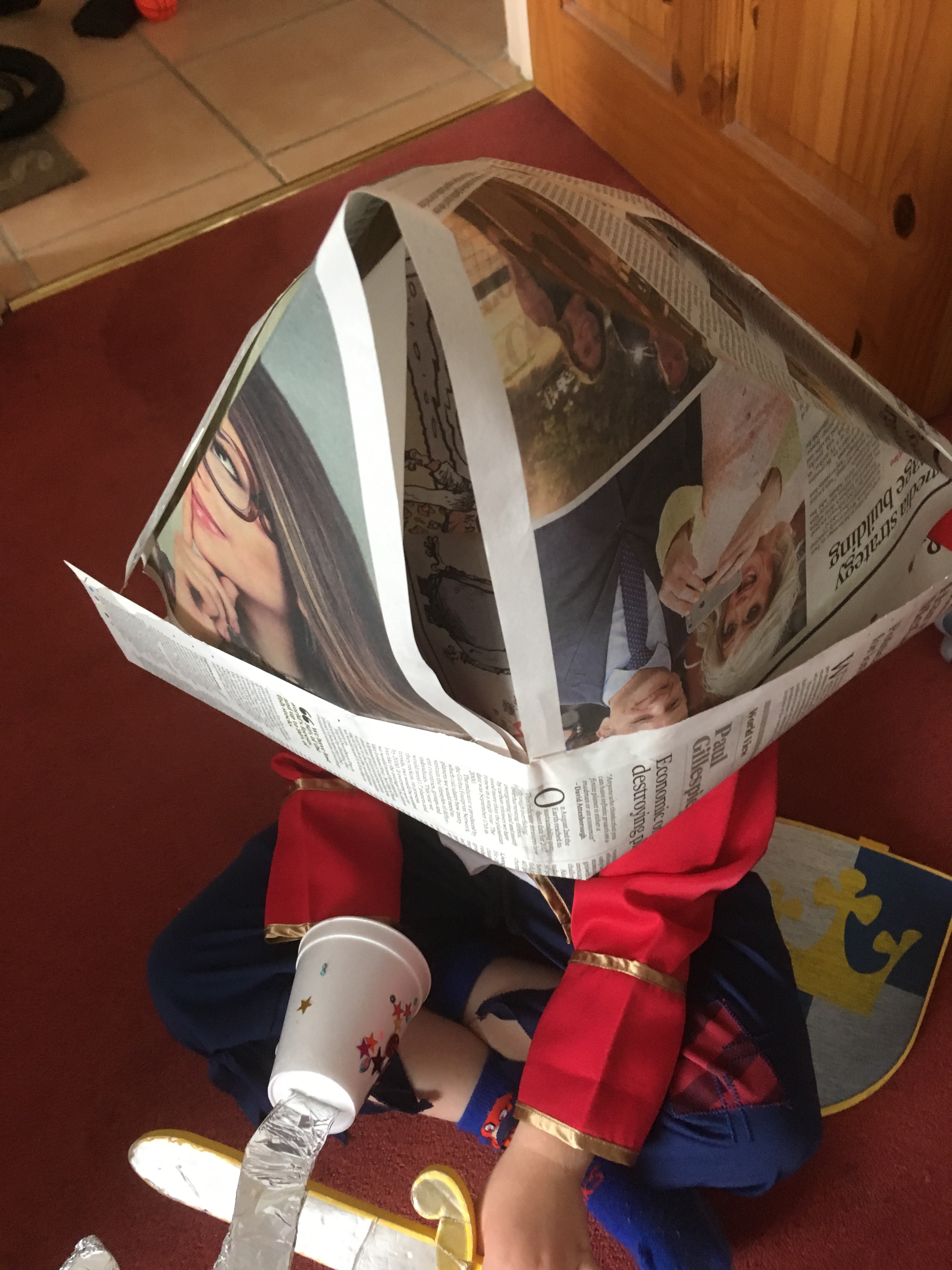
We make something which resembles a hat.

Except it’s huge.

Big enough to serve as a pair of Giant Haystacks’ underpants.

My son’s head disappears completely when we try it on.

But we’re on the correct route.

Another couple of attempts and we have a hat which stays on his little head.

He’s beyond excited at the process of creation. And his part in it.

And now he wants to go further.

‘Daddy, let’s paint it!’

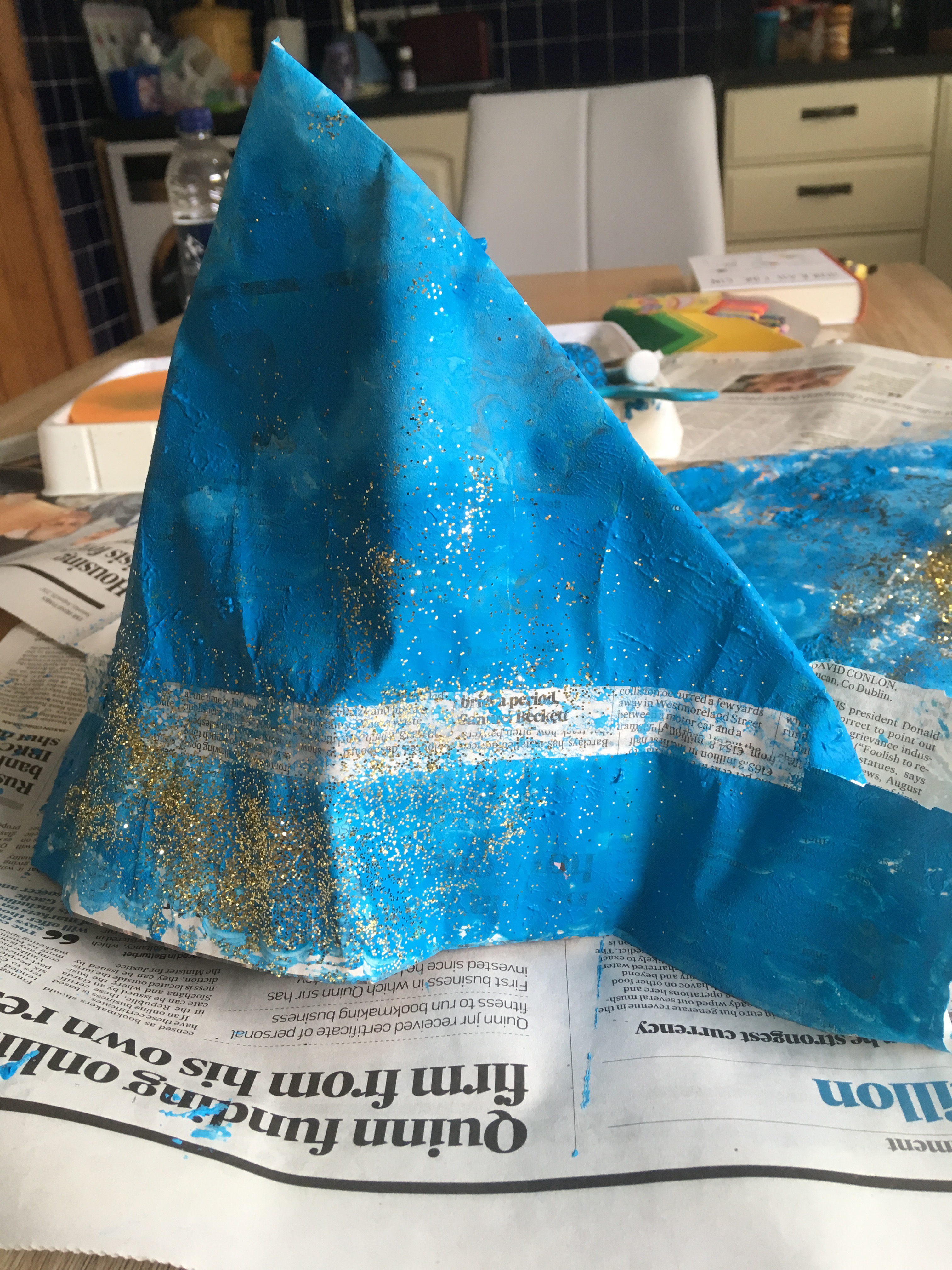
I suggest black, but he’s set on blue with gold glitter. Unconventional for a pirate.

I hate paint. It always makes a mess, no matter how careful I try to be.

However, my hatred of it is comfortably exceeded by my feelings towards glitter.

That stuff ends up everywhere I don’t want it.

On my face. In my ears.

Between my toes.

In my bum crack.

There is no force on this earth that can contain the malevolence of glitter.

We don’t so much paint the hat as lob large volumes of blue liquid in its rough direction, hoping some stick.

My desperate pleas to go easy with the glitter are blithely ignored.

And then it’s finished.

I step back and take a look.

Just to see what we’ve done.

It’s awful.

Completely awful.

Mind-rottingly awful.

If I was religious I would say it’s the pirate hat that spewed from Satan’s bottom.

It’s the pirate’s hat that’s been through the digestive system of a gnu.

A very ill gnu.

In fact it looks more like a wizard’s hat than a pirate’s.

Some poor unfortunate drunk wizard who’s stopped for a leak in a field on the way home from the tavern and fell head-first into a sheugh.

No. It ain’t pretty.

But I’m strangely happy with it.

And my son is thrilled.

Of course he can’t wait until it dries properly and we end up with blue paint and gold glitter all over the bed clothes.

And then just as sudden, he grows bored with it.

Casting it aside, he goes off to play Buckaroo.

But that’s ok.

Of course it was rewarding to make this hat with my son.

The sense that we were doing something together, like a team.

But the greater satisfaction is that I chose the more challenging path.

I didn’t follow the easy option of just plonking him down in front of the TV.

We had a go.

Who cares that it turned out shit?

4

Uncle Jonny, let’s dance….

The first thing you see is the rollercoaster; stretching like a great ladder into the skies.

I’d never known too much about what was in Tayto Park.

I suppose I’d heard people talk about it as a place to go but just assumed it was a museum which explored the history of the potato.

As we neared the park I could see I was wrong.

I chuckled to myself, thinking ‘From this distance it almost looks like that rollercoaster is made out of wood’.

Then we pulled alongside it and I thought ‘Shit, that rollercoaster is made out of wood!’

This seemed strangely medieval to me. Had the Iron Age passed this part of the world by altogether?

We went to the ticket booth.

I did my usual thing which essentially amounts to me saying, ‘Hello, just in case you hadn’t noticed I’m a bit of a buffoon. If you could just provide me with whatever the most expensive, worst value ticket option is, then I’ll be on my way.’

We entered the park with brightly coloured wristbands newly attached and I spent a good part of the rest of the day trying to work out how many rides I would have to go on to justify the cost.

Mummy, son and I made our way to one of the playparks where we had arranged to meet my wee nephew and his parents who were going to spend the day with us.

My son asked to go on the swings. I had just paid for a wristband which gets him on every exotic ride in the park. And he wants to go on the swings.

The swings were slightly different than he was used to. There were no bars to keep him on the seat.

He started to show a bit of fear. I reassured him.

‘Son, I’m going to be right here with you and no matter what happens I’m not going to let you fall off that seat.’

He gave me a little smile of love and climbed onto the swing.

I gave him one push.

He fell off the seat.

As he gathered himself together, his face now covered in sand, he gave me a bitter look which seemed to say, ‘I’m never going to fall for your shit again.’

We played in the park for a bit. Then we saw some animals in the zoo, went to the dinosaur park and chatted with the talking tree.

Basically my son decided he wanted to visit every attraction which is free.

I could feel the wristband burning into my arm.

Eventually we got him and my nephew moving in the direction of the rides. We were rocked on a pirate ship, spun around in a bear’s teacup, bounced on the back of a frog and went up high in something which resembled a giant egg.

The kids loved it. I’m truth the adults did too.

There was the joy you get from seeing your child have fun.

But there was also the joy of remembering you’re really just a big kid yourself.

We stopped for refreshments. They sold a lot of crisps. I asked if they had any Golden Wonder.

They didn’t.

It was getting late in the day and there was only time left for one more ride.

The rest of our group headed towards the 5-D cinema experience.

But I broke off on my own. I had a date with that rollercoaster.

I’ve always had a fascination with scary rides. In truth I could have very well put the day in here on my own just being scared witless.

The roller coaster is called the Cú Chulainn. I was pleased at this nod towards history and tradition.

For the uninitiated Cú Chulainn was an ancient Irish mythical hero. He defeated all of the warrior chiefs of Ireland by challenging them to a rollercoaster ride.

The last warrior to vomit was to be proclaimed king of Ireland.

Cú Chulainn was clever as well as brave. He had secreted a rotting turnip on the seats of all of his foes and by the bottom of the first dip they had all vomited except him.

As I queued my heart swelled with pride. All the years of education were not wasted on me.

The ride itself is all about one giant climb and descent.

The car crawls into the clouds until you fear you will need an oxygen mask before hurtling towards the ground at a terrifying rate.

Why we consider such things as fun remains a mystery. But the truth is that by the time I had finished and regained the feeling in my legs, I was ready to go again.

The newest attraction in the park is some sort of Viking water ride. But as the estimated queuing time was 13 days, we decided to pass on this occasion.

A short drive brought us to our hotel on the outskirts of Dublin. A noticeboard advertised an evening kiddie disco and this seemed like an excellent way to round off what was rapidly developing into a memorable day.

So after dinner we headed towards the disco room.

It was huge.

With a carpet from the 1970s.

And absolutely empty.

The DJ seemed delighted to see us.

My son is four and my nephew two, both too young to understand they are supposed to give a damn what anyone thinks of them.

They headed straight for the dance floor.

What else was there for the adults to do but join them?

And so it was. Four adults and two young children doing crazy dancing in this huge empty room.

Soon some other children began to arrive (clearly word of my funky moves was spreading rapidly), and the room began to fill a little.

And the dancing went on and on until dark, damp stains were spreading across my shirt.

I don’t know too much about the songs that were playing. To me music pretty much ended when The Housemartins split up.

But there was one song I knew. ‘Tonight’s Gonna Be A Good Night,’ by the Marrowfat Peas.

By the time it was playing the dancing had morphed into some kind of chasing and tickling game.

As I lay there on that old carpet tickling my son and nephew and hearing them shriek with joy, it seemed like the perfect anthem.

We let them play as long as they could. Way past bedtime. Right until the point that exhaustion overcame them.

As mummy and I carried our son back to the bedroom, he fought to keep his eyes open and mumbled, ‘Mummy, this was the best day ever.’

And it probably was.

The next morning we were at the breakfast table. My bones and muscles were slightly regretting the exertions of the night before.

I should have known the twerking would be a step too far.

My little nephew waddled into the room, a mischievous smile on his lips, beautiful brown eyes dancing with the wonder of finding out everything in the world.

He pulled himself up into the chair opposite me.

‘Uncle Jonny, let’s dance….’